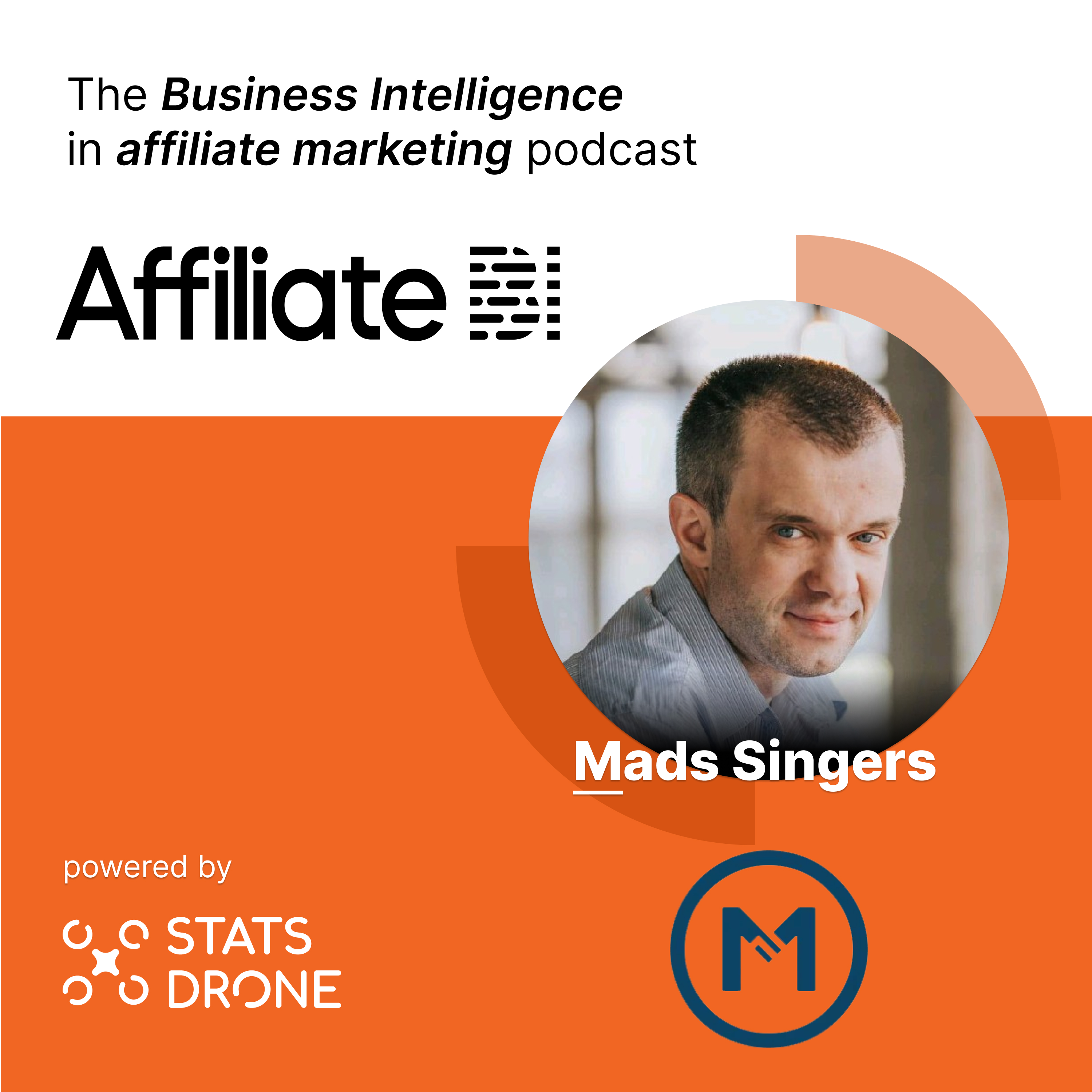
About This Episode
Meet Mads Singers. He is the founder of the SEO Mastery Summit, Aristo Sourcing and Mads Singers Management Consulting.
I saw a recent clip of him on Instagram about making better business decisions with time management. That is when I realized that Mads isn't just another SEO but something more. What I got out of this podcast as the person asking the questions, I hope you get just as much value as I did.
Full Transcript
Show: Revenue Optimization with StatsDrone
Episode: Delegation & People Management with Mads Singers
Host: John Wright
Guest: Mads Singers
Published: Thu, 18 Jan 2024 11:11:00 +0000
Duration: 56:59
Speaker labels are a two-speaker split from pauses (host vs guest). Timestamps are `[HH:MM:SS]` from the episode audio. Light ASR; names and brands may need a pass.
---
John Wright: The way everyone started is a boss saying, hey, we have a website, can you figure out how to get some traffic? All of them said, hey, we have this problem, we have a website, it's getting traffic, go figure it out. So people have been asked to go figure it out because that's how you grow great employees. Now, it doesn't mean they have to figure out every single part of everything because you have processes, you have a lot of learning, but the way that's easy to do is say, hey, John, I want you to own this thing. Here's a bunch of processes of how we've been doing it so far. Right now you're a smart guy and you can probably make these processes even better.
Mads Singers: So you want to give people ownership. That's the essence of effective delegation and that's the essence of really getting to the bottom of getting your great people to give the best output on a very consistent level. I'm John Wright and you're listening to Affiliate BI, the business intelligence and affiliate marketing podcast brought to you by StatStro. Welcome to the affiliate BI podcast. Today we're chatting with Mads Singers, who is the founder of the SEO mastery summit. He's also the founder of Aristosourcing and I've seen Mads around in
Mads Singers: the SEO communities and I reached out to him because I saw a post that he shared on product management and managing people. And that leads into his other business, which is the Mads Singers Management Consulting. Mads, welcome to the show. Thank you very much, John. So we're excited to be here. So I want to put SEO on the side for a moment and talk about time management because I saw a clip of you how you said people and business owners could be smart and effective with their time as a business owner. And that's when I realized that there's more to you than just SEO, which is how I viewed you just from our networks in common. Just want to know if you
Mads Singers: can dive a little bit deeper into the topic or share some stories about how you help companies.
John Wright: Yeah, I mean fundamentally my key passion in life is management and really
Mads Singers: too bold. It's helping create a lot of great bosses out there because there's a ton of people in this world who haven't got great bosses and reality is if you can get a good boss and
John Wright: yeah, that gives you a better life generally. So that's sort of my whole passion. Now, a large part of my audience is sort of in the e-commerce and SEO side of things. And I've been in SEO myself since around 2007 where I started out in affiliate marketing. But my background really is in the corporate world where I work with IBM and Xerox and large companies.
Mads Singers: And fundamentally really what I spend most of my time doing now is really teaching people and helping people how to become better business owners. Because reality is most SEOs know enough SEO to make hundreds of millions of dollars. SEO knowledge is not where they're struggling. Where they are struggling is in management. So it's how to build a business, how to be a CEO, and particularly in how to manage people. So many SEOs are very introverted and so on. And therefore they're not necessarily great at the people management part by nature.
Mads Singers: But fundamentally I believe management is something that is taught. It's not something that people just born with. Everyone have to learn management. Everyone have different strengths and weaknesses. So people need to learn different parts of management depending on who they are.
John Wright: And that's really my focus. So specifically around time management. And this is something that SEOs spend a lot of time and effort thinking about. And my philosophy is very, very simple. It is very rarely about time, but it is about priorities. Most SEOs are thinking about how can I do more in less time? But that's not really the right question. The right question they should be asking themselves is what is the right thing to do? Because reality is when you're
John Wright: building a business, your goal is to be a business owner or at least hire someone to be the CEO role in the company. But most SEOs are so good at SEO and they're so busy learning more tricks about SEO. They're so busy trying to have incremental improvements in this and this. And I speak at a lot of conferences and everyone's always so busy trying to get this little hint and tip that can maybe give them like a small tiny edge somewhere. But reality is for most SEOs, they're anxious learning business. Learning to become a better leader because they have the knowledge. When you
John Wright: look around at the people who make the most money in SEO, it's not the smartest people. It's not the best SEOs. It's the people who take action, who delegate well and grows a business. Those are the people that make a lot of money. I'd agree. I've spent a lot of time in the last year looking at
John Wright: some of the mentors I have in affiliate marketing space and going, what is their key to success? And there's one really big iGaming affiliate I had the chance to interview and I said, what is the key to your success when everyone is jockeying? They're bragging about being the 24th best iGaming affiliate in the iGaming space. And I said, why are you in the top one or two or three and what's the secret to your success? And they had an answer lined up, which was, most people don't have a long-term vision or plan. And I believe that to be true. But what I think I've seen behind the fence that that person didn't share was that they actually
John Wright: are very optimized in their business, in their management. And it looks like they have like really good people in place. And yeah, maybe there's a lot there where delegation and
Mads Singers: just leadership is really a part of it. Yeah, that's the big thing because
John Wright: reality is again, with SEO, it's not that the people who make the most money. I mean, if you look at companies that are doing well, it's often link building businesses. They do extremely well because they're taking a very simple process. For example, doing guest posts, outreach or whatever, they take a very simple process and they're just scaling it. And I know multiple people who have done million dollar exists in link building businesses.
Mads Singers: And you don't see that everywhere in SEO. But that's because they're focusing in on one area, one very simple process, and they're just scaling it up. Most of the time, I work with so many agency owners and the first thing I asked them is what happens if you get sick for three months and can't do anything. And in 90% of the case, the companies goes on. Right? Reality in my mind, reality is if your business cannot survive without you for three months, you hardly have a business. I mean, you have a very well paid job, but it's not a business. You can't sell it
Mads Singers: in most cases because without you, it stops existing. Now, there's definitely certainly a period niches and so on where you can still make a decent bit of money from selling a company like that because someone else has the skillset and can take it over straight away. Right. But fundamentally it's getting into the business mindset of things that is fundamentally how you grow.
John Wright: One of the things I always look at, people are so eager to do their own SEO, but reality is you can go and hire a great SEO for five grand a month or maybe 10 grand a month sometimes. Right? Like you can hire some really, really good people. Now you can make a hell of a lot more money than 10 grand a month. If you run a business and you have a good system to pro and skate. So you're much, much better hiring out the expertise because skills, I mean, it doesn't matter if it's SEO or if it's Facebook ads or whatever skills like that, you can hire people to do them.
John Wright: Running a business and having the business vision and so on, that is very difficult to hire people to do. Yeah. I think that's where it helps to have some experience and all those things, but I think I can really tell everything you're saying where in my own journey in the last 10 years, the more I've been able to say, I can get someone that's better at that than I am. Like, for example, SEO, I like SEO, but I'm never going to be better than someone who lives and breathes it day in and day out. And I'm also passionate about user experience design, the exact same thing.
John Wright: We had the luxury of hiring a SAS design agency called User Active and they're experts at this. Once I saw their work, I'm like, I'm never doing this task again. Never.
Mads Singers: Yep. So that's the essentials.
John Wright: So what would you say are like, you know, the key points of being effective at delegate?
Mads Singers: Yeah. So I would say that there's three key points to effect. Number one, and this is particular for SEOs, is delegating responsibility rather than tasks. And what does this look like in practice?
John Wright: So number one, most people sit down and they're like, okay, we need to hire someone and we want them to do this task. So let's say, let's say, building as an example, just because it's easy. So they have a system and they tell someone, Hey, you know, I want you to sit down. Here's a process of how we find our identify site start. Good. I want you to find 100 sites every single day.
Mads Singers: And you have someone sit down and they literally just doing the same repeatable task day in, day out. Right now, from an ownership standpoint, from an interest standpoint, from a how fun is this standpoint? And this is one, a very boring job. And two, it's one of those jobs where you will never see people come and suggest improvements. They'll never come up and say, Hey, why don't we do this instead of that? And the fundamental reason why they can't do that is because they haven't actually got the ownership. They're being told the task to do
John Wright: instead of giving the ownership of owning it. So the different part of it, so ownership, you say, Hey, John, you know, I hire you because your greatest spreadsheets, I can see you're very detail-oriented, you get stuff right. I want to hire you for this job because we really, really need to get someone in here who can help take this off my plate because I don't have the time to do it, but can do an exceptionally good job. Now, our goal is to build, I don't know, a hundred links a month. And we want you to be this critical part of the process. And we want
John Wright: you to own this area so that we get quality data out. Now, the way we get links is from
Mads Singers: going to reaching out to sites and, you know, go through the whole concept of how you're getting links, but helping them understand what is the end goal they're trying to achieve, not just sit down and email a hundred people, but why are you emailing a hundred people and giving them the ownership? So instead of saying your goal is to email a hundred people every day, I would say your goal is to get a hundred links a month, right? I'll actually make you responsible for it. And then I want you to own it. I want you to look at the data. I want you to look at, hey, you know, we email these hundred, we had zero responses, we mailed these hundred and we had 20,
Mads Singers: you know, figuring out how do we get, do better. And that only comes when you actually give people ownership. And I'll actually take it a step further. I'll use SEO as the prime example.
John Wright: Most people who are, no, let's say everyone who is good at SEO today, none of them started
John Wright: in SEO by being told, here's a bunch of processes. Go do this thing. The way everyone started is a boss saying, Hey, we have a website. Can you figure out how to get some traffic? All of them said like, Hey, you know, we have this problem. We have a website. It's getting traffic, you know, go figure it out. So people have been asked to go figure it out because that's how you grow great employees. Right now. It doesn't mean they have to figure out every single part of everything because you have processes, you have a lot of learning, but the way that's easy to do it is
John Wright: say, Hey, John, I want you to own this thing. Here's a bunch of processes of how we've been doing it so far. Right now you're a smart guy and you can probably make these processes even better. Right. So you want to give people ownership, right? That's the essence of effective delegation. And that's the essence of really, you know, getting to the bottom of getting a great people to give the best output on a very consistent level. It sounds basic as hell to say, go figure it out. Like it's almost like you're admitting that I don't know how it should be done best, but maybe that's actually the problem of most people is that they actually know how it
John Wright: should be done. And then you get into micromanagement. Yes. And that is the problem. There's two aspects. Admitting is a great word. Now the thing is, I don't want to know, right? The problem is every time I know the answers or something, the questions land up on my desk every single time. Like I had a good example. I started a podcast a few years back and I hired a girl to do it who had never heard about podcasts. Didn't know what it was. I literally sat down with her. I could see she was very driven. She was very good at getting things done. I sat down with her
John Wright: and I gave her the objectives. I said, I want to start in a month. So I gave him a month to get a bunch of podcasts lined up and so on, because I wanted to give myself a bit of a lead way. Because I want to start in a month. We want to publish an episode. I think it was every Wednesday at, I can't remember even what time it was, but basically once a week.
John Wright: The only thing I wanted to do was to open my calendar. I wanted to see, put meetings in there for podcasts. So she had to do that. She had to get the meetings in, make sure they were well arranged. And then I wanted to press the record part. Everything else I wanted her to take care of. I wanted her to figure out where the recording went, find it. I wanted her to figure out how to edit, how to publish, how to produce a podcast, how to get it shared, how to do everything. And then the third goal I had to have was that we had to get at least 5,000 listeners within the first three months. And that was basically the goals, et cetera. Now she had never heard about
John Wright: podcasting. And a month later, we had already stacked up. I think it was eight and nine interviews. We had stacked up before we actually kicked off with the first one. And I'm sure the first two or three or five were not super great. Like I'm sure the editing got a lot better on time and so on. But the whole thing was I had nothing to do with it. I spent 30 minutes interviewing people and I was all I did. And this is what you want to do from a business standpoint. If you're a business owner, this is what you want to do. You want to be the person who is
John Wright: responsible because you have to make sure stuff get done. But you want to be the person who is giving out responsibilities for areas of the business. And when you do that, people step up, they take ownership. The opposite, what you see with many SEOs, when you're a micro manager, when you're constantly having to check everyone's task and when everything comes back to you and you're constantly the bottleneck, that is a sign that you're a micro manager. Now what happens is when you do that, the one thing you will hear again and again is my staff is not good enough.
John Wright: I don't know how to get them to do it. I don't trust them enough. And it's not really about trust. But the fundamental thing is that they haven't given them their ownership in the first place. And because of that, they're not growing. So what happens is normally, if you're here as the CEO, you've learned a bunch of stuff, you hire someone to do a job, you have a bit of knowledge. So they start out below you. But if they're fully focused on that thing for a long time, they will eventually get up. Now what happens in most cases is people are like managing. So they're dealing with everything. They're growing more than their staff. And the staff never outperform them because they keep doing the job. And the problem with doing that is they're not
John Wright: doing the essential things. And that's point number two, when it comes to delegation, it is about figuring out what are the things that you should be doing to really move your business forward. The amount of time that you see business CEOs sitting, looking at HREF data, sitting, looking at all sorts of stuff like that. It's insane. They're not running a business.
Mads Singers: They're not. And that is the fundamental challenge. So figuring out to put the right people in place, give them ownership and let them do what they can. Now, they're not going to get everything right because the first time you and I did things, we didn't get it right. The first time I have had every single new job, I've made mistakes. I've made some backups and I've learned from it, but there've been good people around me. They haven't taught me not to make mistakes. They've helped me a lot. They've given me a lot of guidance, which probably means I haven't made as many mistakes as I could have if I had to figure out everything for myself. But that's the
Mads Singers: essence. So I'm going to be sort of devil's advocate. Everything you said I'm totally into, but when I try to look at this and go, how do we apply it to other companies, not just my own, but other companies I've seen. And when I hear stories about the wrong person having the responsibility and it's starting to clash or they're actually taking the ship in the wrong direction,
John Wright: how do you help the business owners not only get over that fear, but make sure that this is being done right? And then are we going full circle back into micromanaging? The third part of it is hire the right people and put them in the right seat. So the thing is all people have natural tendencies. They have things that they're naturally good at and things that are naturally less good. Everyone of us has that. And learning to understand people is probably the single most
John Wright: powerful trick to hire more successfully. So when I cast recruitment, I always say hiring, it's a simple game. If you don't know what you're doing, your chance of getting that right is one hour 10 or two hours 10. The better you get at hiring, the more your chances increase. The better hiring framework you have, it never gets 10 out of 10 because you're dealing with humans. Sometimes you hire a human that just, they get divorced the following day or whatever happens. Life happens. But learning to understand people, and for me personally, have been the number one
John Wright: trick, if you will. Not that there's any particular tricks to management, but it's been the number one thing that have really, really up my game personally. Because if you put the right people in the right seats, you are so much more likely to succeed. So when you're looking at people, you have people that are extremely driven, extremely go-getters, just getting things done, but not necessarily very detailed answers. They're great at certain things. They'll be great at outreach. They're often great at sales and so on. You have people who are by nature super extroverted. They want to talk with everyone all the time. They are absolutely not organized.
John Wright: They're absolutely crap at data. They're often great in sales roles and events roles and stuff like that. But the thing is you have to put the right people in the right roles. Most people, like you and I, we can force ourselves to do something for a period of time. But if we're doing something that we're not naturally good at, then eventually we're going to be not very good at.
Mads Singers: Because if you're not naturally good at, say, bookkeeping or data, or if you can't stand the side of Excel, now again, you can force yourself to do it for a little period of time, but eventually it ain't going to go anymore. And when that happens, you're basically just in a situation where you're fighting nature. It sounds like a basic concept, but I believe what you're saying is true. Why do companies either go to business or why do some kind of stay at a level
Mads Singers: and don't really achieve a breakthrough in success? And what are the people that are actually doing it well? What's the secret sauce? And I think what you're saying, I believe to be true in a lot of ways where I've been really lucky to have made a lot of mistakes in hiring the wrong people. But I think with the people that I've taken the chance on have actually been just that. For example, my business partner, I got him on board because he comes from the corporate world and he's extremely good with people. And he's helped me manage our tech team better, where I believe we actually had the right CTO. So I'm learning leadership as you go, but I believe what you're
Mads Singers: saying is just spot on probably the biggest single takeaway from this chat.
John Wright: There's a big thing for me. If you're a business owner, your goal is to run a business, it is not to do SEO. And this is for most SEOs, that sounds scary. But yeah, it's like most things. If you can learn how to be great at SEO, you can learn how to be great at management. But just like the first time you looked at a website and you didn't know what the what unless you're doing, like same thing, right? Like it takes time to learn. Now, here's the thing, all the people I work with, they all come to me in the beginning to say, Hey, can I just hire someone to do this thing so I can do SEO or you know, I'm not good at managing people.
John Wright: But here's the thing, it's not that they're bad at managing people at all. It's not that, right? It is simply that never learned how to. That's all. And if they do spend a little bit of time to do it, and they do learn to manage very well, they become so extremely powerful. Like if you look, some of the people I work with years back, someone like Matt Diggity, for example, like he,
Mads Singers: I mean, he owns so many companies. I mean, he builds a lot of an empire really. And it's been down to learning to understand how to build stuff to other people. Because here's the thing, if you're just building everything yourself, you only have 24 hours a day, right? Sometimes, you know, I'll have an idea for an affiliate site, I'll tell someone. And, you know, when I wake up 12 hours later, we have an affiliate site. Like I've done nothing except tell someone or ask someone to do it, right? That the ability to get things done without having to do it, that is the business life hack
John Wright: that you want. Yeah, I was looking at your LinkedIn profile of all the things you do. So it's like we've got SEO Mastery Summit, we've got Aristo sourcing, and then we've got your management consulting. And I was thinking, this is a really odd mix of projects and interests that you're working on. And I was trying to figure out, how do these things connect? And I think they connect perfectly. Maybe the SEO part of it, I'm kind of on the side with, but maybe you've learned SEO from needing that for, you know, advancing your businesses. But I think there's an interesting topic that maybe people aren't really having a discussion about, which is, we all are
John Wright: interested in hiring VAs. So you've got Aristo consulting, but then there's management of like, I think most of the people that hire VAs don't really get the best out of them. So I'm wondering if you've got some thoughts on that.
John Wright: Two reasons. Number one, it's treat them as cheap labor. Number two, is they don't know how to manage. So to start from number one, you can get incredible results with great people. And you can find great people anywhere in the world. Right. The thing is, you have to hire good people in the first instance, right? A lot of the time, the problem is, both business owners look at it wrong.
John Wright: It's not, it's never about hiring cheaper labor, ever. That is never the goal. Every recruitment you make, every hire you make, have one purpose. It is to get good ROI. If you hire someone and pay them 10 grand a month, and they make you a hundred K a month, that's a good deal. If you hire a similar role, pay them 500 bucks a month, and they make you 400 bucks a month, that is a bad deal.
Mads Singers: Right. It is not about what you pay. It is about the outcome. That's the first step of really understanding it, right? It's not about thinking about hiring cheaply. It is about to think, where can I get the best return of investment? So for example, if you look at developers, right, you can hire some absolutely great developers, many places in the U S and in some places you end up paying 200 grand a year. Now, if you go to, well, Ukraine is probably a bad example at this point in time, but similar countries in Eastern Europe, you might hire a very similar qualified
Mads Singers: developer might not be native English and complications key, but let's say you hire a similar developer at 60, 70 grand a month, not a year, sorry. You can very often get a,
Mads Singers: at very close to a similar return from an individual like that. Right. So it's not about thinking she, it is about thinking what has the dining done and how can I get it done in the most cost-effective manner? Right. Now, one of the key things about outsourcing is that there's a lot of things that are not feasible to do. If you have to pay someone $15 now to do it, like, so there's a bunch of lead generation methods for cattle that just doesn't make sense. If it's a $15 an hour job. Now there's some of these methods that make sense. If it's a $5 now, you know, right?
Mads Singers: Now again, it's again, it's never about the cost, but it's always about the return. Why don't you get back? So when you're looking to hire for a job, it's always and consistently to look at, well, what do I need here? Right. What I need and how can I get the most cost-effective sort of setup or the most cost-effective output from this process? Right. That is, that is really what's key. And when you're going to that, when, when you're looking at outsourcing workforce, right? Like we, we obviously have a lot of great people. We have about 300 staff. What was at the moment,
Mads Singers: as VA's and the key thing with them is that they're as good as people let them be there. So very often our strengths as an agency is to hire great people. That is all short focus.
John Wright: Yes, you can find people who have certain experiences and so on, but most things in my experience in SEO, you're better teaching people your process. It can be okay. They have a good understanding of SEO beforehand, but you're much better off teaching people your process, right? Because even though if you find someone who's good at on-page or good at link building, the way they did it versus how you did it is rarely the same, right? And so when you are looking at outsourcing, right? Find great people, find great people with the right personality for what you're trying to hire for and you will succeed. Right? Second thing is treating them as
John Wright: cheap labor. The problem is if you have someone in an office sitting in Milwaukee or you have someone halfway around the world in the Philippines or our favorite place to hire, which is South Africa, and problem is people treat them as such. And the thing is, if you treat someone as $5 labor, $5 labor, they will deliver like $5 dollar labor. The thing, if you have an expensive staff member in an office in Milwaukee, you will talk to them. You will have conversations with them. You will try and grow them. And the thing is we have virtual assistants that have been with
John Wright: clients for years. We have a virtual assistant that is literally the CEO of an e-commerce business right now doing millions of dollars every year. She's the CEO because
Mads Singers: client trusted her and at some point she was good enough to run the entire business.
John Wright: And that never would have happened with micromanagement.
Mads Singers: It would never happen with micromanagement. But often a lot of the time, it's also about spending time with people. Like SEOs think spending time with people is teaching them how to do something. Like one of the key things about management is you have to care.
John Wright: You have to actually show an interest in the people that you're working with.
John Wright: And when you start doing that, things start happening. And this is the biggest thing.
Mads Singers: The most secret weapon you will in management, Management 101, is about one-to-ones. And it's
Mads Singers: simple conversations with your staff. You want to get to know your people. You want to get to understand who they are. Because that is how you get the most out of humans.
Mads Singers: If someone hires you and they will talk to you, they will never look at you. You're not going to deliver your best one. It's not a question of, oh, well, I pay you so you should sit down and you should do this. That is never the question. Reality is. And take this from your friends. If a friend calls you up right now and says, hey, I'm moving this weekend, can you help me? Well, it's very simple. If it's a great friend who cares about you and that you trust, you're going to say yes. And it's easy to say, oh, well, but I pay them so they should do it. That's not how humans work. That's not how humans work.
John Wright: No, it makes sense. I know we could probably talk about SOPs, but I think maybe this is part of actually caring for your virtual assistants or people you hire, which is help them advance. So if you want them to be better than you, how do you think courses and helping them with their education of that role? How important is this?
Mads Singers: Education in general is important. Honestly, it doesn't have to be courses per se. I think courses can be great for a lot of things. Not everyone learns the best way from courses. So that's also something to turn into consideration. But I think generally development is important. One of the key things, so when you're doing one-to-one with your staff, talking about development is key. And one of the big challenges that most people have when they're like managing
Mads Singers: is that they tell people what to do. So let me teach you a way not to teach someone something. So a great way to say, oh, you need to be better at this, take this course. Of course, yeah. Because then you're telling people what to do. Now, here's a way that you can get better at it. If you're having an employee and you say, hey, you're struggling a bit with your, I don't know, let's take something simple. You're struggling a bit with your typing. I can see that when you're typing, you're sitting with one finger and you're typing
John Wright: very slowly. How could you get better at that? And the thing is, even if you know the best course on planet earth on how to type fast, don't tell them. You want them to go out, research, figure out what do they think is the best call. The reason why is very, very simple.
Mads Singers: If you tell people what to do, it is not their choice. It is not their will. And they don't learn from it. If you really want your staff to learn, you need to give them ownership to learn.
John Wright: And the way you do that is let them figure out what calls to you think. And here's the thing, they might not pick a great call. When they come back and you say, okay, I went to the boss man, I went through this course, you know, I think it's better. And you're like, okay, let's test your speed. Let me look at your typing. Are you typing with one finger? Are you saying multiple because right, it's very simple, but you need to give people ownership. And actually it ties great into processes that you are SOPs that you just mentioned, right? All business owners, particularly small business owners, they're all with some gurus and they all think they have to
John Wright: sit down and write all this piece. Let me tell you a secret. The CEO of IBM is not sitting and maintaining 400,000 SOPs across a business. And now, if you want to do the right thing,
Mads Singers: you tell, you give people an ownership, you share with them existing SOPs, but fundamentally the person doing the job should be the person owning the SOP. Now, the manager of the person should probably sign off on updates, but you want the person who's actually doing it to be responsible for the SOP. I agree. I think I've heard of some really good SOPs and sales documents that have come out of IBM. So they're not a big corporation for random luck. I think there's
Mads Singers: definitely something behind it. Now, going into SEO, so you've set up the SEO Mastery Summit, and obviously I want to learn about your background of like, how did you get interested in SEO? And I think this conference looks pretty interesting. I saw the lineup last year and I said, oh, this would be a great place to visit Saigon or Ho Chi Minh. So tell us more about your SEO background in this conference. Yeah. So I actually got into SEO many years ago. So while I worked in the corporate world at IBM, I eventually started building up my three year sites and
John Wright: I built up a very, very big site and I had very little time. I was doing 60 hours a week in my full-time job. So as a manager at IBM, I was not bored. But I had a couple of Filipinos at the time and back in 07, 08 when I first started out, you could write, let's just call it pretty terrible, cut it, till have some very promising results. So we built up a scientist and we were at the peak of it, it was making over 20 grand a month. So we were doing pretty well. That was a pretty nifty sighting, if you will. And yeah, one day till the next site got annihilated,
John Wright: penguins and pandas coming along and that was not my favorite time in the world. But I've gotten, I got to know a lot about the world of SEO and so on. And when I eventually left the corporate world, I already knew at that point that SEOs were a great audience to teach management because most of them, most SEOs are afraid of it because it's dealing with people and most SEOs are introverts and it is scary. But as an introvert myself, I learned very quickly that when you learn how to do it, you become extremely powerful. When you learn how to manage people well,
John Wright: it is a cheat code like no one else. So that was really how I got into SEO and that was how I sort of got into SEO as one of my primary issues. Really my management, I work with
Mads Singers: people in many, many different niches, right? So it's not just SEO, but SEO is definitely one of my favorite niches. And SEO was through some of it came along. I speak at many, many conferences every year. So I speak at somewhere between 10 to 15 to, and I see a lot of conferences and at every conference I was at, there was always something I wanted to change.
John Wright: And I was like, well, why do we not just make the best SEO conference in the world?
Mads Singers: And so we did. And now that was really how the conference and the event itself sort of kicked off. And that was, yeah, last year was the, so we ran it online during COVID a few times,
John Wright: where it was just an online summit. But then last year we kicked off for the first time. And based on the feedback, it was the best SEO event in the world. And I love where we have it. So we have it in Saigon, which is Vietnam. So it's been away from most people.
John Wright: But what this does is very, very important. When you go to a lot of events in UK, like, if you go to something like Brighton SEO or something, if you're actually a good SEO, you'll often run away screaming because it's full of agency staff that have worked on social media for three weeks and like building for two months or whatever. It's not where you make the right connections. Now, when you look at it, when you look at the people who come all the way halfway around the world to Saigon, it's usually people who are making money, it's typically with
John Wright: business owners of very, very high level SEOs in agencies and affiliates and e-comers in these various sort of high level situations. And that's the best event you'll find. When you see these events, I mean, we typically have three, 400 people. Actually, this one will be about 450 people. And with that, you get plenty of very, very outstanding people that you can learn from. Personally, I find an audience like that way better than a couple of thousand people
John Wright: who, where it's much better, what's harder to connect, it's much harder to find, you know, you have to meet a lot of people before you find people that are interesting and so on. So for me, that was the essence of the event. It was really about building the event with one of the best audiences in the world. And I believe we have done that. It's an interesting full circle. Like I said, how do we connect these three things you do? And what was your take in not only being into SEO, but like, what are you offering the SEO community or what do you speak at? And
Mads Singers: I think what you've seen, you've obviously got a different lens on the SEO space than I did, but I did believe that there's a lot of really good SEOs that weren't good business owners. And there's a lot of really good salespeople that were terrible at SEO, just basically ripping people off left, right and center. And I know just from having the chance to interview a lot of SEOs, like the really great example is a very Kasoni from search intelligence. Like he shares his story about three years ago, going, you know what, I'm going to go super niche. And then once he did that, he's like, you know, everything just became simple. And then he became, you know, his reputation grew. He started to separate themselves when you're like, who are they and what do they
Mads Singers: do? It's all about identity. And, you know, oddly enough, there's like a branding lesson in there somewhere. Yeah, I mean, honestly, successful businesses is built on simple, scalable processes. The problem with most SEO agencies I work with is they're like, yeah, but you know, I have to be involved in everything because no one else can analyze all these companies and no one else can do all this. And like, here's the thing, if the business cannot run, if you disappear for three months, you ain't got a business, right? You need, you want to make sure you have a business because it's sellable. It's more scalable. It's piece of life, right? Like if you can't
Mads Singers: sleep every time there's a Google update, that's not a very great life.
John Wright: Yeah. I want to go into like almost every podcast finds a way to go into AI, but I'm going to be direct. How do you see AI disrupting, you know, virtual systems for the work they do, as well as the companies that hire them? And what do you see the future of like this year and beyond?
Mads Singers: Yeah. So again, I actually have many businesses. So our BA company is only one of very many. So we own seven companies now. And the key thing I always look at and particularly with AI is
Mads Singers: how can I help sort of serve or deliver services to the world of SEO and similar niches in a way that makes sense, right? Because reality is that things have changed, things will change always. And
John Wright: that's a fact, right? So with AI specifically, I, in some way, it really excites me. In some way, really scares me more so for humanity. So let's take the good angle, right? So I believe AI can be extremely helpful to many, many things. I think doing more things with less is always good. It's good for business. Every time I look at the world, I look at sort of productivity of humanity. And if you can do a lot more things, if you can accomplish a lot more things with less, I think
John Wright: fundamentally, I think that's a great thing. And so my personal view on AI is that it's something that's going to benefit, hopefully. And I think from a business standpoint, it can benefit in so many ways, right? Will it take jobs away from some people? Possibly. Will those people potentially have all the things they can do, I would say, probably. Some probably won't, right? Because again, AI, I mean, the same with you when you start when they figure out all the self-driving stuff and you can suddenly replace all truck drivers on the planet with a self-driving truck.
John Wright: Are they going to find an instant job? No. But the potential for humanity is that they can find jobs that adds more wealth, right? And yeah, there's definitely got to be some hard times. And I think AI is, when you look at the tech world, AI is definitely pushing out some people in different places. And the key thing for me is you need to look at that and you need to see, well,
Mads Singers: what is the direction? What do I need to learn to benefit here? And the thing is, if you're just an SEO, and I say just as a just an SEO in the worst possible way, but if you're just an SEO
Mads Singers: and suddenly you can ask AI to do SEO for you, well, then you're not very valuable.
Mads Singers: The thing is, if you're a business owner, if you're very great at accomplishing things with people, you're going to be incredibly valid. And for me, that is the essence. So if you
John Wright: can learn to really get things done to other people, you are going to be extremely valid.
John Wright: And for me, that is really the primary thing. I'm going to summarize that. People,
John Wright: like we're all going to be safe. We're not all going to be eliminated. That's what, yeah, let's not talk about the dark side. Yeah, the dark side is not very pretty, especially if you see it on Instagram. Moving on to what do you see of the future of affiliate marketing as it intersects with business intelligence?
Mads Singers: I think affiliate marketing, I mean, so actually the latest Google updates have been very interesting, right? I think they've been very difficult for a lot of affiliate marketing.
John Wright: I think Google took a step that they had to take, because if you look at the quantity of content on the internet over the last 10 months, it's like 10 X. Google have no way of, I mean, with sensible resources to go through all the content. I mean, if you look at the next 12 months, I mean, even though at 10 X, I wouldn't wonder if it at least a hundred X in the next short months, like there's going to be unbelievable, incredible amounts of content on the internet. And realistically, there's very little we can do about it. Now, what does that mean?
Mads Singers: I think Google had to make changes to how it was evaluating things. I had honestly expected they would go even more aggressively on authority. I thought big authority guys were just going to keep winning even more than they have been. That was my expectation. They went a little bit of a different route. And I think honestly, there's no way back. I think they realized that the results are pretty shit right now. Google is not delivering the best results, but honestly, I don't think they have much of an option. So I think they need to look at what they have right now and reiterate.
Mads Singers: And but I don't think AI has done anything positive, but the better search results.
Mads Singers: Now, is the end result of it going to be better possible? Right. So is there going to be a possible at the buy-in where all this AI content help generate better outputs and total? I hope so. And I think there will. But yeah, in general, I'd say that the landscape is changing. But the key thing, whatever you're doing, if you're able to build great businesses, if you're able to collect some great people together and enable them to do great things, for me, that is consistently
Mads Singers: the lifetime skill that will make you value. And I'll say for people right here right now, like if you're stuck in a situation where your business is to peddle on you, you definitely need to get out of this. Because with AI, most roles, most things over time will be replaced. I think your answer goes perfectly into my one last question, which is, as someone who already has their own podcast with the Mad Singers Management Podcast, which I just followed recently, do you think media channels like podcasts will be important for affiliates
Mads Singers: in the B2C space for growing their brand, their revenue, and potentially being another signal that tells Google that says, hey, I'm not just another AI content site. There's some real people here. Well, over the last five, six, seven years, what we have done with every single website we have built is we have started a podcast. Now, I wouldn't hype podcasts too much, because I would say we recorded at least one episode that was at least five minutes long.
John Wright: And the reason was very simple. If you synchronize and amount of links you get from all over the internet, when you sign up to all of these different podcast directories and you get synchronized everywhere, that is a lot of very good links. A lot of them are no follow, but honestly, it's a lot of trust. Again, most gamblers, most whatever don't build a podcast. So just having all of those links are great. Where do I see the future? I see a video absolutely exploding. I see a video absolutely exploding. Now, the problem is
Mads Singers: from, I don't know, six months ago, 12 months ago, whatever content is no longer difficult.
John Wright: Anyone can spit out a million words of content in a very short amount of time.
Mads Singers: Videos will probably get there, but right now they're not. And because of that, you can
John Wright: do a lot of things with video. And if I see a lot of big people who are really making moves, they're killing it on YouTube. They're absolutely killing it on YouTube. And I think video is probably going to be the number one thing for quite a period of time. Now, what I would say about it is that I think at some point, it is going to be hard to stand out on video because just like we are sitting talking here, I imagine a year or two from now, there'll be two AI models sitting out podcasts similar to what we are having. And honestly, you won't know the difference. And
John Wright: it scares the hell out of me. But I think the way content, I mean, I've seen a lot of these
Mads Singers: sort of voice synchronization services that can duplicate your voice. And honestly, some of them are so good. Like you could go out and find, I mean, I've done hundreds of podcasts in my career, right? So you can go out and find hundreds of my podcast episodes. You can put them into some I think, and I'm pretty sure you can make something that sounds exactly like me. And
John Wright: in a while you can also find something that looks exactly like me. And we're going to have
Mads Singers: Elon Musk interviewing Elon Musk on the 7 millionth Elon Musk channel. I have no idea how the world would cope with that. But honestly, I see it as a potential because the way people are working with content right now, I see no reason why they wouldn't do the exact same thing with video.
Mads Singers: And maybe this is maybe not the right question to feed back to you, but maybe it's possible that there could be a chatbot that does like the management consulting you do and says, Hey, can I have my own personal chatbot that not only teaches me the best things, but teaches me and understands how I learn. Exactly. I don't think that's a bad thing.
John Wright: Again, my mission is very simple. I want to create more better leaders because, I mean, look at politics, look at anything. If we had more better leaders in the world, the world would be a better place. It's very true. If that can be done with chatbots, I have plenty of things to do. So I would happily stop doing what I'm doing. But for the time being, at least there's a lot of needs. And this is one of the key things, right? Most business owners who start a business have no management experience. Most people who get promoted into a role of management, no management experience. One of the big reasons why a lot of companies are struggling
John Wright: in that situation is that when you are promoting someone to management, I mean, if they were an SEO on Friday and they show up on Monday and they're in management, they don't know what to do. You know, had no training, right? It would be a similar scenario
John Wright: to hiring a brand new person who have never heard about SEO. And from day one, expect them to be your head SEO. No training, no skill, no experience. You can do it, but it will take them quite a long time to get up to speed. Now you are way better utilizing existing people, utilizing processors, utilizing other things to get them up to speed faster. And that's what I focus on, right? So a lot of the companies I work with, I go in, I typically work with the business owner and the entire management team to get everyone on the same pace from day one. And you know, no one wakes up in the morning and wanting to do a bad job.
John Wright: Like if you have a manager, they don't. You would think so, but not really. That's true. Like no one actually wakes up and say, Hey, I want to do a bad job. They don't.
Mads Singers: Now what does happen is the people don't know what they're doing. They don't know what they should be doing. And that is something you can change. Yeah. It's quite shocking that you said any of that. Like I'm writing down notes through this whole conversation in this last one. I literally see another company that we're kind of doing some business with and this is exactly happening. They've got the, the, what I believe to be the wrong person in that forced position who doesn't have that experience. And I'm looking at the person that's under them and it's like that person actually should be there because they have more of that experience. Or you just need a good
Mads Singers: manager and it's amazing to watch how destructive this is. Like you can either have pure destruction or like the opposite, which we all want, like, you know, like not just wins, but like wins that are amplified and it's quite crazy. You know, what can happen? Yeah. And this is the thing, wait, like for me, the biggest thing is is the time aspect of that, right? Like because reality is you can have great manager, get absolutely stellar results for mediocre people. Yeah. Now
John Wright: you can have a poor manager getting horrific results from best people on the planet, right? If you manage great people very poorly, they will very often give you very poor results. Right. And here's the thing, like when you look at SEO, it's a, it's a technical skill. Like most people spend three, four, five years getting good at SEO. Here's the thing. Most of the companies that goes through my management training, it is a one or a two day thing, right? Like I'm not saying
John Wright: they're going to be magically a million times better, but for most companies, what it takes is literally a couple of days because they often have great people who want to do a great job. They just need the basic tool. Right. And a lot of these companies in one or two days, they learn what it takes. Right. It is, I mean, again, that there's different between learning and then living it and doing it and so on. Right. So it does take more time. It does take more practice, but it is not like SEO. It's not something that you need to, obviously, if you do it for three years or 10 years, or I mean, I've been at a 20 years now, but the longer you do it,
John Wright: right, the better you get for sure. But you can get the 80 20 at a very, very fast pace.
Mads Singers: Mads, this was amazing. I mean, you hooked me with one of your Instagram posts and I knew I wanted to kind of knock on the door of talking about management. And of course, seeing how it connects the dots going full circle back to SEO. So all of this was quite the learning experience for me. I'm grateful to have had this opportunity. How can people get a hold of you? And of course, we're going to give one more shout out to the SEO Mastery Summit too.
John Wright: Perfect. Yeah. The best place is Mads signals. So Madssignars.com or my name on any social media, only person on the planet with the name. And yeah, the SEO Mastery Summit. So if you want to experience the best SEO conference in the world, it happens in Saigon in Vietnam in April. And one of my favorite cities in the world. And yeah, it's an amazing time with a lot of amazing people. This is not like a typical conference. A lot of people come in even a week early, just to start hanging out with great people and so on. So some of the first people already come in
John Wright: towards the end of Mads and some people stay two, three weeks after. So it's that the main event is obviously key, but there will be a lot of people around both before and after. So highly recommend it. I wasn't quite planning it, but I might have to revisit my schedule for this year and make some adjustments. Mads, thank you so much for doing this. Likewise. Great meeting you.
Mads Singers: Thank you for tuning in to the affiliate BI podcast. I'd like to take this time to ask for small favor to leave a rating and review wherever you listen to your podcast. That helps us expand our reach to rank higher in podcast directories and reach more listeners.