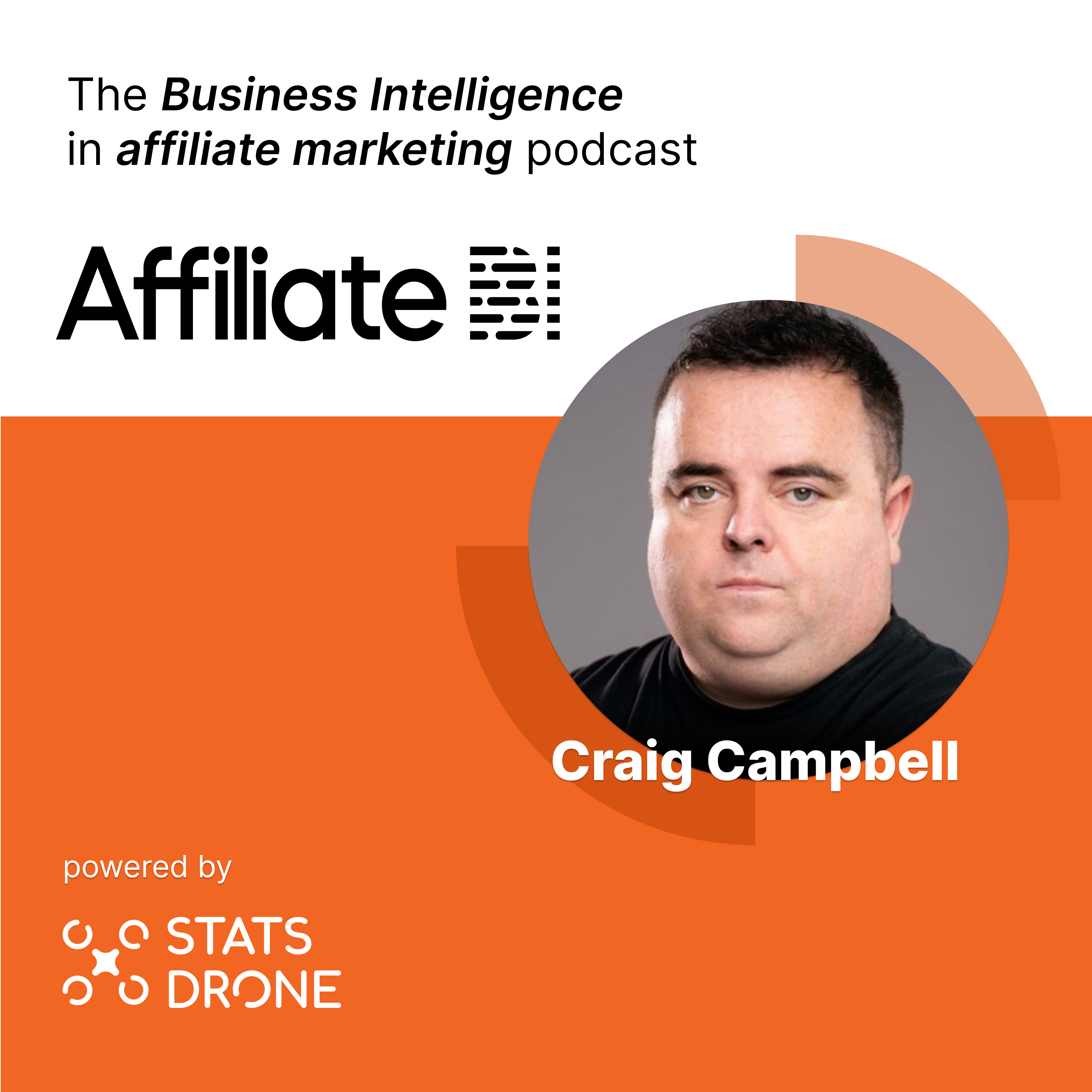
About This Episode
Craig Campbell inspired me to get into producing videos and doing podcasting. I remember Craig telling me that video was a powerful tool for SEO but I didn't realize that it was a significant part of his sales and affiliate funnels.
In this episode we also talk about masterminds and why he runs a mastermind group along with the benefits of being in one.
Full Transcript
Show: Revenue Optimization with StatsDrone
Episode: Using Video For SEO with Craig Campbell
Host: John Wright
Guest: Craig Campbell
Published: Fri, 09 Feb 2024 08:05:00 +0000
Duration: 52:55
Speaker labels are a two-speaker split from pauses (host vs guest). Timestamps are `[HH:MM:SS]` from the episode audio. Light ASR; names and brands may need a pass.
---
John Wright: I think video is a really important one because video is something you can do, whether it be an email that you send out to people, whether it be social media.
John Wright: Video covers a lot of those areas. I could do away with my website tomorrow. I could just work on my email. Go to strategy would be twofold. I think you have to build the following. Build data, collecting data through a pixel, collecting email addresses, that type of thing. I think that is where the hard working grind comes in. You've got to build up that following and the data and then video market the shit out of it. People want something short, sharp and concise. Over the shoulder tutorials.
John Wright: Hey guys, look at this amazing tool that can cut out all your content writing team. Let's have a look at it. Boom, boom, boom. Very simple and very easy. I think video marketing is probably the one to go to in all honesty.
John Wright: For me, anyway, I think that would be the number one tactic.
Craig Campbell: I'm Jon Wright and you're listening to Affiliate BI, the business intelligence and affiliate marketing podcast brought to you by Statstron. Welcome to the Affiliate BI podcast. I asked Craig Campbell if he could jump on the show again and he said, I can do it, but I want tough questions, no bullshit questions like how you got into SEO or what's new in SEO. Because we already know what's new in SEO anyways, if you're not paying attention. Let's jump into it. Craig, welcome to the show.
Craig Campbell: Thank you, Jon, for having me back. It was a pleasure.
John Wright: Awesome. I know your story or some of it where you started off, from my understanding, as an SEO consultant and then you got into creating courses. I just want to jump right to today and I want to know what you're working on, what's in your portfolio for making money and what's part of that that's also including affiliate marketing?
Craig Campbell: So I still do affiliate marketing under the guise of tools. I help a lot of SaaS
John Wright: people. I've got a nice audience on YouTube. I've got a big email list. And people always think you have to have a number of websites to do affiliate marketing. That's not the case. So when it comes to affiliate, I still work with a lot of people and hosting companies like WPX. I've worked with ODYS on the age, the main side of things.
Craig Campbell: Some of those was a sponsor forward slash affiliate. I still got a percentage. So yeah, I still utilize my SEO following, if you like, to try and promote what I believe to be good tools. On top of that, I've got a couple of e-com stores that do well. I've got a private mastermind, which I run three times a week. What else have I got my fingers into? I've got some non- SEO related businesses like Bricks and Mortar businesses that I've invested money into.
Craig Campbell: I still buy and sell websites, mainly display ad type websites. I buy them up and maybe add a bit of affiliate to them, scale them up, flip them. I'm forgetting stuff. Courses. I do courses here and there. What else do I do? I still do a lot of consultancy as well. Travin slash consultancy. A lot of people come up and just want my way of doing things. A lot of people have maybe got
Craig Campbell: agencies and they've got money, but they want to pivot off in a different direction. So I get involved in a lot of stuff like that as well. So I've got my finger in a fair few ties, so to speak. And I like to play around with a lot of different things, to be honest. Just see where we go.
Craig Campbell: Yeah. And I guess it goes without saying, it's like whatever project you work on, it has a connectivity to something else. Like affiliate marketing, SEO, investing, buying and selling websites. I mean, your skill sets are all complimentary. So even when it comes to doing SEO consulting, whether it's like one client a month or something, you're going to have like a higher take on it than someone who's just getting started as an SEO agency type of thing. Yeah. So yeah, people with agencies that are starting out tend to come to me to talk about
Craig Campbell: scalability, hiring, remote workers, processes, and also to learn all of the crap that I fell into, all the hopes that I fell into. So if I can save five years of your time trying to
John Wright: make you navigate around some of the junk that I fell into, then I think it's money
John Wright: worth spending. I think there's a book there somewhere about, not the positive side, but the dark side of consulting and the clients from hell that you would deal with.
Craig Campbell: Frightening. I'm scared to release some of the stories. I have had some real horrific type stories, clients from hell. Maybe they will come out one day. But for now, I just don't want to rock the boat. But yeah, I think thinking used to come, I'm talking about real horrific
John Wright: situations I've got myself into with some clients. And I've had to fight back as well and said and done things that, you know, maybe are not the right thing to do. So yeah, there's definitely stories there. Yeah. Well, we'll share a drink at a future conference and you can tell me some.
John Wright: Yeah. I want to jump ahead to at the time of recording, I had a look at your social profiles and you have 130 watch subscribers on YouTube. How much video content are you producing right now? That's a good question. I am currently building a YouTube studio.
Craig Campbell: So I have over, I've got 1,150 videos so far in YouTube. I've probably taken my foot heavily off the gas over the last year or so in terms of producing a lot of content.
John Wright: But it's something I want to go back to. I just gave myself a race because I uploaded a lot of content and a lot of it was still current and there's no point in me doing a video four times on the same exact same thing. What's the point? But I think there's now a period where some of the stuff is a little bit dated, some of the things no longer work. And of course,
Craig Campbell: you know, things change, it evolves. So I want to go down the road of AI and automation and stuff like that as well. I don't have a huge amount of content on that and I didn't want to produce a whole lot of content around that because obviously the last 12 months in particular with AI,
John Wright: it's been a massive learning curve and you'd be changed. You'd be changing your content every week. Ah, this tool is no longer the best one. Go to this one and go to this one. We've all done it, John, as you know. How many AI content writing tools have you tried over the last 12 months? Probably double figures. I think you're trying to... Because my whole thing is I don't want people to make the same mistakes as me. So if I can help someone not do that,
Craig Campbell: go through testing and all the cost of it, then I'm doing something valuable. But we're all learning last year when it comes to AI and still are. But I think now there's a requirement for it and what I'm using it for and AI on social media and stuff like that as well. I think everyone thinks you just churn their content with it. So what else am I using AI for? And I want to document that. So I'm going to be doing a lot more content. Probably two or three videos a week would be the initial aim. Maybe more. I still always have done two live streams per week doing Q&A sessions.
Craig Campbell: I've been consistent with that, but I'm going to come back with a bang on YouTube. I want to see how far I can push that up because 131,000 subscribers, I want more.
John Wright: Well, going into that, just looking at some of your stats here, I think we've got 40,000 followers on LinkedIn, over 100,000 followers on Instagram. We've got the 131K on YouTube, over 100,000 on Twitter slash X. How much effort did it take to build up these profiles? And what would you say it does for you in terms of your ability to sell anything? You can literally just talk about a product or service and make something happen when it comes to sales.
Craig Campbell: Yeah. I mean, a lot of people forget. I've had, if we talk about Twitter, for example, I've had Twitter for 13 years. And I've worked very hard on it in the past.
Craig Campbell: I don't do so much now. It's kind of fallen off a cliff. I don't seem to get a lot of
John Wright: real engagement on Twitter. But you need to be active on these things and consistent and
Craig Campbell: stuff like that. So I'm off the belief that Twitter is where the most toxic people are, which is why I'm not. I just can't be asked. Like, what do I want? I won't be doing fine with people.
John Wright: So Twitter's not one that I do too much with just now. LinkedIn as well. Again, I've had that for, for, I don't know, 15 years, something like that. There was a lot of automation. It used to be a lot better than it was, than it is now. So LinkedIn has scaled up to a reasonable degree as well. But again, there was a lot of time and effort into it. But the only other thing I would say is there was a lot of automation that you could use before as well that is no longer a thing now. So I got away with a lot more than maybe someone coming into the market today can get away with,
John Wright: because the one thing I will say to people is engagement is vital for any social media platform. And, you know, if you're faking it, you'll get caught very quickly. You'll get shadow banned
John Wright: and stuff like that. So you need to be very, very careful in terms of how you grow your social channels these days. I wouldn't do any of the kind of fuckery that I once did. And with that, you know, certainly when it comes to Instagram, Twitter, and various others, there were tools where you could follow people and if they didn't follow back, it would unfollow them and all that kind of crap. So, you know, are my numbers manipulated in some way? Yeah. You know, I've never been out there and bought, you know, crappy old bots or anything like that. But yeah, I played the game, played the system in the past and to my detriment, believe it or not,
Craig Campbell: so, you know, as years progressed, you know, I think some of my social media channels were kind of shadow banned to some degree and it wasn't quite getting the right traction because something was off. But I seem to have overcome that now, spent a lot of money in paid and they tried to balance it out. But advice, do not fuck with it. Just be consistent. Mash it out the park.
John Wright: And you know, the big thing I've got, John, that you haven't mentioned is TikTok.
Craig Campbell: I have TikTok and I've done reasonably well over beer. Totally organic, no tools, no fuckery, no nothing. Just like shaking my fat ass and seeing what can happen. And it does pay to be consistent. You know, people have got their different concepts of how often you should post and all that kind of stuff. But all I would say is try and make it engaging, try and connect with the people you're talking to. Try and get them to like, share and stuff like that. Posting rants, no one really cares about it, doesn't work. So the key part is engaging. And if someone messages you on there,
Craig Campbell: try and message them back. I think all of that kind of stuff helps.
Craig Campbell: Yeah, I would say, I mean, when I look at, you know, what you've done over the past five years, I think it's the consistency. And I think the thing that has probably helped you get out of these shadow bans is the fact that you're not shy to do video. And I talked to a couple of people that are very big on LinkedIn, and they say video is basically taking things to another level. And we already know right now, it's like TikTok, Instagram, like that's becoming video heavy.
Craig Campbell: I think even Twitter slash X, they're looking to become more of a video known platform. So I think the future is video and you've been doing video for many years. Yeah. Well, face look,
John Wright: it's not always easy, but all good. And you mentioned before that you're building a YouTube studio or something like that. So I wanted to ask, you already have a pretty nice setup,
Craig Campbell: just looking at the podcasts you do and the video recordings. Would you say this is pretty important that people should actually double down? I'm recording here in my living room, which I totally love, but I'm kind of looking at what you're building. And I think, you know what, this is actually, if you want to take it to the next level, I'm seeing some big affiliate groups, they're investing pretty heavy into this and going, we're doing the best recording, the best sound, the best presentation, and putting more thought and care into it.
John Wright: Yeah. I mean, there's two reasons I want to do it. There's nothing wrong with the background and stuff that I've had. The big thing for me is when I record in particular in my office, now I'm in my house just now, this is fairly well set up. I don't have to do much here, but when I record in the office, I'm sitting there and I'm going through emails and then I'll say to my video guru, you know, pull out the lights and all that shit. So it's like a half an hour set up and then you're like, fuck, I can't be ass making a video. Now, I just want to open a door,
John Wright: flick these lights on and sit and just rattle out video after video after video without pulling out these tripods and fucking around. So that's one of my reasons for trying to build a dedicated studio is just I would just go in and knock it out the part. When I get an idea, go in, boom, and that's important for me. But secondly, like you say, it's only going to get
Craig Campbell: worse if you like in terms of how many videos you're going to have to make. So production, you know, the mics, the camera, the angles, the lighting are all super important and, you know, people will start looking at that. If everyone's doing a podcast now, everyone's doing video, and so you want to stand out from the crowd and have the best kind of production quality that you can get. And for me, a better camera is better lighting and having, you know, that light and above me. So I've been in many professional podcast studios,
Craig Campbell: and you just sit there going, wow, this is a real setup here. So that's what I want. I want to
Craig Campbell: have proper lights rather than the tripods and all that crap. And it's just a pain. But wouldn't you also say like just for me to play devil's advocate and agree and disagree that we're being faced with blasted AI content left, right, and center. It seems like Google's struggling to know where to send users and going, okay, is this high quality? And it just seems like video is where everything's gravitating towards. And then my devil's advocate is basically saying, well, you've started doing video like five years ago when people weren't really doing it. And even though the barrier to entrance to video is like literally your phone,
Craig Campbell: I think people still struggle to say, I'm going to do a video because they get caught up in their head. They're like, oh, you know, I don't like the way I look. I don't like my voice. And they're like, I don't have experience. I've never taken a course. And they use all these excuses to not get started. So I still think video is going to be an amazing channel for years to come where, you know, there are a lot of podcasts, but how many podcasts stick around? Like there's lots at start and then they just stop. Yeah. I think some of the things you said, yeah, Jordan, you know, people sit there and they go, ah, I've never, never had training, never done
Craig Campbell: a course. I've never had training. I've never done a course. I just went and done it. And maybe that's a special skill. I don't know, but I would also probably guarantee Jordan, you've never done any kind of real formal training or a course. I might be wrong with that. But mostly wrong. I've done some studying, but I am going to admit that you're one of the people that inspired me to say, you know what? I see you hustling with video all the time. And I kind of knew that you didn't have the experience. You just said, fuck it. I'm just going to go ahead and do it. You were one of the people that inspired me to say, you know what? I think I should do this because I've been watching
Craig Campbell: you for like five years. I'm like, this guy's going a level up and a level up. And you're starting to separate yourself from a lot of people. And that for me was like, okay, I'm not going to be in the same space as you as for affiliate marketing and SEO consulting. Like I'm doing a SaaS company, but when I watched what you did, that was inspiration. I'm like, Craig, Craig, you made the right decision years ago to invest in this. Yeah. I think, but sometimes I'm not an overthinker. Sometimes you just do it and
Craig Campbell: see where it goes. And I actually find it quite fun talking to different people,
John Wright: you know, just finding out what they're up to and what they do and what they use. So I actually do enjoy it as well. And yeah, I think I don't ever watch it back. Like one other thing you said, people hate their own voice. I never listened to my shit back because when I listened to it, I'm like, Oh Jesus, I hate that voice. So that does happen. You know, if anyone out there is thinking, oh, I do it and then I listen, I just don't listen. I don't give a shit. And you guys need to suffer rather than me. So I mean, there's not much you can do.
John Wright: Just go with it. And yeah, it's a, you know, I may not be the most professional. I'm not a professional speaker. I'm not a professional podcaster or anything like that. But you know, the amount of people who come around and say, I got something from that. And that's all I care about. You know, if I can say something that helps people in some way, that that's what keeps me continuing to do it.
John Wright: Yeah. Well, I think it goes with it saying, you know, you're, you're as real as they get. So I mean, you know, it's the swearing and it's basically, you know, being honest, but you, you live and breathe, you know, the work you do, like you try things and you're like, Hey, I don't know about this, but I'm going to go ahead and test it. And you know, the people that I see that have success are they're making mistakes, they're testing, they're learning from it. And you know, they're not afraid to, you know, to even like talk about it. Yeah. Now that's it. That's part of life is I see it. And when I go down to pub with my mates, it's always about what we're blown up. Not how much money we got. Let's,
John Wright: you know, compare bank balances or anything like that. It's just like, I bought this and it was a piece of shit or, you know, whatever. So that's how I see it. See life anyway. And you've got to just keep trying.
Craig Campbell: Speaking of like learning from mistakes and growing, what would you say for any aspiring affiliates out there that want to do a go-to-market strategy for building any affiliate site? And as much as I know you said you're doing like a lot of these AI tools, what would you do to say to maybe move away from written content? Not to say that you have to do video, but what would be a go-to-market strategy that you would just, you know, say off the top of your head?
John Wright: Jeez. If you want to have questions. Yeah. I think video is a really important one because video is something you can do,
Craig Campbell: you know, whether it be an email that you send out to people, whether it be social media, email. Video covers a lot of those areas. So if you built up a good following, then I think video
Craig Campbell: marketing would be the best way to go around it. And to build up that following and the data and then video market the shit out of it.
Craig Campbell: I think that's where people will listen. People want something short, sharp and concise, over-the-shoulder tutorials. Hey guys, look at this amazing tool that can cut out, you know, all your content writing team. Let's have a look at it. Boom, boom, boom. Very simple and very easy. So I think video marketing is probably the one to go to in all honesty. For me, anyway, I think that would be the number one tactic. Yeah. I would agree because, I mean, what I like to say when talking to people about this is people
Craig Campbell: buy from people and the more the person, the reader or the customer can experience some realness. I mean, video, as much as we do have tools to kind of fake this, which is still fine.
John Wright: At some point, it's kind of like another, they're chasing your personality and it's your opportunity to share what insights you have on whatever it is you're trying to sell and going full circle back to your social media audience. Like you've got a massive audience. Like you could literally start your own SaaS company tomorrow and make sales happen instantly. Yeah. I would love the,
John Wright: that's actually one of the regrets I've had so far is not having a SaaS tool.
Craig Campbell: Well, maybe there's another question coming up that talks on the investing side of things. Yeah. All right. So I want to jump into, I had a chance to interview James Dooley,
John Wright: basically, I think it was like a week or two ago. And one question I wanted to focus on him, because I know he's really big on masterminds. And I think I've seen you part of some of these mastermind communities and I'm just learning that you have your own mastermind group. So I just want to hear your thoughts on how this mastermind works and what it's done for you, your business, and your networking.
Craig Campbell: I think masterminds are massive. I've done many with James Dooley at his office and in Manchester
John Wright: and things like that. And then I've went on and done many other masterminds. I've waited to other people's masterminds. I've held my own. I've had my own private mastermind online for,
Craig Campbell: God, I'm thinking I'm going to get into the third year now of doing that. And I've got
John Wright: a fair amount of people, a wide variety of people in there. And what does it do for me?
Craig Campbell: Again, selfishly, I get to pick the brains of the people in the mastermind. There's people from
Craig Campbell: all sorts of different backgrounds working with all sorts of different companies. So yes, I'm still learning in there as well. But secondly, I can give back to the community as well. And people in that mastermind talk very, very highly of what they learn, the style that we use.
Craig Campbell: It's a no-bullshit approach, no salesy approach. No one's in there to sell to one another. I've made certain rules in there to try and stop people from being there to try and sell to the guys in the mastermind. It's all about networking and stuff like that. Now, when we go to events,
Craig Campbell: for example, Shanghai SEO, I think there was maybe 10, maybe more guys in my private mastermind that came to Shanghai to hang out and chill. We went to La Manga and I think there was about 20 of us from the mastermind. When I held my own event in Vegas, I think there was a bit dirty of them because a lot of the people from my mastermind are in the US. They can't come to Shanghai, they can't come to La Manga. So I've met most people in my mastermind as well. And we meet up
Craig Campbell: at events and go out for dinner and all that kind of stuff. So it's good. They're a good group of people. We can utilize each other in the group if someone's not so good at, I don't know, GMB stuff. But there's certainly guys in there who are really top level at the GMB stuff. So we can all utilize each other as well. And I think it's good having that little community where we can tap into and get to know and trust each other. So I enjoy the mastermind. I was literally on
Craig Campbell: the mastermind prior to coming on here. And we do the two or three calls a week. And we'll even get different guests in as well. I had the guy today, Big Duck, Shambari, you might know him. He works in the casino niche. He's based over in Malta. He was actually given the mastermind some of his
John Wright: TBN kind of, how's he going to set up? Because he works obviously in a different way than maybe guys that are working with plumbers and stuff. So it was nice to get some insights from Big Duck.
John Wright: And yeah, so the mastermind thing is really big. For me, I would rather sit in a room,
Craig Campbell: you know, even when we do it with the likes of Dooley and stuff, we'll get 20 or 30 people in the room and talk about different things and pick each other's brains. And I think that's a much better environment because when you go to a conference, you don't really get the chance to pick. So at Shanghai, you do your talk, you're whipped off stage, people will come to you and try and ask you questions, but you don't really have that much time where it's a mastermind type thing. You can sit and pick the brains of people. And I think it's a lot more
Craig Campbell: valuable for those that are attending. What would you say? Like I kind of asked James a similar question about people that would be in a mastermind that are probably competing with each other, because I look at this and go, you know what, it'd be amazing to have an affiliate mastermind, but I know a lot of my affiliate friends, like we're obviously targeting affiliates as our customer. Some of them, they kind of put a wall up and say, there's only so much I'm going to talk about my business there. So I'm just wondering, like, what would you say to both trying to set up an affiliate mastermind where there's hypothetically either competition or someone's going to pick, oh wow, that's a great idea. I'm going to go ahead and copy it.
John Wright: What are your thoughts on all of that? I mean, from the angle that you say
John Wright: you're looking for affiliates, I think that's kind of the danger that if you were having a few of you guys in the people are going to start to trample on each other's toes,
Craig Campbell: so to speak, that's just the nature of what it is. Now, when I go to a mastermind,
Craig Campbell: we are not competing for people in the room. So someone might have an agency, someone might be an affiliate guy, someone might be, you know, whatever. So in most cases, we're not fighting to sell to each other. That is the key part. Whereas I think if you're trying to beat your peers to get all these affiliates signed up, I think, you know, that's where there's going to be problems.
John Wright: And people may be bad mouthing and saying, oh, you know, John's stuff, shit, they have come to me, I've 85% more or whatever it might be. I think that's something you need to concern yourself with. But most masterminds, we're there to help each other. We do SEO, but most of us are doing it in different niches. And there's not really any kind of fighting to get money in that room. And I think I would make that a rule. Do not come in here and sell. Do not come in here and pitch.
John Wright: Come in and offer value upfront and help each other. Do not come in here to try and win business. And that's one of the rules that I try to enforce in my own mastermind. I'm like, guys, don't share likes. Do not pitch people. By all means, if you're really good at something and someone approaches you, do business, but do not come in here as a way to win business. Yeah. Lead magnets and all that stuff. I think it goes with the saying, like there's a catch-22. Like sometimes when you give your best stuff, people trust you as the go-to expert for that expertise. Like, you know, if it's like a digital PR, you know, you're really amazing at that.
John Wright: I mean, just by sharing some insights, you're going to kind of make those sales without having to literally pitch everyone in the room. Yeah, exactly. You can't make the knowledge. So that's what we have. Don't sell. But if people come to you, happy these.
Craig Campbell: I think masterminds is something I'm going to have to add to my agenda this year. And at some point, I'm going to have to start knocking on your doors and saying what I've been missing on the other side. Yeah, for sure. So coming full circle, knowing how you got started and what you've been building up recently, one pattern that I've been looking at of like everyone, like SEO agencies here, affiliates here, you know, they start making more money. The money piles up in the bank, and then they start becoming investors. So I wanted to ask, do you have aspirations to invest? I'm assuming you do. And I'm guessing that's also part of maybe what you mentioned that
Craig Campbell: you like doing, which is also having a chance to mentor people.
John Wright: Yeah. So investments, first off, I do invest in digital assets. That's something that
John Wright: I've been talking about on stages for years. Why are you not investing in digital assets? As an SEO, if you've got money, why go investing properly? You can get a lot more investing in a game that you actually know how to play. So I do invest in a lot of digital assets. And yeah, with a view to selling them, scaling them up quickly and selling them on,
Craig Campbell: I do invest in things, other things. I've just never invested in a SAS tool. I've had opportunities to do so. And I just find them the right one to get involved with. I've even had people often be part of a company without any cash investment to leverage my following. So the right opportunity will come up, but I think it's more of an opportunity thing
John Wright: than anything. I don't think I would invest just to sit there and tell people I've got
Craig Campbell: 10 things in the go and I'm some big investor. The opportunity's got to be right, and it's got to be something that I actually believe in. And I have made some bad investments in the past as well where I maybe have done it for the wrong reasons. Maybe just to say, oh yeah, guys, I've invested in this new thing. And it's not really that way.
John Wright: Yeah, I think investment's really important though. You're trying to make your money work for you. And there's no other game. After 22 or 23 years I've been in this industry,
Craig Campbell: there's no other thing that I understand better than the digital marketing game. So
Craig Campbell: that's the only thing I can really invest in. Without properties and other various bits and bobs, I think it's the only thing that's a safe investment for me. Yeah, I would agree. I've watched a lot of affiliates grow from one person to 50, 100 plus people. And then of course, when you know digital assets, you just know how to make
Craig Campbell: things happen. And you're just meeting the table. I'm desperate to get into that. I see an opportunity where someone's making
Craig Campbell: probably reasonably good money, but they're not doing everything else. Yeah, that's like pawn.
John Wright: I'll have to go back and check our message history because if I haven't pitched you yet, then that's my mistake. But us as a startup, we've been bootstrapped and then we did a round to Accelerate. And I'm just sharing a short story about how I learned being on the other side of the fence of raising capital. You start realizing how they invest, what's the criteria, and it's a whole new world. It's like another layer of business that it's there, but it's starting to grow. And I think you probably have more of these chats with people in your mastermind and
John Wright: people like James Dooley and everyone else that they all find a way to level up and do something a little different. Yeah, I'll tell you a funny quick story. I was on the phone doing voice messages back and forth with Dooley. And he invested in a lot of things as well. But one thing he said to me the other day, he went, you know what? He says, I paid X amount of money for
John Wright: 20% of this fucking tool. He says, an bastard like you can get 40% recurring monthly just as an affiliate. He says, affiliates earn more than the fucking tool owners themselves. So that's always something to think about, guys. You know, I'm not trying to talk anyone out investing, but yeah.
Craig Campbell: But for affiliate people out there, there's still a massive opportunity to make a
Craig Campbell: ton of money and not have the stress that people that you have, John, you're trying to raise capital and do all your backgrounds, your development stuff and all that. That's
John Wright: not a nice place. I hate developers. So it goes within context. It's what do you like to do and what do you want to work on? And I can say from my own experience, that's actually the thing that I realized I like doing more of. It's the development work, the building of ideas, the creation of stuff, the solving of problems. That's where I'm more than willing to take a step back. We still do some affiliate marketing, but more in the B2B sense. And that's still fun because I find it less competitive. But no, we made a big sacrifice to say, you know what? Let's
John Wright: sacrifice our B2C affiliate sites. Let's sell them so we can basically spend money on investment to build the software. And yeah, I don't have any regrets. I was willing to risk everything burning to the ground at the expense. On the other side, we easily could have been making, you know, probably millions per year. If we just said, let's not reinvest into software. Let's put the money back into the affiliate sites. So it was a big gamble, but it's looking like it's paying off, but it's still early days for us. But yeah, this is where I feel more comfortable.
Craig Campbell: Everyone's different. That's the thing. I just don't know if the temperament of the patients, I start getting mistreated. Like when I say about developers, it's nothing against developers as such. I just find it very frustrating because I don't know the ins and outs of it either. And I start to become frustrated. So it's better sticking to what you feel you think, you know, you're best at. Yeah. And just to add to that, like I know this is kind of like conversational. I've got a degree in engineering, so I do understand the tech more, but what I'm
Craig Campbell: realizing is that I think I actually need to double down and go, maybe I'm not going to do the actual programming work, but I do think I need to learn more of the programming languages because you can ask your developers to build stuff, but you can't always ask them to create the ideas and solve problems and see a pattern of a problem. For example, like even when it comes to AI, it's like there's so many ways of integrating AI. And I've actually said, you know what, this is going to be my learning for this year of learning Python, learning, you know, of course, more of the data viz software is like powered by and going,
Craig Campbell: okay, I'm going to see how I can integrate chat GPT and Python and go, let me see if I can build apps that can stack on top of each other. Can I build something that previously would have taken me one or two developers for an entire year? And can I actually do this in a short period of time? Can I use these tools to do instant analysis where we don't even have to build that project anymore? We can just say, look, you know what, affiliates, you have all this stuff, you're two clicks away from making it happen. We'll just, we'll just pave the road for you to get there. Yeah. So speaking of mentoring, and this is where I get really selfish here.
Craig Campbell: And I only do this because I had a chat with James Dooley about this talking about what we do with StaffStrone. And we started talking about like, we have all these data points, and we're looking at publishing them. And he basically said it's a great idea versus the risk of someone's going to copy it. So I wanted to say like, you've mentioned you've done some SEO work for SaaS companies. For what you've known about StaffStrone, what would you say are some tips that we could do as SaaS companies for SEO, for link building, your best tips and strategies, all that stuff? I mean, I think, you know, what you've already said in terms of
Craig Campbell: pushing data out there, I think that's the big thing that people want to see. You know, if you can lay that out in a plate for us as lazy SEOs, we can't be us digging around. But if you can lay it out in a plate, obviously you do run the risk of, you know, your data being twisted and stolen and everything else. But, you know, that's the big thing that you've got. Like, I worked with Semrush for many years. You know, Semrush had an outrageous amount of data. They
Craig Campbell: didn't at the time, you know, Semrush used to take us away to different countries. So they take like 40 of us and they'd sit you down and you'd work with the product team behind Semrush. And they'd say, what is it you want us to fucking lay in a plate for you? Tell me what the fuck it is you want. We can guys this up in whatever way you want. What do you want to see, Kig? How do you want this to be calculated? You know, even when it comes to toxic links through the site audit, how do you
Craig Campbell: think link should be toxic, Kig? Is it based on this, this, and this? So they really sat down with a lot of people to try and understand what we want and then present it to people in a
Craig Campbell: in a nice way. And I think, you know, obviously you've got to put the date out there, but equally I would be saying to someone like yourself is yes, you've got experience and you probably have already sat down with people to ask what they want to see, but I would be asking a wider range of people what, you know, how you want to present it. What do you look for? Because everyone's got their own little, you know, thing in their head for me when it comes to SaaS, you know, they give you information and data. Is it holy after that? No, it's not. It's how you interpret the data.
John Wright: So I think also giving people an understanding of how that data is calculated would be a big key thing for that. Because a lot of people say to me, John, same rush, the fucking, you know, the traffic overview on that is fucking horrifically off. Now, yes, of course it's horrifically off, but they've got a formula where they look at certain volume, they'll look at your position, and then it's math to say, you know, if you're in position two, your own average is going to get,
John Wright: I don't know, 10% of the traffic compared to the 80% of the number one guy gets. So they're working on math and it's never going to be wholly accurate. And people don't understand that, but what they don't, what, where I think the big thing is, is same rush won't publicly, or they didn't at the time, tell people how these things were calculated or give you a rough idea of how that's calculated. So I think that would be something that I would try and lean on as well, because the more I understand how it's calculated, the more I can do with that data, if that makes
John Wright: sense. Yeah, no, it makes a lot of sense. We're actually taking a philosophy of going, you know what, people can copy our data and then basically write automated reviews of our content. And we're just going to say, you know, we don't care, because we want to do kind of something, what you're saying. It's like, make the service so valuable that people will just come back to anyways. Like if we're providing data points of affiliate programs that no one ever wants to take the time to do, but we're doing it indirectly. It's like which programs have like server to server tracking time, which programs have data by real time, by the hour, every 24 hours, what time zone is that
John Wright: data point? And then even what you just said, like, well, how are the commissions calculated? Sometimes commissions can be like a total mess or a nightmare, depending on the product or service, you go into online gambling and it's kind of like, you know, it's like spaghetti. It's like this calculate with that minus that and no negative carryover. So yeah, we're, we're actually looking at doing that as one of our, our, um, as kind of like an a USP, so to speak, how do we separate ourselves and be an essential service where our radios attract even people that say, you know, we're not going to use your software, but I need this, this data over here because it's like the
John Wright: sort of truth. Yeah. So I think presenting that in one of those ways would certainly start doing good state. And I think a lot of people don't think a lot of sesperators don't think of it like that, but you get frustrated when you see data and our data, as you guys call it, and you don't understand where they're coming up with the figures from. So trying to, to bridge that gap would be key. Yeah. There's lots of insights there, but I mean, it goes without saying, you know, a lot of people overlook the basic concept, provide value. What does value look like? You figure that out.
John Wright: It just can't be regular content. That's content for the sake of content. No, definitely not.
John Wright: And last but not least, what do you see the future of affiliate marketing as it intersects with business intelligence? I still think affiliate marketing will be there. You know, the big thing that I see is a lot of crappy websites, you know, that are out there, have been getting slammed over recent years. I think if you really want to become a big affiliate,
Craig Campbell: I think you need to treat it like a real business. You have to have video, you have to have a YouTube channel, you have to have social media, you have to be building that list. I think quality is
John Wright: the big thing now. You know, the days of, you know, having some crappy little informational website that's full of how-to guides and all that kind of stuff, I think are gone. You know, Google is crushing the stuff there that's kind of not had the time and effort put into them as they probably should have. So I think each and every affiliate website probably has a higher barrier to entry, so to speak. That's the way I see it. I don't think people are going to stop searching. I don't think videos are going to stop working. I do not believe for a second SaaS
John Wright: tool providers are going to stop coming to me for my YouTube channel going Craig, I want exposure on here. You know, that is all kind of affiliate marketing to some degree.
John Wright: And I just think how that is done is going to change. You know, one thing I would say,
John Wright: I get a lot of approaches for YouTube. Now statistically, as an affiliate, a link on a YouTube description is a problem because no one ever clicks it. Now, if you watch a video of mine, and I say, I don't know, Instagram is the best social media tool, you just go to Google Instagram and go over there and sign up or whatever. You don't really click in the link. So I'm not going to get the credit as an affiliate. So I think when it comes to video marketing,
Craig Campbell: the tracking of affiliate is getting somewhat harder. Because also on top of that, putting a link
John Wright: in a YouTube description, or a LinkedIn post, or anything else and leading people off site
John Wright: compresses your people who see your post. So you've then got to take away the link and put it in the first comment. So again, your link is becoming harder to get clicked on as an affiliate. So that's the only thing I really see, you know, with the way social media works and the way that YouTube works and user behavior works is affiliates are not always going to get the credit that they deserve for what they do. So that's a bit of a problem for me, but yeah, it's just something you have to
John Wright: try and figure out. Yeah, I think the way it's going to be figured out, and I know I've been listening to a few people talk about this very problem, is that like, let's pretend we're actually going to do a deal. It's Craig Campbell with Stats Drone and the way I would envision that knowing that, you know, YouTube had leaked it, they don't really want to see a lot of links, even if the links are going to appear in the comments. So let's put that aside. It's kind of like, how do we make it such that when the user is watching your video that we add value such that they have to go to the Craig Campbell landing page of Staff Drone, they're going to actively search for it. So you can actually tell them, staffstrone.com slash Craig.
John Wright: So again, we create that landing page for you. And then it goes without saying, it's implied that we'd want to add a little bit of extra value. Like why is Craig recommending this? And what can we do as a company that's going to help you do an easier job of selling? I think this will be part of a future of affiliate marketing. And I think it's a weird way of bypassing tracking links without having to use a tracking link, because we know what a tracking link is. It looks like a bunch of mess, but we have ad blockers over here that says, hey, we don't like the stuff, but we, there's so much money involved that we can't live without it. And I just think that, you know, to bypass this concept of a link, it's like, we don't care
John Wright: how the user gets to the end destination. We just care that you are able to drive traffic to there. So we know that your competitors aren't going to be promoting this link. They're going to be promoting their own. So knowing that people are going to land on that page, we actually can just create the link. And if you just tell people how to get there, whether they Google it or it's actually written as text or you even say it, as long as they get there, then, you know, I think that's the future of having the supplied value shared. And I've heard landing pages are going to become more important. And it's not just going to be a tracking link that has the code. It's going to be, no, we need a landing page with Craig because the more you talk about us, it's a connectivity.
John Wright: You're a great person at selling. Let's keep that same, you know, Craig personality onto our page. And that's how we can benefit from it. Yeah. So that's a good work around or coping codes or, you know, go over there, go to this and get a 14 day trial, whatever it might be. Like there's a number of different ways you can push people over to the landing page and
Craig Campbell: try to get your kudos for it because obviously people like yourself need to know who's bringing in traffic and who's not. Yeah. I think landing pages are actually going to be an important future because you're like, you know, when I said stastardom.com slash Craig, it's easy. It's clean. People don't feel like they're being sold to as much. It's almost like you're walking into it where I've heard a lot of stories where tracking links have been blocked on certain platforms. Like as soon as you got all that code, it's like, like heck, even when Facebook puts all their code on your link inside, the messenger, some websites actually just don't render it and you end up on a 404 page. Yeah. So that was the thing.
Craig Campbell: Yeah. My belief of what I see on my side is that I believe that affiliate marketing can be optimized to death and in an insane way where I think you're right, quality is going to be one half of the equation. And the other half is if we can have everything optimized on the tech side, which is what we live and breathe, I, I see a doubling of affiliate marketing year after year for quite some time. I think that the future space itself is going to be worth way more than what's predicted for 2030. Yeah. Thank you. I think we're good. And you're going to be the
Craig Campbell: canary of the coal mine. It's as long as your affiliate revenues keep growing up and grow year after year. Um, like that's, that's actually the signal. Yeah. That will be really it. I hope so. I hope so. Greg, thank you so much for doing this. How can people get a hold of you? And you can go to take Campbell SEO.com or follow me on any social media platform. Just look for Krieke Campbell SEO. I am mainly on the, uh, kick it about in one of the social media. So just add me and send me at the end or whatever. And make sure you put the SEO part on there,
Craig Campbell: because there's, there's enough Craig Campbell's out there, but there's only one Craig Campbell SEO. Yeah, exactly. Thanks a lot, Craig. Thanks, John. Appreciate it.
John Wright: Let's expand our reach to rank higher in podcast directories and reach more listeners.