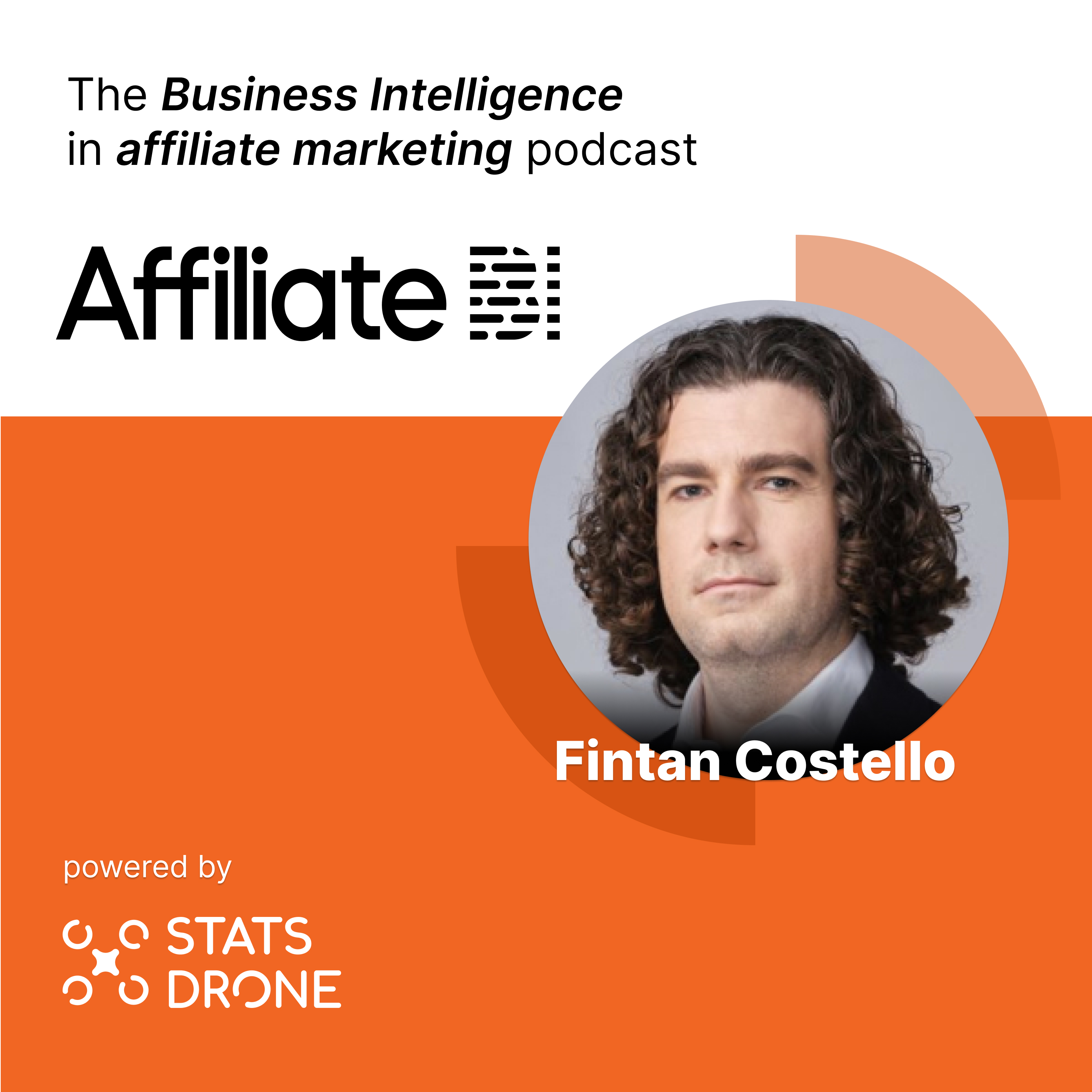
M&A, investing & affiliates, a conversation with Fintan Costello
Guest: Fintan Costello
About This Episode
Meet Fintan Costello whom runs The Gambling Files podcast and has had a successful career in iGaming leading up to an exit to the Gambling.com group. I took a page out of his podcast playbook and setup this episode without any agenda or planned questions and just talked. We covered a wide range of topics from affiliate marketing, data in the iGaming industry, investing, exits, M&A strategies and even how to create a good company culture.
Full Transcript
Show: Revenue Optimization with StatsDrone
Episode: M&A, investing & affiliates, a conversation with Fintan Costello
Host: John Wright
Guest: Fintan Costello
Published: Fri, 08 Mar 2024 07:25:00 +0000
Duration: 51:10
Speaker labels are a two-speaker split from pauses (host vs guest). Timestamps are `[HH:MM:SS]` from the episode audio. Light ASR; names and brands may need a pass.
---
John Wright: Do you know who does this really well? Investment banks, right? So if you look at like a Goldman Sachs, we're more than standing these guys.
Fintan Costello: They're really good at disrupting themselves. And cause they're, you know, very money focused and spotting the opportunities and putting resources behind whatever's making money. But when they do get the superstar trader who wants to leave and set up their own thing, they can best.
John Wright: And I think that's the, you know, so it's just like, look, we get it. You're going to go do your own thing. You know, you've got your track record. We will invest in you and we'll be your prime broker. So we'll help set your trades to provide all your extra bits. So it's new business, but also you get a stake in what they're doing. So I think it's also, there's, it's kind of more, I think if you approach it with a more of an open mindset, that's what we get it. This isn't for you anymore. You, you know, we either give you your own saying within the business, like your own little kind of skunk works. I think you crack on. Or if that's not possible, then look, you go do your thing, but we will
John Wright: invest in you and we want to be part of that journey.
Fintan Costello: I'm John Wright and you're listening to affiliate BI, the business intelligence and affiliate marketing podcast brought to you by Statstrom.
John Wright: Welcome to the affiliate BI podcast. Today we're chatting with Fintan Castello, who is the co-host of the, the gambling files podcast. And aside from that, I don't know what you're up to these days. So maybe I'll pass it back to you and tell us what you're working on.
John Wright: So first of all, John sends his regards, my other co-host on the gambling files podcast, and you're in a little bit of trouble. He's a little bit miffed. He didn't get invited. He'll get invited. But yeah, there was little, it was like, Oh, he didn't invite me. Yeah. Okay.
John Wright: And I'm going to do that. And so yeah, my name is Fintan. Um, I, what am I currently doing? I'm technically on a sabbatical.
Fintan Costello: Um, so, uh, two years ago, uh, I was very lucky to sell a company. I was leading and was a shareholder. And we went through a pretty big, um, pretty long earn out process, uh, which all, all went well, which was great. And I finished up at the end of December and now I'm, yeah, I'm reading books. I'm trying to exercise. I'm trying to do all the things I put on hold. Um, uh, sort of when you apartment. And, uh, yeah, that's, that's me. I'm, I'm on a sabbatical and just enjoying life. So you're a free agent now. How long do you think you're going to do this for?
Fintan Costello: Cause I mean, most, uh, entrepreneurs that I know, they don't really slow down too much, they always like the longest they might take off is like six months. So like, I just got to get back into it.
Fintan Costello: It's sort of, there's a couple of the assets that's definitely my instinct. Um, the, my joke is that I'm a bit like a hustle. So a well-behaved Husky is a tired Husky, right? They're working dogs kind of thing. And it's kind of me as well. So, uh, being bored really doesn't suit me and being busy is definitely my natural state. However, um, I am trying to just like not do anything and just stop and take a moment because I think that's it's bad to just fill the void with random stuff. Right.
Fintan Costello: So it's important to, um, recharge the batteries.
Fintan Costello: So it was definitely, I wasn't burnt out, but I was definitely crispy around the edges. It's my current running joke. However, the other tension is I didn't mention the word retirement, uh, to my wife and the look on her face was she, she wasn't happy with that. Uh, she's not, she's not buying into that, um, at all. So I've definitely got a clock ticking, uh, before she expects me to get back on it. So yeah, dual tension, dual tension. I'm sure you would still find your own way rather than having a, you know, the wife be like, this is pure horror.
John Wright: Oh, no, no. Yeah. Yeah. For sure. Um, yeah, yeah. Like I'm perfectly capable of filling my diary. That's not a problem. So since, since you have a podcast and it's very conversational, I wanted to kind of, uh, copy that for once. Cause I do everything pretty structured. So, um, yeah, so, um,
Fintan Costello: congratulations. I think we'll start with first. Um, the, the awards, the award in London really well-deserved to you and Darryl. I think that's brilliant.
Fintan Costello: Um, it's great to see hard work, uh, be recognized.
Fintan Costello: Um, and I think you guys are doing brilliant stuff with Stratsdron. It's that strong.
John Wright: A little bit dyslexic. Um, yeah, I think it's just phenomenal what you guys are doing. Um, and it, yeah, it's just great to see it recognized and it's, I loved the energy, the two of you brought to, uh, to London, to the conferences, the ice and IGB in London and you know, you guys are decked out on purple. Boom. Meeting people, walk in the floor. It was great. It was just, I love, I love the energy and I love the energy. It was really, really good. Thank you. Uh, we both appreciate it and it's been, uh, quite the journey. I can say from most of 2022 was extremely stressful.
John Wright: It tested the limits of our friendship and business partnership. It came extremely close to ending. And then, uh, I think what changes everything for us is that, you know, we were kind of trying to, we were bootstrapped, but we're also doing a funding round and we were kind of stressing ourselves out by having all these expenses and going, what do we do? Do we get rid of people or do we get money in the bank and we're able to kind of grow? And, um, the big turning point was a shift in mentality to go from sales led growth, which wasn't working for us to product led growth. So ever since that's happened, it's like, I feel like I've got my own comfort
John Wright: in home where it's like, my background's engineering. I think the more engineering I do, what's involved in that listening to customers and then solving problems. And, you know, as long as I've got problems to solve, I'm in a happy place.
Fintan Costello: Yeah. And I think like when you, when you fundamentally boil down what you guys are doing, it's helping affiliates make more money.
Fintan Costello: Um, so product like it sells itself, you would think. Um, so anybody, you know, if you haven't used the software, I'd highly recommend that it's, I was thinking about it the other day, um, because in the old, I was using, uh, I won't name, I was using a competitor product and switching and it becomes this, like, it must be like, what it could like going from like a horse and buggy to the Tesla. Like it just felt like just the, the, just the shift of, oh my God, like everything, like the data and the insights and everything's there.
Fintan Costello: Um, it, it's great. And I think that kind of being an affiliate, like being an affiliate is tough enough, right? There's, you know, there's a billion monkeys, a typewriter is trying to take your traffic and take your business. And there's no barriers to entry to being an affiliate.
John Wright: Um, so you literally got to wake up and beat the internet every day. Right. That that's, and it's doggy dog, right? The, the second you aren't sending traffic to operators, they stop taking your calls. And if you're sending, closing your account, closing your account in activity, yet we don't care about the tens of thousands of players you've sent us in the past or whatever the number is. Um, you know, what have you done for me today?
Fintan Costello: And not all of them, but it definitely happens. Um, you know, so if you're sending traffic and they're making money, they're your best friends and hey, let's go for beers. Let's go for dinner. What else can we do?
John Wright: Um, so it is, it is a very brutal, um, it can be very brutal existence. Um, so when there's, there's tools like this where it's like, here's the data. Here's the insights. Here's how can you make better decisions? Um, it's always amazing how much free money is just sitting there that just needs to be collected and tidied up off. We did this, or if we did that, or if we move these guys around, we can do unlock a lot of extra. Um, so something like that strong is just, you know, it's great. And it's just pays for itself. Very good.
Fintan Costello: Yeah. It's just funny. Like the more stories, the more affiliates we talk to the more of these, I call it revenue leak the more, right. Wow. Money is being leaked so many places. And so I just get excited because I'm like, we can do this all day long for years. And we probably will do it for years. So, um, yeah, we're excited to keep just iterating that concept.
John Wright: Absolutely. I mean, look, it's always the case of the, you know, the more you look into it, the more, oh, if we could do this feature and we could track this. So it's a never ending, um, thing. And, you know, for, you know, taking in an affiliate on that journey of, okay, let's just get the basics in place for you guys and get this. And then the next stage, next stage. And it, and it ultimately does end up with the kind of marginal gains and little tweaks and things of this. But it's so important to do because it's, if you're a startup, the sooner you make money, the better.
Fintan Costello: And every dollar of revenue is crucial. So it can accelerate that process. And I've, I've seen that, like that accelerating that process to like getting to break even, or I can quit my job point is super important for affiliates.
John Wright: And then when you're big, you've actually got like other problems of like, we're so big. It's hard to keep track.
Fintan Costello: Um, there's random pages sending thousands of clicks and we're making no money from it. That's ridiculous. That's so those kind of just trying to operate at scale or multiple websites or whatever as well. So there's, it doesn't matter where you are on that journey. There's very, just utilizing the data that you're generating as an affiliate is super important. Um, and there's just, yeah, free money. So we were talking about how, you know, if your revenue is trending down, you're losing, you're not the popular person. And then on the opposite end of the spectrum, I forget what the news was better collective, they raised, what was it?
Fintan Costello: A billion Danish Cronus. Yeah, which is, I've no idea how to convert that anymore. Yeah. So I'm not converting it, but the bottom line is, uh, I think it was Jesper. He said on LinkedIn that they're going to use that for M&A activity. Well, I'm like, well, that's kind of great. But I think, I don't know if you noticed this or have heard this, but in the last couple of conferences, I've been hearing that there's less number of affiliates around.
John Wright: Um, well, look, I, we were both in London. It looked pretty busy to me. It was busy, but in terms of like the London affiliate conference part and also Sigma, what I've been hearing, and I think there might be some truth in it, but I need to talk to more people and affiliate managers, but. Actually, I have talked to affiliate managers. They are saying that their databases are kind of drying up a little bit. It's basically the people that they were working with. It's like, nope, they've been acquired. They they're now part of a bigger company. Yeah. So there's a couple of, like, there's a couple of parts of that. So there's definitely been M&A, right?
John Wright: When it was being, you know, Katina really turbocharged that and, you know, they're paying the price right now, I think with the changes and everything they're going through. Um, it's, there's definitely been M&A, but there's also been, like, if you take the UK market as an example, there's been, you know, the big operators, uh, from particularly for like compliance reasons, only want to work with a handful, like the famous one was say Skybet, um, or Prokist, like that whole kind of thing where they just like sacked all their affiliates, uh, tough shit, you're writing your own, but they,
John Wright: then I don't know what the exact number is, but let's say there was like 10 big affiliates they do work with. Right. So the, the, the challenge for operators is it's not even like the 80 20 rule. Um, it's probably like the 95 five where the handful of big affiliates are pretty much your business. Um, and then the other problem is like the, the small, like in my experience and I kind of supervised the affiliate management team was the smaller that it's like sent the most emails, asked most questions, uh, were the most demanding, uh, Oh, I sent you a hundred clicks.
John Wright: Why didn't I get an FTD? Um, those, those, you've also, they, they, having a big affiliate database. Um, in theory, Oh, look, if these thousand affiliates just sent us one player each, it'd be brilliant. Um, but realistically, they can be hard for small affiliates to do that too. Cause they're still figuring out their business model and you know, it is the classic kind of guy in his bedroom or girl in her bedroom. Um, working away at the laptop. So there's a bit, there's, there's been M and a activity, but there's also been the big operators only want to work with the big affiliates because they just can't take a compliance risk in the, in the regulated markets, which, which doesn't help.
John Wright: Um, but if you look at say the U S market, I would say it's very consolidated.
Fintan Costello: As the reg, sorry, let me start again. The regulated U S market, very consolidated.
Fintan Costello: Um, but UK, there's still plenty of affiliates making money. Um, but yeah, but the, but the thing about it as well is it's also evolving. Right. So, you know, there's discord servers, there's telegram groups, there's, there's a lot of affiliates. You just don't know about it because you're not in that community. Um, so it's not like you, it's not like the old days where you just like banging into Google and whatever your search term is and right here's the a hundred affiliates that matter. Um, it's definitely also more fragmented and it's probably never been easier to be an affiliate in some ways.
Fintan Costello: Um, particularly if you're tapping into new, new channels or newer, newer channels.
John Wright: And speaking of newer channels, cause obviously, you know, you've got a podcast, we've got this podcast and I've actually seen a bunch of new affiliates kind of, or even ones that they want to get an affiliate marketing and they're like, I don't know where to get started, but I've just created this, um, this Tik TOK channel and it's got so many subs and it's all about sports and, and when I, when I do my analysis, I'm like, okay, this big affiliate group has these channels. You have these channels and they're just as popular. It's like, this is pretty easy to copy. I think it's, um, like the barrier to entry is so low now to become an affiliate. I think the only thing that's stopping people is kind of going, okay, well, what do I do? How do I do this?
John Wright: And how do I make sure I'm on the right side of compliance? So yeah, so the, the, and the thing about all this, like if you're building an affiliate business on Tik TOK, it's like Tik TOK does not allow gambling, um, you know, so there's, there is this issue of building your business in on somebody else's platform is risky. Um, but it can be done and it's, there's plenty of people who've done it very, very successfully, um, getting started is always the challenge, but it's also
John Wright: like, if you can't figure it out, like the whole point is you need to figure it out, right? I'm not going to sit here and tell somebody how to be an affiliate because well, why wouldn't I just go do that myself and I'll make the money. So I'm always wary of the guys selling the courses or the, these kind of things because well, you know, it's a bit get rich quick and just these five simple tricks, you know, blah, blah, blah, blah, blah, blah, right. Um, as he's sitting there in his Lambo, what is fake Rolex or whatever, you know, so the key bit is you have to find your way and what works for you.
John Wright: Because it is a grind.
Fintan Costello: You know, the right answer is consistency over time.
John Wright: Um, and it's just doing it for like all the successful affiliates have been doing it for years. Um, and the, the, so you have to find your way to do it because on the sucky days, you have to still do it and you have to be motivated to do it. So that's always kind of a key part, I think. And, you know, anybody promising to sell you the, the secret sauce, maybe you can get some insights from whatever, but realistically they'd be doing it themselves and making way more money. All right. That feels kind of, that feels almost deflating because that's all, it seems
John Wright: like that's what we have to do for our marketing where we actually want to build. I think we mentioned this before, uh, we're working on building ad tech that would automate all the stuff for affiliates. So of course, if we're making your job easier for it, the next thing we need to do is basically have the courses going. This is how easy it is to do. And, um, now that, that, look, that's there. Okay. So here's, here's the thing, right? There's, there's what I know that it's like, you know, here's how you do tracking, here's how you optimize a top list, here's how you, that's fine. Realistically an affiliate, regardless of what they're doing, they're buying
John Wright: traffic from one place and selling it to some, so ultimately an affiliate selling clicks, right? That's all they're doing. Like that's their business. Um, that's a bit, like it's also a little bit deflating, right? I've seen them on a click merchant. Right. Um, oh, we should get that to me.
Fintan Costello: Um, so you're buying and selling clicks ultimately. And, you know, even if you're like organic SEO, you're still ultimately buying clicks because you got to figure out the SEO and get ranking and invest time and effort into that. Um, so there's a whole kind of business side to it that definitely, I think there's, you can do that bit, but ultimately if the affiliate can't figure out how to get the traffic with the right intent and then based on the level of intent of that traffic monetize it, like that's the clever bit that they need to be doing.
John Wright: And, you know, take inspiration from others and experiment and stuff, but the surrounding bits of, and then here's how you do invoicing and here's how you build a relay. So I think there, there is a lot of stuff to kind of help them, but it's the, they need to figure out their secret sauce is my view.
John Wright: Um, otherwise what's the point?
Fintan Costello: I've had friends or different people that come from outside of the iGaming industry when they come to a conference and they start hearing the stories about how it's, it's almost like, where's the tech? Where's the innovation? They're like, I thought this industry was way in the future. And when they show up, they realize it's actually the opposite. Just wanted to get your take on that.
John Wright: Look, that's definite. So there's, there's two parts to that. Right. So yes, is the short answer. So the short answer is like, this is a very not, not very innovative industry. And we're definitely not on the bleeding edge of tech, either affiliates or operators, just asking. Part of that is just, you know, the economics of the business model.
John Wright: And there's a lot of money to be made and great margins. If you're, you know what you're doing.
Fintan Costello: However, the second part of it is due to, uh, regulations, uh, you know, Facebook, Google, YouTube, like all of these platforms, like their policies.
John Wright: And like we just talked about, like TikTok doesn't allow gambling. Right. So, you know, how do you navigate that? So there's, there's a, there's a ton of restrictions, put on affiliates and operators from a marketing perspective that other industries outside of say porn and pharmaceuticals or other kinds of like restricted industries don't have to deal with, right? So here's, here's the difference. So I, I worked for a while with, um, a Danish company called SaxoBank. So SaxoBank is based in Copenhagen, a multi-asset trading platform.
John Wright: So you can buy and sell shares, FX, EFTs, the whole shebang, right? They've been around forever. Really, really, you know, really good at what they do.
Fintan Costello: So I moved from the gambling industry to SaxoBank for a while. And we sat down with, uh, Google and our Google and Facebook reps. And guess what? We had all the toys to play with. All the data and the retargeting and the automated this and yeah, of course you're going to double click and you get full access to inventory and you can, right? It was brilliant. It was like, oh my God, this is so much fun. Um, and we could basically now, you know, trading for X and CFTs is a leverage product you can definitely lose more than you deposited. And, you know, so if we ignore that bit, but you know, it's finance and
Fintan Costello: we all wear suits and everything's fine. So the, my kind of different digital marketing teams had like full rain to kick ass and press all the buttons and use all the tools, which no gambling company, affiliate or operator gets to do.
John Wright: They don't get the full suite. Now what was fascinating was because they had access to everything.
Fintan Costello: Oh, it gets a bit lazy.
John Wright: Right. So what you end up having, so what was interesting from the coming industry was you've got to do the basics really, really well to like absolutely like bleeding edge. We will, you know, if you take an operator, we will optimize our registration first deposit, onboarding flow to an image of its life or an affiliate, you know, so anything you do, you've got to do like if you're a PPC affiliate, right? So let's say you're a PPC affiliate, you're spending, let's say in the even the U S you're spending like a hundred pounds or a hundred dollars click, the click, right?
John Wright: You're like, think of how great your, and you're not allowed to use any of the data tools available within AdWords.
John Wright: All right. So you've got a keyword, you've got a bid and you've got ad copy, right? It is the basic, like you get the most basic things within this and all your ads need to go for approval and policy restrictions and you can't say the whole shebang. So you've got to be really, really, really good at what you do with the absolute basics. And so it was really interesting for me then. So you got this, this tinsel, I hired a lot of people from a really good travel comparison website. So, you know, bleeding edge, really tech savvy, very data driven, but
John Wright: just applying like gambling one on one, I was actually able to get far more done with them than all the bleeding edge tools available. So it was this weird mix of if you could take both, you can do, you can really create magic. And, you know, and then it was this weird thing. It was like, it was the first time affiliates worked properly for them. It was the first time PPC was paying back. They started to rank for stuff in Google. So it was like first deposits were through the roof because, you know, we turned on credit cards and like just really basic stuff that any
John Wright: gamble, anybody in the gambling industry would just do like day one. Day one had a huge impact in this business because they just weren't
Fintan Costello: weren't doing the basics well enough.
John Wright: It's interesting. You're bringing all this stuff, especially outside of iGaming, because I had a chat with the new CEO of game lounge, Richard Dennis, who comes from web games. So he comes from that whole background and he said something pretty similar. He was like, the tech there is more advanced, but he basically told me that he believes that some of these companies and again, don't want to name names, but we're talking really large affiliate networks. They just have this dinosaur mentality that they've been making as much money for a long time. They have almost no pressure. And he actually thinks something similar, like good tech there in a different context will actually disrupt a lot of things.
John Wright: And there's so much opportunity. And look, let's let's okay. Let's take the gambling affiliate example, right? It's, you know, depending on your traffic source, 20, 30% profit margins, maybe 70, it can be 70, 80% depending on the business, right? That's insane.
Fintan Costello: Right. If you, you know, you go to your MBA and they're like, Oh, if the business is making 12 to 15% margin, that's unbelievable. Like a Google at its heyday was, you know, you know, 50, 60% and growing at 30% year on year. Like there's a lot of affiliates doing that.
Fintan Costello: And so you've got these incredible when they work and they've been scaled up, you've got these incredible money machines.
John Wright: And, you know, the psychology for a lot of affiliates is very different within gambling than outside of coming. So usually like the affiliate conference, right? The, the operators take the affiliate for dinner and beers.
Fintan Costello: Any other world, the publisher, AKA the affiliate would be taking the advertiser, AKA the operators.
John Wright: They'd be hosting them, right? It'd be completely like the dynamic could be completed. Like if you, if you're a, if you advertise in a, in a newspaper or by TV ads or doing any of those kind of a traditional kind of advertising,
Fintan Costello: the publisher is taking you as the advertiser. It's a very different dynamic, right? So because you've got probably outside of America, because you've got so many operators chasing a finite amount of traffic, the relationship is flipped.
John Wright: Which does distort your view of how the world should work and can make you arrogant and can make you lazy and take a lot of things for granted.
Fintan Costello: And so I think that's the, there's a part there. And then the second thing is like, you talk about like, you know, if you've been around, if you've been, if you've been doing this for however many years and on the name of it, there's definitely a few of it. It's a fall into this trap and had issues where you've got a business that's making good money, good profit margins.
John Wright: And you've grown, you've now got like middle management. All right. So if you've got a middle management, like they've got school fees, they've got a mortgage, they don't want to get sacked. Right.
John Wright: And safest thing to do is not change anything because this is working. I, I'm afraid, and it's the innovators still out, like the Christian Plaiston or probably Butcher's name, but the innovators still have it, right? It's very, very hard when things are going well to disrupt yourself.
Fintan Costello: And a lot of operators as well get into this trap where, look, everything's going fine.
John Wright: Why would we take the chance of like completely rebuilding our SEO strategy or completely changing how we do XYZ when it could work against us? I lose my job and I've got to go, you know, pay the mortgage. And, and that's a, I think that's, that definitely happens. And I could name a couple of companies very, you know, you know, who are in a very bad place right now, exactly because of that.
Fintan Costello: That's a, I kind of want to go deeper on that because we talked about innovation from a tech perspective, but you've really highlighted something that I haven't really heard anyone talk about in a conference about innovation from a cultural perspective within a company. And I think you're right. It's affiliates, operators outside of iGaming. We see it everywhere. Like we're even hearing stories about like Salesforce being that type of a company. Like no offense if any Salesforce fans are listening, but it's like when you hear about what they're doing, you're like, wow, these guys, in my opinion, are going to get beat by someone who's going to do something a little bit
Fintan Costello: innovative and they talk about innovation as if it's like, yeah, we've got this tech and AI, but it's, I don't think it's the same thing.
Fintan Costello: It's yeah, look, there's the buzzword, bullshit, bingo of like, there was a,
John Wright: somebody in their quarterly announcement very recently was talking about the fact that our AI is better than everybody else's AI. It's like, prove it. Right. I'm currently not in their job anymore.
Fintan Costello: And so, okay.
John Wright: Yeah. Let's take the innovators dilemma, right? So it's actually explains all of this. You get a core group of people who are like, right, we're going to set up this business.
John Wright: We've worked for this big conglomerate for ages and these guys are dickheads and they don't know what they're doing anymore. They're dinosaurs and we're going to go do it. And we're going to go do it differently. And core group of great people get together. And this works for affiliates, operators, agencies, as well as really common in agency land. Right.
John Wright: They do some really, really great stuff. They start growing and then it goes from the core group to a big company.
Fintan Costello: Obviously through many stages. And then like, there's the layers and the things dilute a little bit and everything just becomes a bit average. And then a core, like a group of really disgruntled young hot shots in there get pissed off and they leave and they go do the same thing. And that's really common, which is why, you know, ultimately hiring
Fintan Costello: is the most important thing.
John Wright: Um, and the hardest thing to do to like, how can you maintain that same sense of mission?
Fintan Costello: And, and if you think about it as well, like as the business changes, so like the, the core group at the beginning are entrepreneurs, right? If you're a bigger company, you don't read the people you need to run an existing business, it can be different than the team you need to run a startup. And they're very different. Like, uh, like I've seen it where like we had to introduce, uh, Jira tickets. Um, so before we got bought, we had to introduce like Jira and Jira tickets. And taking an entrepreneur and forcing them to write a Jira ticket, a user story, rather than just pick up the phone and call a developer and say, change that button.
Fintan Costello: Right. Just the watching their soul break.
John Wright: Um, as a real, like that happens, right? So there is different, like, as you get managing that becomes a, becomes a thing. And then there's other people who just be completely freaked out by freewheeling nature of we need to figure this out and make it work. Um, rather than here's the playbook and just follow the instructions and everything will be okay. So just different people for different stages of, of a, of a company's growth as well. So I don't know if there is a right answer. Um, the front, you know, I don't think anybody solved it. I don't think there's any great examples. Yeah. But maybe, maybe Netflix. Yeah.
John Wright: But at the same time, it's like the fact that you're even mindful that this is an actual thing. Like I would actually trust that. You know, maybe you've gone through this with your previous company. And if you had to do another company that you would, you would, you even understand this, but it's like I said, this is the first time I've ever heard of any company talk about such a concept then, and it's just like, as a company grows, it becomes sameness. It becomes like, here's the problems. And then, and then yeah, it's like, where's the innovation? And then we're just getting a cycle repeating of, you know, all right. So the kids grow up to get the experience. We're like, this is bullshit. Let's, let's keep changing. Do you know who does this really well? Investment banks.
Fintan Costello: Right. So if you look at like a Goldman Sachs or Morgan Stanley, these kind of guys,
Fintan Costello: they're really good at disrupting themselves and cause they're, you know, very money focused and spotting the opportunities and putting resources behind whatever's making money. But when they do get the superstar trader who wants to leave and set up their own thing, they'll invest.
John Wright: And I think that's the, you know, so it's just like, look, we get it. You're going to go do your own thing. You know, you've got your track record. We will invest in you and we'll be your prime broker. So we'll help set your choice to provide all your extra bits. So it's new business, but also you get a stake in what they're doing. So I think it's also, there's, it's kind of more, I think if you approach it with a more of an open mindset of, look, that's what we get it. This isn't for you anymore. You've, you know, we either give you your own thing within the business, like your own little kind of skunk works, I think, and you crack on. Or if that's not possible, then look, you go do your thing, but we will invest
John Wright: in you and we want to be part of that journey. And I think there can be ways to solve it and turn it into a win-win.
Fintan Costello: Yeah. It sounds like so simple. That's like, why wouldn't everyone do this? And I'm sure this does happen within our own industry, but we're just not hearing the stories as much or, uh, like, I mean, the whole, um, MNA space in iGaming is interesting. The, the investment groups are interesting. It's like, you look at tech and most of the tech companies, I think it's the, like on NASDAQ, I think it was like 70 to 80% have their own VCR. And it's like, I, I just run into so many people. It's like everyone that got bought by Katenna Media, I've, I've talked to, like I pitched it. I was like, wow, it's like, there's so many of them and you just start adding up all the money and you're like, this is crazy.
Fintan Costello: Like, no joke. I think I talked to five people that exited from Katenna and I said, like, wow, this is bonkers. They, they, they bought a lot of stuff. Um, and you know, it's, I'm not, I'm not in the details and I'm literally dead, but I think, you know, MNA is really, okay, so look, I think, you know, global stats says that 70% of MNA deals fail.
John Wright: Yeah. All right. So something like that, like it's a huge percentage, right? Um, it's very rare that there's an MNA deal. So when you think about it, it's very rare, there's an MNA deal that works. And then it's very rare. There's an MNA deal where everybody walks away happy.
Fintan Costello: All right. And it's one of the things that I'm very proud of where we've, you know, we landed the ship or whatever you would land on the plane and like everybody walked away happy.
Fintan Costello: And both sides and alive and on really good terms and you know, it's great. Right. That's, I'm very, very proud of that. You know, it's a big kind of tick to box.
John Wright: Um, the, the, however you have to walk into MNA, you have to be really disciplined. Right. If you're, if you're the buyer, you should be really disciplined because like I'm an optimist, right? You can show me any business, right? I'm like, ah, we just did this, this, I'm sure we can make it work. Right. I'm an optimist and I can be overconfident in my own abilities. And I've got lots of like ultra marathon stories where it's just like, I've completely underestimated the actual, oh shit, that's what a three and a half thousand meter mountain looks like. It's quite a lot.
Fintan Costello: Um, so you have to be super disciplined and you, and I think Warren Buffett talks about it where it's, his job is actually saying no to things. Right. Yeah. It's not about saying yes. It's about saying no and being very disciplined about what you do say yes to. So that's part of it. Um, obviously it was the whole like negotiation and haggling paperwork, due diligence process.
Fintan Costello: And you have to really understand the business you're buying, um, to make sure you're doing the right deal. And particularly where it's an area, like what you can see with M and A type stuff is let's say you're a really good SEO, let's say, good for the right. You're really good SEO business and you're now buying a paid media business. All right. So if everybody in your company is like SEO experts, now you're buying paid media, like a PBC business or something, it's completely different. Like it's, it, it, their cousins, but it's a completely different business, completely different business. And so being able to really get under the bonnet and make sure they're not
Fintan Costello: cookie stuffing or doing dodgy stuff where anybody who's into paid media would immediately be able to spot.
John Wright: It can be, um, can be difficult, right? So you can end up like missing things because it's outside your wheelhouse, uh, quite easily.
Fintan Costello: Um, and then, and then there's an integration process, which is it's, it's own, it's whole own thing. I'm like, okay, how do we, we've bought this now? What, how do we, you know, and having like dedicated resources to manage an integration and do that in a, in a great way is, is it's again, its own skillset. So there's a bunch of, you can't like, so, you know, we talk about getting famous for like buying a lot and they publicly talk about the bottle, a lot of stuff and didn't integrate. So 10 different, however many different tech stacks and different CMSs. And it's literally now the last quarterly, they talked about like, oh,
Fintan Costello: we've now got a unified CMS.
John Wright: I was like, holy shit. Like that took a while. Yeah. Now, you know, they've also like divested a lot of assets. So there's a lot less assets to integrate. So that probably makes it a bit easier, but there is this kind of like, holy shit, lads, that's probably not the best way to do it. You can, they, and this thing, you could argue, well, it gets every team flexibility, blah, blah, blah, blah, but the duplication of resources, like, you know, big part of M&A is like, can we cut costs and raise revenue? Um, so you, you, you need to approach it like a grownup and you need to, um,
John Wright: think about caters, this cost, but then what's the integration costs and what's the ongoing to make this a success as part of our business. And so there's a long return thing, which I think it can get overlooked, particularly when, you know, everyone's optimistic and entrepreneurial and let's go make this happen and this will be brilliant.
John Wright: So yeah, but it can be done. And I've, I've literally firsthand experience of seeing them in a really great way, um, but not everybody does it. Yeah.
Fintan Costello: My previous guest who I'm going to be publishing this week is Mark Wright, who won the UK apprentice and we're having a couple of interesting chats and he had this interesting comment about how small companies, they stay small because they don't do these little things that kind of help them get to the next level, I'm just wondering your, your take on a comment like that.
John Wright: Um, so yeah, so it's okay. So I can totally see why because we are like, I, I show up with a lot of baggage. Right. So if I'm setting up a new business today, right. So I've done things in a particular way in my past. So like we talked about, like I've never raised capital.
Fintan Costello: I've never done like an investor pitch ever. I've always been scrapped.
Fintan Costello: And so immediately that would be my kind of, um, default, oh, well, I'll, you know, how can I make this myself?
Fintan Costello: Um, and I'll get the credit card out and I'll buy to the main name and, you know, hire, you know, do all that kind of stuff from, from my own pocket.
Fintan Costello: And so straight away I'm showing up with a set of biases.
John Wright: And every, and then there'll be other people who like, particularly when you look at the U S um, like there's so many idiots running around with PowerPoint to try and raise like 50 million. Um, some of them make it look easy too, which is crazy. Yeah.
John Wright: I've seen some shit.
Fintan Costello: There was one I'm like, all right. So your forecast says you're going to make however many, whatever the number was. Okay. Let me show you these three publicly listed companies, uh, who operate globally and how much money they're making.
Fintan Costello: And you're going to make five times that.
Fintan Costello: And he didn't even blink. It's like, Oh, maybe I have to reassess some assumptions.
John Wright: And so there's, you know, and there's two ends of the extract, right? And the right answer somewhere in the middle, you know, it's better to raise money if you've got traction, it's better to raise money. If you've got like a proven business model, it's better to raise money. If you're profitable.
Fintan Costello: And then there's a, there's a, there's a spectrum there. So I think if you, if you think it in terms of biases, so,
John Wright: if you are running your business and you know, you're paying your bills and you've everyone's happy and you know, you're making enough based on your set of experiences, you, you know, or I would approach things in a certain way. And it's kind of, you don't know what you don't know, which is why one of the things I'm, I'm really, I think if I was to go again and do something new, I would immediately set up like a, a little kind of advisory council.
John Wright: And, and bringing in people like who are the opposites, right? So have experience raising money.
John Wright: What else?
Fintan Costello: I don't know if it would be tax optimization would be a great one.
John Wright: If you're dreaming, let's dream bigger. And whatever the skill sets I feel I'm knocking or just different experiences and stuff. And I think having people you can turn to go like, here's where I'm at.
Fintan Costello: And being able to bounce those ideas because it can be lonely.
John Wright: And having, you know, or obviously people have boards and investors and these kinds of really thinking about those things. And I think I would probably do something like that to just make sure I'm not stuck in a rush. Yeah. Or I'm like, Hey, Finton, you're, you're like, you've got a hammer and everything's a nail where actually, if we did this or the, this is a way this, this could be done to make your life easier is I think really important and definitely something I would.
Fintan Costello: Yeah. And funny Mark Wright suggests the same thing where he's like, I know this sounds like a kind of, uh, what's the word? It's like trivial or kind of, you know, educational or by the book, but he's like, I recommend you set up a board. Um, like, you know, as important things that a company should do. And, uh, as a means of like not having that small mentality. And I think to be devil's advocate, I know like this is my own experience is I think I like for me and my business partner, I think we need time to realize who would we want to have on the board or our board, hypothetically. We think we actually think it's a good idea to do.
Fintan Costello: Uh, but we think we've needed time to see people out. Like the people that have basically said, we'll invest, but we're getting a board seat and we basically said.
Fintan Costello: Either no, or we need time. And as time has gone on, we're like, okay, we dodged the bullet there.
Fintan Costello: Yeah. Look, which is why I would talk, call it an advisory group or something rather, because the board obviously has very legal kind of things. Um, definitely date before you get married. Yeah. Um, there, there is a lot of people knocking around who are very good at getting a percentage and that's it. Yeah. Um, so, or, you know, optimizing for the role case. So I get a percentage here on that force these guys to buy services for my other company and I'll, you know, they're all, you know, they're, they're not, you really want people to run team John or team.
Fintan Costello: Like that, that's the key bit. Um, I'm like, they're, they're definitely out there, but I, anybody should navigate it very carefully. And, you know, reference check. Yeah. Big time.
John Wright: Big time. Just stay from those, the rush to state, um, super easy.
Fintan Costello: Yeah. I know just from, uh, the reference checks, I've, you know, say, uh, dodged a few bullets and yeah, just, uh, been trying to get a, I think maybe a common thing I've ran into is people that act like they've, they've got time for the calls, but then you're like, they're super busy. And you're like, I don't think I'm going to be getting the time after. It's definitely not there. Yeah. And that's the thing like, so it really depends like where you're at and what you need. So if it's some of the, you know, like I need, you know, we're at a phase where we need a lot of, which is why I think the little advisor, rather than making a board, little advisory group, because as your business goes through
Fintan Costello: different phases, like bringing people in and out, um, I think it's important because it's like, okay, we're at this like really kind of growth phase. And so we need people with a lot of experience in that area, or we're now at this slightly more mature phase and we need a different skill set where maybe engineering becomes a far more important part of our business or whatever it is. Right. Or like, Hey, you know what? Fuck it. We're sick of this. We're ready for, we're ready to sell. Right. So again, the same way we talked about like different employees, different stages of the business, different advisory type people for different stages of, of the business, I think is also important.
Fintan Costello: Look, there is people who can do multiple boxes. Um, but sometimes it's easier just to get the specialists. Like you just go to your account and just to get your books done. Not to also do psychotherapy. Right. And like, it's just not their thing. Yeah. I wouldn't trust them if they do both. That's a, that's the thing where you find people that do five things. I'm like, I'm definitely not sold on one. Yeah. So typically they've got their core strength and then they might have a, you know, brought that kind of T shapes kind of thing. So they're a bit light in across a bunch of things, which can be useful, different perspectives, but they've got their core thing. Um, but it's also like, also thinking about it for your personal life.
Fintan Costello: Like people who you can talk to for everything else, you know, your own kind of personal board of advisors. Um, and that can be super useful too. There's, there's a couple of books about it, but I found that kind of like being able to turn to a few people and I'm like, you know, like I'm a father and my husband, I'm, you know, I'm trying to do other stuff as well. And how can I do those things better? Um, and that's been super beneficial. Okay. Um, so it works across like, you know, I want to get fitter. I'll go get a personal trainer and let's just go get fit.
Fintan Costello: Um, and it can, it can work if, yeah, it can work in multiple ways, um, which is great. And it's, look, it can be uncomfortable. Um, but that's part of it. Like it's challenging my thinking and that kind of moment where you're like,
John Wright: oh, you're completely wrong. And then about a week or so later, you're like, actually, you know, well, I think there's something in that. Um, and that's, that's all part of it too. Yeah. That's cool. It's, I've actually done a men's group where you're able to chat about the personal stuff. So it's, uh, it's not even about the business stuff. I mean, we can do business chats and advisory all day. Um, you know, I've done psychotherapy and those little things that people kind of look at and go, Oh, you have to be kind of weak to do that. I found that's given me a lot of as I, I call it a superpower. It, there's nothing weak about it. Like, first of all, everybody should do it. Right. I've reached everybody should agree. Right.
John Wright: If you need a driving license to have a car, like, like, as a, like I do therapy with my wife as, as parents. Right. Because again, you show up with a lot of baggage from your childhood about parenting and, and then parenting as a, as a team. And then, you know, what's, what are we just projecting onto our child versus what's actually, you know, it's just, just that alone is phenomenal.
John Wright: Um, and it's rare. Like I'm just a better person is the only way to describe it. Um, I'm such a fan.
John Wright: Um, all of it. I think there's nothing weak about it at all.
Fintan Costello: Yeah. And, you know, just to wrap this up, um, you know, I'm taking away the key insight from this chat where I've got a lot of notes and I definitely would love to do this for another hour, maybe another show. And then, uh, obviously I have to get John in separately because I know he's a little, but heard about that. Um, but no, going back to that key insight, I just found it really interesting. It's the emotional intelligence of having a company that starts as innovators and then becomes corporate. And how do you keep this drive and energy going? It, it seems to be a common problem that hits everyone and the ones that find a way to solve it. They just seem to be the ones that they don't stop.
Fintan Costello: They just keep going. Yep.
John Wright: Yeah.
Fintan Costello: Um, yeah.
John Wright: Awesome. So Fintan, thanks so much for doing this. How can people get a hold of you if you want them to get a hold of you? Uh, LinkedIn is probably the easiest, uh, Fintan Costello. Um, yeah. And then we'll also include in the show notes, the, the link to the gambling files podcast, which is one of my favorites. And I like how you have it set up where it's just purely conversational. I'm mostly the opposite, but today I just figured, okay, I'll write a couple of notes and, um, yeah, it's always interesting to, to not have a plan for an, for what's going to come out for the insights, but this one was, uh, yeah. I'm, I'm pumped about, uh, some notes and definitely want to chat some more. Brilliant.
John Wright: Thank you so much for having me.
Fintan Costello: Thank you for tuning in to the affiliate BI podcast. I'd like to take this time to ask for small favor, to leave a rating and review wherever you listen to your podcast. That helps us expand our reach to rank higher in podcast directories and reach more listening.