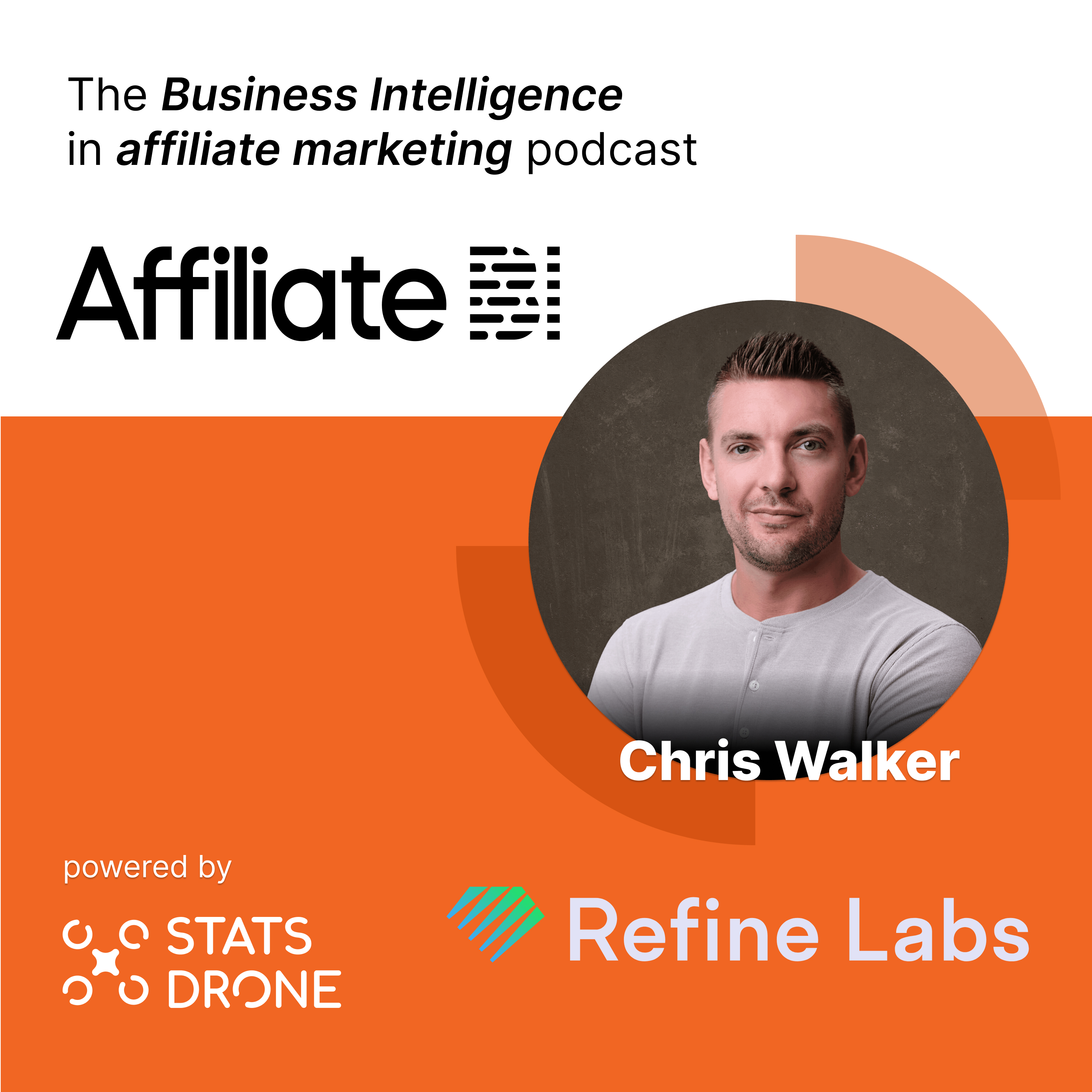
Capturing demand in affiliate marketing with Chris Walker from Refine Labs
Guest: Chris Walker
About This Episode
Does the knowledge that Chris Walker teaches in B2B marketing, personal branding and demand generation and capture transfer over to affiliate marketing? I thought it would and there was only one way to find out.
I asked Chris Walker, CEO & founder of Refine Labs, some tough questions about his take on affiliate marketing and if the same principles in B2B marketing can apply to B2C affiliate marketing.
Time stamps
0:00 - Introduction
01:31 -Chris Walker
02:41 - Self Attribution in B2C space
04:06 - A huge miss in the use of data
05:20 - Companies should know about demand capture but also about demand creation
07:19 - AI tools and automation
08:15 - Advertisement vs word to mouth
09:54 - Opinion leaders vs Affiliates
11:24 - How to find your purpose
12:59 - How your mindset influence your opportunities
17:40 - Owning an audience
20:18 - Linkedin, YouTube, TikTok, Podcasts and Affiliate Marketing
22:34 - How to look and use data
24:45 - The future of affiliate marketing as it intersects with business intelligence
27:05 - How to contact Chris
Let me just say I was blown away at how much Chris seems to know about marketing in general. He might not work in the affiliate marketing industry, but if he were to ever cross over, either we are doomed or it would be something to celebrate.
This podcast is beyond insightful and you gotta listen to this one.
Chris is also the host of the Revenue Vitals podcast which is probably the number 1 B2B podcast out there.
Full Transcript
got a little secret for everybody uh maybe a hundred years ago people bought through word of mouth and referrals and guess what today it still happens just it still happens and it's the biggest driver of business growth and it's the biggest driver of lowering customer acquisition costs and it's a signal that you're doing a lot of things right the difference is that word of mouth has fundamentally changed over the past 20 years especially over the past five with the dramatic scale and maturity of the internet
so in 1995 you could just tell your kids your your kids friends parents about the thing that you like at the t-ball game um and now 25 years later you could post it on LinkedIn and a 100,000 people are going to see it within the next hour you go viral on Tik Tok and 8 million people see it and drives incredible business growth and that's happened over and over again I'm John Wright and you're listening to affiliate bi the business intelligence and affiliate marketing podcast brought
to you by ststone welcome to the affiliate VI podcast I'm chatting with Chris Walker who's the CEO and founder of refine labs and he's also the host of the revenue vitals podcast which I'm an avid listener of he's got over 100,000 followers on LinkedIn and Chris uh welcome to the show John thanks for having me an interesting topic here so looking forward to uh seeing where this takes us awesome me too uh first question uh for people that are in phet marketing that don't know you
too well what do you do at refin labs and tell us about your company uh hey everyone my name is Chris Walker for those of you that don't know me I'm an entrepreneur a business owner a marketer A salesperson when you own a business you kind of do all the jobs um and so I find myself to be just a well-rounded entrepreneur and business person the way that I've come up to that stage is through product management and marketing and operations um and so that's sort
of where my background leads but uh in general I've built an eight figure company we have a large team we work with more than 250 B2B SAS companies we've been in business for about four and a half years um and now we're moving into the next phase where instead of just like seeing the pattern at 10 companies in a row and meating that back which is why my message resonates so much with the market is because I'm not making this stuff up I just see it
in real life see the patterns and then recognize that it applies to a lot of people um and now taking that to the next level by leveraging uh scientific principles and data to actually demonstrate these things to Executives and investors and leaders in a datab backed scientific way that hasn't been done before that gives people confidence and Clarity in what they should be doing in their go to market okay that's going to set up a future question uh but I'm going to jump into the next
one which is in the B2B space you're credited with coining the term self attribution as a smarter means of tracking leads and sales do you think this concept could be applied to the b2c affiliate marketing space where the majority of the industry heavily relies on the cookies and last click attribution models um so just to be clear I didn't like invent this concept uh companies both B2B and b2c have been doing this for decades um asking how did you hear about us collecting information uh directly
from their Target customers to determine or at least have another input of data to determine uh what's working and what's not and how to allocate Investments um I don't believe that this is necessarily a better way than using digital touchpoint attribution I just think that it's a different way that gives you an entirely different view um and when we think about driving our Market strategy I think we need two things we need inputs based on standardized data that everyone in the executive team can look at
and everyone on the downstream team can look at and say we all agree on these numbers just like we all agree on our p&l um and then we need customer data we need direct information from customers through primary market research through self-reported attribution through win loss analysis through asking uh on the first call in sales meetings and other fors of primary market research where your customers feed you data about what's working and what's not and I'm just calling out out to all the B2B companies that
this idea of primary customer data and using it to drive your go to market is basically not happening right now companies use customer insights to build their product to determine the product road map but they don't do it to dictate how they make go to market decisions which I think is a huge Miss um and another reason why a lot of B2B companies all do the same dumb [ __ ] because it all revolves around the one sort of myopic measurement model that they use using digital touch
Point attribution whether they use multi-touch or a u shape or a w shape or first touch it doesn't really matter it's just missing a lot of key elements that don't come directly from your customers um and so could you use this in the affiliate space like I think yeah you could I think traditionally people use either coupon codes La last click attribution things like that um I think that you could do it but I also believe that um self-reported attribution or how you hear about us
is typically going to tell you what created the demand not what captured the demand and so Affiliates I find to be you know they can create demand but a lot of Affiliates are are more in the demand capture game um and so uh depending on sort of where you play in that space like influence I think if you did influencers on Tik Tok and Instagram you would get that stuff in self-reported attribution for B Toc I'm not sure you would get it from an affiliate blog
that's linking out to get an affiliate commission so it really depends on your use case I I think you articulated perfectly it's actually Affiliates are part of the demand capture um and maybe that's why might be helpful for companies to actually put that field in their place where it's like we know the coupon code is going to say you came from the affiliate but what was the leading driver was it your friend saying hey I heard about this coupon code and I actually believe this is
um completely missing in affiliate marketing I know for a lot of the tracking tools that exist I can't think of a single one that that really has these things built into it unless it's the the operator side actually putting that in there yeah I mean uh affiliate by definition is highly transaction um and so in a transactional model you typically use a transactional measurement model which is like hey I referred you this customer you use my coupon code or different things like that and if uh
like a mtech let's just say like six cents hired me to do that [ __ ] for them um I would I wouldn't uh none of my stuff would ever show up none of my stuff ever shows up on last click attribution or through a coupon code or something like that because I don't operate operate operate transactionally um and so all of stuff would be more equivalent to an influencer or a key opinion leader that you're going to need a different measurement model to use um which is
why companies struggle with a partner Channel Affiliates could be considered one stream of a partner or a near bound motion um and B2B companies struggle with it a lot because the measurement model was only Built across like transactional demand transactional demand capture that makes sense uh do you think there's maybe a way um like my thought process on this is that there's a lot of companies that when they're dealing with millions and millions of customers or signups that having that single field is kind of cumbersome
like you're asking for data that's not going to be consistent but I remember listening to um some other podcasts where uh the company lavender where they're talking about what were some of the common attribution answers and a lot of them had the word will in it uh for will aen so I'm just wondering if you think maybe we're already at the place where AI tools could possibly sipped out like millions and millions of rows of data and maybe actually come up with better insights than what
we can do like we don't want to do that manually of course yeah like as a rep one before AI was on the scene in 2021 middle of 2021 we started doing it we used automation that looked at and if it Rec if it said Chris for Chris Walker in it it would automatically categorize it in that area and so we had like manual automation or automation doing this in 2021 and all the way through till now now with the rise of AI the ability to
analyze all that data and conduct sentiment analysis and things like that and not maybe presented in a way that Executives feel is equivalent or at least believable um as the same way they look at their visible report which is in other ways flawed um and so yeah I do think that uh AI will easily be able to do do do this one of your podcasts I remember listening to a story how you said uh like hundreds of years ago people bought from each other through referrals
Word of Mouth um and I'm just wondering if maybe you think people today are distracted on the tech side I know in B2B uh everyone's kind of jumped towards the tools where they've ignored that Personal Touch of like where did you really hear about us I'm just wondering if you think um maybe affiliate sites kind of have a bit of that problem where some of their sites are maybe too corporate or too soulless and they're not really putting a person or um something meaningful behind it
got a little secret for everybody uh maybe a hundred years ago people bought through word of mouth and referrals and guess what today it still happens just it still happens and it's the biggest driver of business growth and it's the biggest driver of lowering customer acquisition cost and it's a signal that you're doing a lot of things right the difference is that word of mouth has fundamentally changed over the past 20 years especially over the past five with the dramatic scale and maturity of the internet
so in 1995 you could just tell your kids P your your kids friends parents about the thing that you like at the t-ball game um and now 25 years later you could post it on LinkedIn and 100,000 people are going to see it within the next hour you go viral on Tik Tok and 8 million people see it and it drives incredible business growth and that's happened over and over again or you post a podcast and people listen to that podcast for two years and over
time start to really believe and trust you um and so the idea of Word of Mouth has fundamentally changed over the past 20 years which is the core difference um I really think that we need to make a split here when we talk about this between influencers or key opinion leaders leaders and Affiliates they're really two very different things with different motions that require different ways of measuring success um Affiliates play at the bottom of the funnel and try and make a small transaction fee for
a referral um influencers start at the top and create the demand that drives accelerated business growth and accelerated Word of Mouth Affiliates are not driving Word of Mouth they're not uh you might get a byproduct of word of mouth when they go through and affiliate buy the product have success when they talk about it but you'll rarely get the scale of Word of Mouth that an influencer or key opinion Le a key opinion leader creates um that ultimately creates demand and drives business growth so I
think for uh for the affiliate game I think that you have to be thinking about do I need business expansion do I need to expand my capabilities and services in order to not just play at the bottom of the funnel when someone searches this category and I'm going to continue to try and win on Google being a top three results so they can click my link and I can get 10% of the sale and instead of playing that game which overtime SEO is going to change
and it's going to leave your business your business your business vulnerable um and so knowing that do I need to shift to a add a different service or add a different layer to my service that includes demand creation and influencing people before they're considering buying before they're going to Google um that would be if I was in the affiliate space that would be my game right game right game right now awesome uh next question is kind of going in a different direction and I've got an
engineering background so I like to ask this one where you've gone to school for engineering and you've pivoted in your career a few times where I think you've realized what you were good at and what you like to do and you moved away from engineering and I'm kind of wanting to ask what advice would you have for people that kind of struggle to find their purpose or find their mission statement or find something else of you know what they think they want to do um yeah
so first off I believe that I continue to use my engineering skills and degree every day right now I'm looking at statistics I'm re-engineering how companies think about their data model inside of their CRM how we use that to create large scale statistics that create data back insights that help us make better decisions and so I still think that all those things that I learned are directly applicable to the things that I'm doing I'm just applying them in in a new or untraditional way to the
B2B go to market space um and uh what was and then it was what was the second part of the question it's just like how people kind of navigate like uh like in my experience I mean I've been an engineer but I've done non-engineering stuff for about 20 years and I'm now going back into it with my own company and you know when I listen to your story I Mike I wish I kind of figured that out sooner than later and I think there's a lot
of people that just go through life struggling to to find what they really want to do and they just stay unhappy but they can't really get out of their own head and focus on uh just kind of look at the big picture and go what what else should I be doing yeah I think this is uh this is a multifaceted question multifaceted question um a couple things that I'll say here I think that uh your like mindset and your perspective across the world drives or influences
the amount of opportunity that you see around yourself um and so when I started to like break out and really get into like my own my own space where I felt very comfortable and where I think my talents aligned with a really important business problem was when I uh when I stopped taking or stopped thinking about my life traditionally like I need to go through this my career ladder must be like linear where I go from manager to senior manager to director to senior director to
VP to senior VP and then 20 years later I'm a CMO um and that's just like not the path that I would take and if people look at my career path they would literally be like I like what is this guy doing this this career path doesn't make sense first he's in manufacturing then he's over here doing product management now he's doing demand gen now he runs a company what does this guy think he's doing um and in reality those multitude of exper experiences in different
Industries doing different jobs sets you up to be a much better business leader a much better executive a much better leader than someone that goes through that traditional career path it could specialize and tries to grow my my own perspective I also think that you get there a lot faster um and so I think one is about uh not following what the societal Norms tell you to do and start leaning in a lot to the things that you think are right or the things that you
um believe in um so that's one I think another another thing is that uh like I I knew what I wanted to do from the beginning when I was 22 I was like I want to own my own company by 35 I ended up doing it at 28 so I did it much faster than I originally expected which was probably another learning but I knew what I wanted to do um and so my when I was intentional when I worked at the companies about the things
that I was doing and what I wanted to learn and how I could get those different skills and how I could find my way into executive meetings when I was 23 years old and start to observe how people are making decisions and understand Finance I built a couple of e-commerce companies on the side between 2012 and 2018 um that created a lot more experience in being an actual entrepreneur where you make like fundamental mistakes in the business and then you learn from them that you when
you start your real business like I did at refin Labs you don't make fundamental simple mistakes like cash flow management and other things um and I think it's about having that like having that drive and having that Vision what do you want the your life to look like and then knowing that and being intentional about the professional situations that you put yourself in what you do on the side as a quote unquote side hustle you can start your own business you can watch Netflix for six
hours every night you decide um and neither one is right or wrong for that matter it's just about doing what you think is right for you um so those are some of the the things that I would say that's awesome uh in my experience I mean I graduated from engineering and then I got into professional gambling so you want to talk about going off on a tangent and everything you said is uh pretty interesting and uh I can reflect on that of taking you know a
good 20 years of doing different jobs and going I know the skill is helpful doing SEO doing design doing conversion rate optimization but it was uh luckily for me I kind of found a a passion project that took that experience and said I don't want to do these things full-time but uh I do think they're valuable and things that I can build upon along the way yeah and and having the um the confidence I think is what it is having the confidence to go and do
different things that you've never done before like figuring out how to do lean Six Sigma when I was 23 years old or how figuring out how to launch a product when I was 25 when I'd never done it before and being able to do that get the learnings know that you can do it and figure it out um I think that having that uh resiliency and openness to new things is really important I think a lot of people think that when uh they go and do
something new that immediately they're going to be good at it or that or that if they're not good at it that it's not meant for them everybody sucks at everything the first time they do it sure people have natural talent and size and skills and things like that but everybody sucks the first time they do a lot of things um and so being able to have that mindset that I can go out and do this I'm going to suck at the beginning but if I stay
at it I'm going to be able to figure it out um I think that that having that mindset is critically important I use that in all different areas of my life currently as I try new things recognizing that I don't have it figured out yet things aren't going to go my way sometimes I'm going to quote unquote fail AKA do something and get a result and learn um so again it all comes back to mindset and and and perspective I've heard you push back on people
questioning if sh if you should have like an owned audience say over a LinkedIn audience where I've heard you say something along the lines like you wouldn't be as well known on LinkedIn if you hadn't have uh made that risk so I kind of want to get your take on own audiences for both B2B and what what do you think about B Toc yeah just to be clear the people saying like don't rent your audience from LinkedIn build an owned audience are the same people that
own the platforms that you build your own audience on and therefore their position is clearly biased the real answer is both um I have 130,000 followers on LinkedIn probably more than that now I have uh two million downloads on our podcast over the past four years um and the reality is that the people listening to this podcast that know me would never know me if I just built a [ __ ] email list and wrote blogs you would have never discovered me and it's a whole different game
and so and so all those followers on the quote unquote rented channels which are not rented um they're owned I own my LinkedIn profile um just like like an email database and on the email database side we have 50,000 person email dat database and we use that to get people to events and send out new information keep people up to date and things like that email just becomes another distribution Channel just like LinkedIn is for Content those distribution channels have different Dynamics emails changing just like
linkedin's algorithm's changing like email open rates continue to decline so much spam coming out of sales engagement platforms that like reply rates and response rates and all those things are going down more things are hitting spam the algorithms in email are getting better it's the exact same [ __ ] thing as a LinkedIn audience except that you can track whether they opened your email or not personally so I feel pretty passionately about this that the the real answer is both it's not either or um but you'll never
get the like big successful email audience if you don't use the other channels to create attenion where there's significant reach the difference between email and Linkedin is that in 2019 when I posted on LinkedIn a million people saw my post and that doesn't happen in email I don't send one email and then people when I have no followers they forward it to a million people it doesn't work like that and so you need to understand the different use cases for for these two different mediums and
understand that they're just they're simply both just distribution channels so that's what I would say there that's a very compressed uh personal branding master class right there uh on the topics of LinkedIn YouTube video and podcast do you think these channels are going to have more power in affiliate marketing um yeah maybe like uh I I think it's hard to say let me talk about some of the things that I would say um so YouTube shorts is becoming a powerful SEO engine uh Google is showing
YouTube shorts at the top of search rankings to the level where we do zero SEO at my company and I'm showing up number one on key terms like sales velocity versus sales cycle length um do using and the what shows up is a YouTube shorts video and YouTube owns shorts which is owned by Google who owns the the SEO um and so that's one thing to be aware of is that YouTube shorts become getting more put into search less it's not all blogs anymore it's a
lot more content coming from other owned properties that Google owns um I think that uh YouTube uh as a regular regular channel landscape YouTube desktop version more than shorts mobile version is a strong affiliate Channel and always has been you can get that you can do like sort of product features you can do call to action at the end you can get a lot of people to to watch a video and then link out that's a core uh part of an affiliate motion um Tik Tok
can be an interest like all these different social media platforms with like uh content based algorithms so content based on the interests of the content rather than the followers can all be great mediums to get reach and awareness um and the fact that it's now based on the content that you publish not the followers that you have means the people that see the content are actually interested in it um and so I think that's a really uh a really interesting development in how social media Works
traditional platform like LinkedIn hasn't adopted that yet but if you watch Tik Talk's doing it reals is already in there um shorts is getting there if not there already um LinkedIn will have to make adjustments to their algorithm just based on how all the other platforms follow they'll probably be two three 5 years behind so people don't need to rush out and try and solve this right this right this right now uh coming towards the end in affiliate marketing there's a lot of people on the
affiliate side or Publishers as well as the operators and the affiliate programs that I believe are not using data to their advantage uh they're not looking at things like earnings per click they're not looking at conversion rates and they're not looking at like data in a detailed way especially from an attribution point of view I'm assuming you see the same thing on the B2B side and I'm just wondering what's your take on how how to get people kind of looking at data in the right way
um and stop them from having just analysis just analysis paralysis um so I would say that everybody's looking at data in some way like I I think that people listening to the podcast uh at least the people that I interact with in B2B like if you said you're not looking at data they would be like you're wrong I look at data all the time the question is what data are you looking at and how are you looking at it um the big difference between B2B and
B to C for the most part is that in B Toc a conversion is a sale Somebody went in there put their credit card in checked out and you received money in B2B a conversion is a form fill it's intent data coming from an ABM platform it's somebody registered for your event it has it's so far away from an actual transaction in B2B that people over optimize for the event registration or the form fill not the actual and result um and so that's the core the
core issue that a lot of B2B companies have is that they use models and Frameworks and ways of thinking that come from affiliate marketing or media and publishing companies that make money based on Impressions and add revenue and B Toc companies that sell $60 shoes and then take those best practices and try and do that for their 100K ACV cyber security platform and no [ __ ] it doesn't work because buying $60 shoes as one person versus buying a $100,000 cybercity platform across an Enterprise with you know
five s 10 different influencers and decision makers in that sale it's an entirely different motion and we need entirely different quote we need entirely different best practices when we think about that last question is what do you see as the future of affiliate marketing as it intersects with business intelligence um I think there will always be a place for affiliate marketing but I think the more powerful of uh of that would be influencer and key opinion leader marketing at this point I think that like affiliate
marketing's super uh and still people are making money on it today but like crushed in the early 2010's Google ER Google SEO era where you just rank you make a list of the top five things you link out with affiliate links and you make that Revenue as people get their information in different places other than search which is the same thing that's happening in B2B right now is that B2B strategies are all built around how just built around Google from a digital standpoint um where all
people are actually getting their information not going to Google and saying what should I buy for this anymore top five things for this like when I make that search now I go to Tik Tok and I search that best top restaurants in Austin um be best pairs of shoes for you CrossFit stuff like that I make searches on that on Instagram and Tik Tok now and I'm not the only one um and the reason is because the content is better and it's more accurate and it's
more it's more informative than the blog and a lot of the people that are on Tik Tok doing those things are not making 10% when they sell it to you so it's more honest um and so I think that there I think that's what I see in the in the space is that there's based on the movement of how people get information to make all types of different purchases and that move moving away from search and becoming less transactional I think that we as quote unquote
I'm not of an affiliate marketer as affiliate marketers need to think about how they move that transition to continue to be at the place that that is the critical part of a buying decision which happens other than Google most people that get to Google Now have already made their decision they use Google for navigational search how do I pass through Google to get to this website that I already wanted to get to um and so I think people need to understand and recognize the Dynamics of
that of where the information come from comes from and try to be the most value part most valuable part of the value chain um which is more further Upstream now so you might not be in affiliate marketing but if you ever come over to this side I'm pretty sure you're going to do extremely well uh Chris thank you so much for joining the podcast how can people get a hold of you uh you can follow me on LinkedIn or Instagram Chris Walker 171 you can also
follow the B2B Revenue vitals podcast on Apple Spotify or anywhere else the podcasts are published awesome I listen to that podcast all the time Chris you uh thank you so much for this thanks thanks for having me okay thank you for tuning in to the affiliate bi podcast I'd like to take this time to ask for a small favor to leave a Reading and Review wherever you listen to your podcast that helps us expand our reach to rank higher in podcast directories and reach more listeners