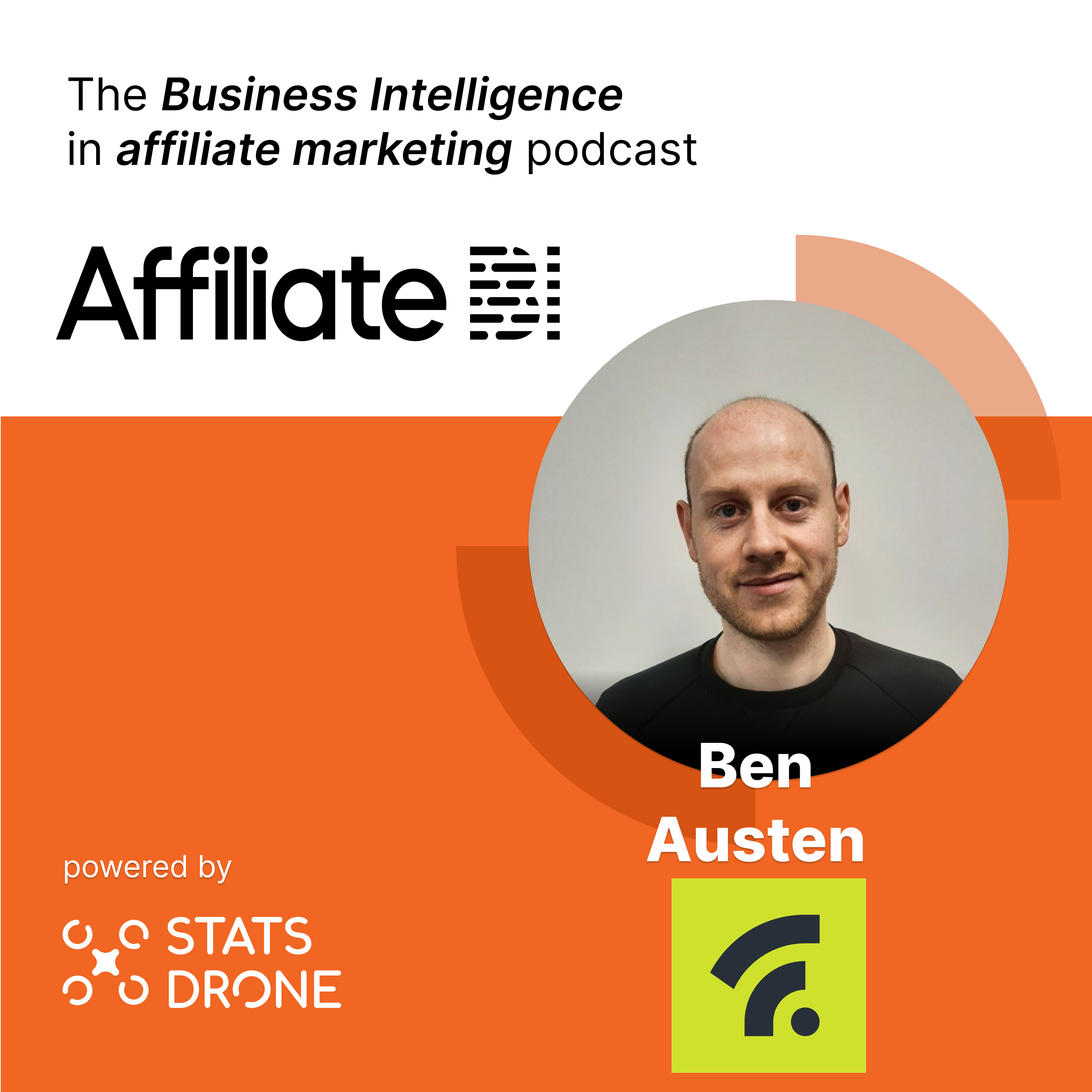
About This Episode
Meet Ben Austen who's the the Director-level leader specialising in RevOps with Find.co, a fast growing media company in affiliate marketing, iGaming, EdTech, CSR SaaS and crypto.
Ben believes that RevOps is an important job that can bridge the gap between sales and marketing. It is the intersection of Business Intelligence with finance connecting all aspects of a company whether affiliate marketing, SaaS, sales or media.
I think what Ben does is a really insightful look at the world of RevOps and I realize these jobs are not common in affiliate marketing yet but I think they will become more important as more people learn the nuances of this work.
How to reach Ben
Full Transcript
sales people are getting paid loads of money Finance know how much money they're getting paid and there's you know celebrations going on and your marketing marketing marketing team especially sort of the more junior members your marketing team maybe CS maybe finance and bi that there's nothing that comes through it doesn't make a difference to them and and that can really frustrate people I'm John wght and you're listening to affiliate bi the business intelligence and affiliate marketing podcast brought to you by you by you by sta
welcome to the affiliate bi podcast today we're chatting with Ben Austin he's the director of Revenue operations at fine. Co he's experienced in running paid search and paid social for search a agency he co-founded and he's the head of Marketing sales director's roles or actually no he was doing those roles and um he's got a lot of experience on investment and M m&a side so uh Ben happy to have you on the show thank you for having me that's I think that's a lovely intro and
I'm sure people who know me well would be questioning whether I know as much about those things as you're you're giving me U kudos for well we've had a chance to chat uh before so I I know you've got lots of experience so I'm happy to dig into questions especially related to the finance side of the business which sounds obvious but I actually think it's a a lacking topic and things that um maybe people kind of lack the education on in our industry and I just
want to get your quick take on that yeah sure so well it's actually a pass it's a bit of a passion of mine um which sounds odd um but I I actually did another podcast recently and I was asked for an unpopular opinion in the world of revols um and my reply was the more time you spend with Finance the the more you'll succeed um and I suppose if I just sort of delal back and sort of Define revops because it might be slightly new to
something people or it means different things in different businesses so for me I I think a simple way of describing rops rops is it's the sort of the co-pilot to the cro is a very sort of pity way of doing that but to expand on that you've got you know revops is there to integrate and align the commercial of go to market teams so Marketing sales customer success underneath that you've got a layer of finance and bi and that that scale like to deliver scale Revenue
growth that's that's what rev does um and it sort of takes a Swiss approach it should sort of play a neutral role across go to market functions and join the doc right um and historically I think the the sort of the best in commer places for them to report into the cro but actually the discussion at the moment is whether they should report into a CFO and I think there's sort of there's like pluses and min es with that um but the the interesting thing about
the the finance is I think that revops often comes out of the sales Ops World I think that's where it started and then you've got less marketing Ops people and you got even less customer success Ops people just because sales is sales and it's shiny I think there's even less people who have the finance the finance the finance Bank um and you know a couple things I was thinking about before we spoke about this is you know in a business I think it's like 90% of
businesses fail because of cash flow like cash is King right if you've never spoken to a CFO before and you want to get in the good graces just sort of wander up and start saying well cash flows important to you know that's we've got we got to think about that um but the you know to give some real life examples like if you're in marketing marketing want to spend as much of their budget in age1 as possible obviously you've got seasonality and things but if you
get get rid of your money your spend the company can't take it off your um but actually uh you need to understand what that does to cash flow or could do to cash flow and have that conversation up front or if sales hit a number but the mix is off and actually this is something I saw happen quite often is sales hit a number so everyone's happy but the mixes of understand what that does to say Revenue recognition and therefore the budget next year here um
and the last one that I think is always a rich vein is discounting so it comes off the purely off the bottom line so from like a CFO or anyone in finance point of view discounting is just awful because it just hits just hits just hits margin um and there needs to be a clear reason and sort of rules around that um yeah so I think that's like lots of things I could talk about um but I think it's it's key I'm definitely going to ask
a bunch more questions because I think it's a topic like what you just said there about Revenue plus bi I mean when I was thinking about what is business intelligence today and how do people get these skills and where does it like how does does it get applied to any industry and I think a lot of it always comes down to finance in some way and then it's like how do these two skills kind of come together and I think it's kind of like I don't
want to say it's a lost start I just think it's a lost on a lot of businesses and like you said when all these companies are constantly going out of business it's it really comes down to all these hard questions that people don't really want to work together as a team like sales and marketing kind of fighting each fighting each fighting each other yeah the the the classic finger point between sales and marketing of you know lead the rubbish sales people can't be bothered to Bone
the leads is sort of an endless cycle um but I think if you can layer over or at least understand the finance layer the insights that you can give especially as you know Revol sits in that that that more Central role that Swiss role so to speak the insights that you can give a much richer and I think that's where you move from a sort of a tactical to a strategic level because some of the things that we just talked about is you know just touched
on and happy to go into detail on them if if you w't is you know these are things that the board are interested in or the investors are or they're you know they're trying to fund raise like the these are the questions which actually matter uh and obviously the sales number does matter and the market budget does matter but it's not always the be all R Endor yeah and I think before I dive into the first question I know from our experience of uh you know
raising investment it's like we started to meet people more that were like you that were asking us these tough questions and I think uh for us it was a good exercise because it really said well where are we weak you know we're weak in the actual Finance part of having to explain the numbers and show Trends and and like you said have a proper strategy to go what are we going to do to fix this how are we going to make things better and it sounds
maybe to some people sounds trivial but unless you have that person on your team or the other person on the other side of the fence throwing these tough questions at you it's uh you're able to just not do that that exactly so I was listening to a recent uh episode of the revenue vitals podcast with Chris Walker I've been mentioning this guy quite a bit uh he's one of my favorite podcasts um he's a B2B sales and marketing Pro and he said that one major problem
for a lot of B2B marketers and salespeople is that they don't have a financial Acumen that they they don't understand how their work can have a profound impact on the sales team especially the marketers so let's dive into like what are your thoughts on that yeah I I think it's pretty bang on from Chris um and I think part of that is sort of whether it's organizational design or it's just um how people tend to run goto Market teams or or that commercial team so I
think I think a lot of it is having the right people in the right room consistently so what what I tend to observe with with Finance is that they're either you know at the back of the room in the old days or on a call camera might be off they don't have a real defined role in in sessions and they're just sort of there and therefore for them to make to join the dots between between sort of you know the commercial teams and finance and the
flip doesn't happen and I I think it's about leadership working really hard to like Empower people both ways to to make it it work or or so you know traditionally you get your serious types of sort of you know Finance can be a bit boring that you know or they can be the people constantly saying no um and again I think it's up to sort of leadership to shape it as a it's our Target it's like this business Target it's not sales as Target it's you
know all of that as I said Marketing sales Cs and then finance and bi it's everyone's Target I mean it should be the whole company's Target but you know if you're starting to build that culture um and once people start to feel um that they are part of that and actually you know you can go as far as renumeration right Finance people don't get paid they don't have any skin in the game so you know there's lots of I think there's lots of different ways that
you can make it happen but it it it starts with the leadership yeah it's what you said there was actually one of the the questions that I wanted to dig into which is typically sales are the ones that are rewarded with bonuses and performances but you when you have a marketing team that can really have a profound impact on not just sales but the conversion rate it's where's their reward or what about the product people that built an amazing product that sells itself where maybe you
don't always need as much of a sales team you know it's uh I think you're spoton for this uh revenue and bonus alignment just being off and it's it's like the way it's always been done and no one's changing changing changing it yeah and so I always say to my bosses I want to get paid well I'd love to get paid how much you get paid but I want to get paid like how you get paid right so if the bonus is based on you know
ebit or whatever it is then that that's what I want because then we're aligned right and I think if you can do that across those those teams and you know it it sounds small but you have a big month sorry a big quarter you hit your target or you go past your target s people are getting paid a loads of money Finance know how much money they're getting paid and there's you know celebrations going on and your marketing team especially sort of the more junior members
your marketing team maybe CS Maybe Maybe Maybe finance and bi that there's nothing that comes through it doesn't make a difference to them and and that can really frustrate people okay so you're you're fairly new to fine. co and you're joining basically a new industry where some of it's ey gaming and I wanted to ask like when you were joining did you have a look at the landscape to say okay we've got Affiliates over here we've got a lot of different B2B suppliers and then we
have the oper ations which is affiliate programs and affiliate managers did you look through the the job landscape and do you think that for the role that you have with.co do you think that there's there's really not a lot of these jobs or there should be more of them like there's tons of sales people tons of commercial people but then I just think that's that's as high a level as it gets um I would say well it's been an interesting job market the last sort of
year and year or so so it's definitely been just slower AC like AC Coss board um I I think that the especially in the US US Revol um as a discipline the stly get run around is a sort of the fastest growing or one of the fastest growing roles um especially at the USU in the US and I'm based in the UK um and the UK sort of follows behind that and and you know I would say you know generally you know the world does does
um I think what's happened is that um especially the the VC or the PE houses have realized that they need people to join the dots and um and that they there's value in this right if you can create this the lead to C Journey from the earliest point that somebody ever um knows about you or your products or your Brands all the way through to the money hitting your account okay with Finance um having someone join those dots is is really important and it works and
so once the sort of the the money people basically start to realize that then that becomes a little bit more of a cookie cutter that template right so I don't quite know when it happened but when sort of you know customer success and account management became like the way of doing things whereas before right you just have just sales people and they sort of did everything um but I think that was uh I think now people would say it's absolutely mad for a salesperson to sell
and to manage the account because it's just a very different like brain shape um and I think that's that's sort of happening on this joining the dots side of things because you're saying joining the dots and I'm just thinking in my head that we we have this weird problem not just in affiliate marketing but in sales where there's always a there's not always a pure attribution of where not only where did the sale come from but what is the value of the sale and it kind
of goes back to the marketing people the product people and I'm just wondering if you think uh attribution is always the problem that everyone wants to solve they're like look we have all these amazing tools we have the best crms but I think there's certain things that you just can't touch like uh like the product like it's hard to really understand how it leads to like the end game which is revenue and I think with what you're doing you start at the top and then you
work your way down and I think everyone's doing the opposite opposite um well yeah I think you got to attack it from both sides to some extent uh I think that I would call myself a pragmatic pragmatic Optimist and so there are uh elements of affiliate I.E the affiliate partner has a bit of a black box right and I'm I'm not going to be able to change that right that that is a sort of a know known that we need to work within and um I
think with a bit of pragmatism and some smart br is that you might have to make some assumptions and so in that sort of middleware layer so to speak you might have to make some assumptions and almost smear that across your data right or in a perfect world this would be the metric X would be the metric we can't get that so what's what's next and that's what we run the business are and as long as we're consistent on that and we iterate and and refine
it that's fine whereas maybe some people are just sat there going like well we're never going to know everything from the partners so we're not going to do it makes sense uh so you've got a background in economics and I wanted to go back to the skill sets of I know what your skills are I don't have an economics background I'm kind of learning this as I go and you know I do believe that the finance and the bi skills are important so what are things
that you think people should pay attention to in both of those segments especially knowing that I think they really always go well together yeah I well I so I did do a ba economics but I think the people that know me especially from uni would say that I'm nowh they're smart enough for a career in economics which is uh why I then went and sort of played poker professionally for a bit and fell into paid search and other things um but the the degree was great
because it it allowed lots of different modules so did so politics development economics maths like and other sort of supporting pieces and it gave it gave quite a sort of rounded introduction to certain things um and actually I if I'm being honest I've done very little structured learning in my career and it maybe that's bad maybe that's good I'm not sure sort of the only certificate piece of paper I could shap to you in the last probably five years plus is related to um Adel and
scrum which uh partly as I started to look after CRM teams um you know more in that development space who work in that way um I wanted to do that to one understand how they work but two actually that sort of holding yourself to iterating Value which is is what I take out of that sort of agile scrum approach that point we just made around it's never going to be perfect but let's just do something you know I think that iterating value is something that I'm
constantly trying to do like what what can we move forward in the next couple of of of weeks um and you start to build that momentum um but dude sry back to your question I would say and if I'm talking to people or giving any advice the route I've taken that worked for me is I just roll my S off and got on with it that I've got involved and um I think I've sort of become a bit of a person in businesses being known for
getting things done I prioritize things and curious and then the other piece is I always tell people when I'm interested in something so so for instance you know even as a relatively Junior person I said to the MD I'm interested in the budget process I want to be involved and that was okay well the budget process isn't it's just happened it's not going to be for nine you know nine months time that's fine just lay your marker down and say this is what I'm interested in
and um and um I I I don't the things that we're talking about I I don't think I haven't seen this I don't think there's any courses or anything that you're going to do to to really give you um like the skills and the capability to to do to do this especially this especially as well as we said Affiliates is a little bit entrepreneurial right it's a little bit more Wild West than other areas um and re and revops is slightly more undefined like you just
got to get involved yeah I agree I mean I think when you look at the whole affilate marketing space the SEO space I mean no one no one I know has gone to school for it and there's been some where uh probably the most common background I've seen in affiliate marketing is lawyers dropping at a school to become Affiliates and actually I met a bunch of people that studied business um maybe some Finance but when I look at their backgrounds it's everything and and I think
you're right I think there's a lack of road map when it comes to well you can go to school for economics and finance which I think are still great in Practical degrees but on the other side of it for business intelligence there are tons of schools offering certificates and diplomas and courses that are kind of like a bit finite but when you start shopping for any of this stuff it's I mean there's too much stuff on the market there's every single course you can think of
you can zero in on looker Studio on Tableau uh you got new shiny toys like seem to come out like every you know few months like hx.com and they just never ends yeah and I I think that um there's two schools of thought in um some of the things we've been talking about which is do you become to an element you well especially if you're a solo revops person and a more jior person and in Finance right it's exactly the same and and in Affiliates you've
just got to become a bit of a jack of all trades and master of none um I am not the most technical person at anything at all like at all but I have just enough knowledge which is probably dangerous if you are really technical in the area to be able to understand that you can like build this journey but I am not the person to build that journey and the other sort of part of success is like hiring people that are really smart and trying to
pay them as much money and getting out of the way which is the old P that's really like that is really important um important um and I I've never been interested in being like the gatekeeper of the the systems or like the most technical person that's not my interest my interest and the P like the flag and the ground I want to par line is I'm sort of like the commercial I'm the commercial gu I understand the numbers the levers we need to pull and and
sort of well one where and how we are trying to get there um yeah cool um because we we chatted before and you were asking you know me and my company a whole bunch of questions and I found them very insightful especially the ones where we started getting into CRM you know from an affiliate point of view and this concept of inventory and this inventory thing made me realize that I'm like okay what is lacking in affiliate marketing on both sides of the fence for The
Operators the affiliate managers the affiliate programs and then on the affiliate sides um I I do think there's a lack of a real core CRM and I think the concept that you kind of uh you know kind of iterated was this concept of inventory like what is our inventory and can we put it into a box can we Define it and it made me think that across Affiliates I I think there's almost no standards on this like we're actually should building our own inventory assets for
our B2B stuff and we did this before running affiliate sites and we we just never really had a system for it I'm just wondering if this is kind of like an untapped space that could be built into into something I I mean I think so I will hold my hands up and say I don't think I know I I I know you know 1% of what you guys know about Affiliates so I'm not sure I think I've had lots of conversations with people and I did
spend a bunch of time a in agency um you know about 10 years ago where we did run affiliate so I have a bit a bit of knowledge it does feel like there's a gap there um you know talking to everyone there isn't there isn't anything that comes off the shelf now I would I would balance that with every industrial vertical thinks that they're special and that it can't be that like oh no no no you can't use sou sport Subs but whatever it is because
we do things differently differently um I'm quite a big fan of offthe shelf tool and offthe shelf Specialists so like yourself right like you know I I don't want a super complicated Tech stack but if someone's really good good at doing a thing I would much rather work with them than a company that's sort of trying to Bol lots of bits on the core offering isn't as good and the the boltons don't quite work um but sorry just back to the inventory piece because well I'm
also interested to talk to people who wants to talk about this but you know what what we were talking about before right and how I I see after after being at fine for a couple of months I think what we need is we need um you know marketing and generating some leads marketing automation platform sort of that's fairly standard and then CRM that is used to manage customer data and where salese can view Dynamic pricing based on the available inventory an inventory could inventory could inventory
could be top lists it could be placements it could be uh news Recs it could be uh programmatic like you know it's a casual term for all of the stuff essentially but I think the the key is that the inventory automatically considers all the brand restrictions has all the relevant affiliate links which and I've spent most of my life in HubSpot and Salesforce so when I say link to the account that sort of sales fors language of the account object um company in HubSpot um and
then as the opportunity is closed one that inventory is removed from the price list immediately so another salesperson can't sell the same thing and then that placement top list whatever is automatically automatically automatically updated you know based on the right date so midnight and a quarter or whatever it is the top this flip flips over um and so of back to what we were talking before I don't think a salesperson or a adops manager or a tech person or a CS is going to be able
to tell that story yeah because they're just trying to um take off chunks of it and they they're much better place to take off a chunk of it than I am um but you need to have that complete Journey because otherwise there's a bit of a so what like have a brilliant CRM or your you know you're trafficking your your all of your links are perfect but so what because you've got this massive manual piece to do do it yeah it's kind of like you as
uh the orchestrator to say okay you can do all those things individually like the sales they're going to piig okay I want to basically put my building items my um insertion orders in in one category but it's kind of you saying hey you can build them all individually but that's some point they can and should go together yeah and we come back to the scale bit right which is I don't know 10 10 years ago if we wanted to scale a business you would hire five
more sales people right and they would have X quota and therefore you're going to do why more but what people have started to realize is well you know there's there's lots more ways to grow a business than hiring more salese or or adding more you know adding more customers um uh not the you don't want to do those things but it yeah that setting things up for scale and repeatability um is how businesses get sold is how they get large funding rounds right yeah that's very
true um so you've got a like I know you you've got experience in in paid uh search paid social SEO and then you've got different experience on the m&a side of business I believe so taking this whole collection of what you you have as your experience when you came into ey gaming what did you see like um the common thing I hear from a lot of people's that they thought it would have been way more technically Advanced but maybe you might see that as a positive
thing where it's like this is just a big opportunity to apply revops and bi yeah I mean the the most mad thing is that everyone's uses Skype what the hell is going on guys it's not 2006 um so I I find that hilarious I I I don't think I've talked to anyone in the last five years that uses Skype but everyone in Affiliates since to use it um so that that was quite a shock um I think that um what you just said is is is
ban on is that I would assume I would have assumed that with the amount of money and the amount of PE like the amount of people doing this like that's there that there would be more of a cookie cutter approach but actually what is what is great is that it feels really entrepreneurial like it feels like you've almost just discovered a new vertical and the opportunity for impact and batteries to be added is huge you know if there was a there were eight offthe shelf CRM
Inventory management systems and the job was install it that's a lot less interesting than trying to come up with the O you know trying to come up with like the overall journey and sort of vision of where we're trying to get to and then working out how we make that happen in what will probably be an incomplete way because of the Black Box situation so yeah I I've I've found um I think that's the thing that I'm I'm being really drawn to um I've I've been
uh you know it's it's relevant to what you just said but I've been surprised by how Silo the nature of the partner like everyone does everyone does things in different ways and there's no there's no uniformity at all and there's these heavy manual lifts that seem to take place on both like publisher on partner on you know like everyone just seems to be doing these crazy heavy lifts and you almost feel like you need a you know you need like a board or or something where
people get together go hey guys can we like can we do this in the same way um so yeah now with a board would you say like that's one thing that's missing in most companies is they don't really have a structured board like as of today the only board that we have in our companies myself and my business partner now it's not to say that we don't want a board but we've been very cautious about um how we do this because we've had people that have
come on board in the company and not worked out after three months and you got to give them time to realize is it a fit or not but I'm I'm just thinking that you know what a board could and should do is bring good ide ideas and maybe ask the uncomfortable questions and a lot of the most common uncomfortable questions are always Finance related yeah yeah it's a really interesting point so I've worked for uh P or VC back companies for the last eight plus years
and um f like yourself don't have you know um I suppose bootstrapped up and um you know they've got to where they had with Co of bambas doing well and you know that's that's that's that's amazing I cannot tell you the amount of time I've spent over the last whatever eight nine years doing things because a board has as the ey of Sauron has turned onto X part of the business and the SE Suite know that it's not going to move the needle you know that
it's not going to move the needle but somebody important has asked a question and therefore we need to go and you know answer that and only being at fine for a short short short time I feel like I've got about 20% of my time back because there isn't a board asking those asking those questions questions but I also think that they would be likely in a better place you know from an in you know from a sort of tool and systems and process place if you
had that board so I I don't know I pros and cons it can always be added if you think it it matters but I guess it depends on the size of your organization what kind of growth you have and I guess really what is the end goal yeah and I would I would imagine for yourself a way that you could do it so right what are our strategic objective like what are we trying to do where do we want to be in a couple of years
time we want to be doing X so we talked about CRM right so you you well you might board is maybe too fancy the time right but you might just bring an advisor in that says okay fine like your job is to is to ask annoying questions and really like hold us to account on this this piece of the business and then maybe that sort of grows out grows out into like into something wider um yeah that might be sort of the pragmatic way of doing
it yeah I agree yeah out of Interest why why didn't they work out o i I know they don't listen to this podcast I don't feel was not on a personal level but was it like a sort of a structural or they weren't close enough to the business to be able to provide the value like how it's been anything and everything um so it's been like a few different people it's just been uh Vision not align um you know their their priorities within the company not
align um we've had it where it's just been total culture Clash we like look you're just rubbing people the wrong way and we're all fighting it's we're not getting work done we're actually spending time in meetings that just are not productive at all it's uh you know I think that's kind of like another part of business where when you've got someone that doesn't work it's the longer you keep them on the more damage that you do um but for the most part it's um I find
what our personal uh biggest problem is um one part I believe we are solving which is like we are a data and analytics company or a bi tool for Phil help them be better with their numbers and we haven't been that in the past so we've basically gotten sharper on that and investors have have helped us in saying you know we're going to be the brutal ones asking the tough questions so go get this done make sure you sharpen your pnls um but I think the
other part of what we have in our personal situation and I'd say it's probably not that much different than find is what direction do you want to go like for us we could be going further into CRM into business intelligence we can go into adtech and I think with a company like fine it's kind of like well do you want to go like acquire more larger media sites or do you want to be like super Niche it's uh you know everything's kind of fluid and I
think um you know what helps is to have people that have experience and kind of going well I think this and then you know you're not you're maybe not going to solve those questions in a quick like 30 minute call but you our job is to see the market you know talk to our users and get an idea of like what's happening on the market like what's what are the conversations that are being talked about like CRM for example where it's like wait a minute there
isn't a proper CRM for affiliate marketing and then the same would be on the same for fine side to kind of go well what is working like if you saw the revenue the conversion rat starting to Trend down but the traffic remaining the same be big we got a big problem here that we got to solve like are we in the right space or um does our product need to change yeah yeah yeah and and this you know just on a s MP system a really
obvious to me strategic question is well are you building a ser or actually you saying that you want to build for instance a plugin into an App Store that could sit in Salesforce or hubs um store right because that that's a very very different way to go but you could probably dip your toe in it much easier much cheaper much quicker and and almost get that product Market fit where um a good example would be like lead distribution so you know you get a load of
leads in and you want to give it to X People based on Y and Zed and serums don't do that but actually I've always ended up just adding a plugin in on top of an Enterprise CRM I wouldn't buy a tool to do it so yeah it it that sort of like Nuance is is important um I think one of the things that I've learned um and you know I've obviously I've never run a business I've never I've never done that um is the clarity of
focus of where you're going to the organization of what you're trying to do is so crucial and it doesn't even actually have to be a good plan it just has to be a consistent plan um a CEO once told me he said that he was just going to say what the company was trying to do until everyone just hated him basically like you know he could I called it the Christmas party test so you walked in Christmas party and you asked everyone what does a company
do and you know if you get back 80 90% of people saying the same thing then you know the marketing director and can keep their job and if not might have to have a conversation but I think that as like a direction of thought is quite important well it's interesting because you know going back to 9% of businesses fail do you think maybe in our industry there's too many companies that are not only sales focused but they're they're money focused but in the wrong sense like
money is like win the money at all costs which could destroy your future it's uh it's almost like they don't like there's a lack of care about the customer and the product like the people that are super passionate product and all that and they're say look we don't want to build just another online casino site or we don't want to just build another affiliate site and I think Google's already pushing people around and saying look if you're just going to be another one of those another
affiliate sites why is Google going to give you that traffic and I think Google with the restructuring of you know the search with helpful content updates and all of these different um updates I think it's actually putting that question back on Affiliates where I'm I'm watching Affiliates in the background I go on HRS and I even talk to them it's like their sites are struggling they're like I don't know what to do and it's like well you're doing what used to work but it's not working
anymore I think if you only have the the money hat on I think that's maybe the biggest risk in the business yeah and yeah it's that sort of shortterm gain long you know versus the Strategic Direction um which is is always difficult always difficult and I've always thought about it if you can have a if you can have the CEO doing the long-term stuff full-time and if you have the MD or the cro or whoever that role is during the day today that's a really good
way sort of organization to say to people like this this is who's responsible for these things and this is why I'm talking about this and this person is talking about this and holding those people to account for those those pieces um but it's also as a business it's about confidence right it's about confidence confidence confidence in the the business in the medium term to be able to say no no no this is our product like really understanding your ICP and your product and being them in
it to as you say maybe not take a big deal with you know let's say someone turned up and said I'm going to pay you X because we want you to build the CRM CRM well that could be a major issue where your call product just doesn't get the love and attention in needes three other people spin up versions in the next six months actually no one else is interested in a CRM because maybe they just want to plug in or maybe Affiliates aren't special at
all and actually you can just do it normally through custom objects and yeah so I completely agree and then going full circle back to the very beginning where we started talking about the sales versus marketing um I I just did a a newsletter this morning that just went out automatically before recording and it was me talking about you know going back to Chris Walker's uh podcast about you know the sales and marketing being very misaligned and I'm wondering if maybe igaming has too much emphasis on
on sales like there's sales on the fil side like go get all these sales done go get your deals and get them at all costs and I think we have them on the other side the affiliate managers where their sales Focus I don't think they've got a good CRM to manage things they'll they might use HubSpot and Salesforce to get the leads but there's just a lack of let's build a relationship and I'm just thinking this relationship product and marketing I I think marketing is probably
the the thing we're missing the most in igaming yes I think just to just a sort of couple of thoughts on that I think there's some things that sort of bi rops even Finance can do to help that which is what are the metrics that help counter that so for instance a traditional marketing metric right would be how many leads you driving whatever um actually I think that a really good powerful metric there is percentage of m2l leads that meet ICP so you know if as
a find if we're a publisher we know based on history that you know XY and Zed make a good partner and it's worth our time and their time but as a sales person it can just be worth you know if you can sign up 14e accounts why not sign up 14 accounts but actually for my revops town the downstream problems of that of onboarding them and the adops and everything like that it's not ICP like what why are we doing this and yeah you you know
John the salesperson can stand there and say hey I'm board 14 new account new record but like so what um and on the customer success side because I would say customer success gets the least love in all the industries I've ever worked in and it's the least it's partly because it's like the least definable as a process because you're just reacting to customers and you know I send your guys five emails yesterday on probably four different things right you can't build a process for that um
and um but everyone got back to me very quickly by the way just for just for clarity sake um the you know a really good metric on the other side is time to Value so comes a bit from the SAS world but time to Value which is you pick a point at which you think you have delivered value to your customer so for instance for you guys it might be that you know they've got their first account logged in and the numbers work or whatever it
might be and then that is what you what you track um and you use as a kpi to determine like if customers are happy yes not not MPS not you know you can do obviously you have lots of other health metrics but I found that the time to value is a really powerful metric if you can get it working and obviously you tweak it for your business and the um the the key the the really interesting thing is it's not always the shorter the time to
Value the better because actually you might be able to get an account working within two minutes but I've got no idea what to do with the platform or what to do next anyway so just a like maybe some practical ways that you can actually start to counter what you were talking about yeah so I I I I definitely want to touch on that a bit uh more but I want to take a step back where it's like I can't tell you how many times people try
to set up meetings with me at conferences I'm like I'm not your ICP why you and they get offended when I tell them this and say look you we're gonna be wasting each other's time I can't do this and it's like they care more about just saying hey I've got a fully book calendar than they do saying hey my calendar's half book but it's all the the the ICP yeah yeah yeah or even it's just I've got two meetings yeah um and you know that that
also then comes from the like Town work that should have been done at the beginning of the year or for the budget that says you know what there's this many accounts we want to go after in ICP we've already got these you know a successful ring rate would be this actually do you know what John if you can get two meetings a month we convert them through do you know what I mean you build that funnel and that budget back to the financing and that model
would be a living breeding thing that I would be working on and keeping up to date with fin Finance with fpna probably using be um I think that's how you get almost that confidence right to be able to say good news meetings are down 200% from last year but that you know that's good because we're getting double the amount of meetings that we want to get and we want to get them because of this yeah and that's almost like Common Sense bi right there yeah yeah
yeah exactly and then uh last but not least says what do you see of the future of affiliate maret marketing as it intersects with business intelligence well I I think lot lots and lots of opportunity so like any sector it's going to become hand in hand so um actually one of the initial projects so we've got a head of bi who's joined recently he's been running a um a process to bring on a new bi tool but you can see that these bi tools are and
their ability to answer questions do projections and all of that that sort of thing I think everyone is saying it's in an alpha stage at the moment so you know the question of which of um you know I've got a I've got one bace left if you have if you had the vision of the inventory management and you I've got one top L Place L who should I give it to right the the latest generation of bi tools I'm not quite at the stage where they
can tell you I think they could but you'd have to do a lot of prompting but give it 6 months give it 12 12 months you know you're going to be able to ask these tools like one pound where put it next right and they're going to be able to come back to you and you and you and say okay the and then that impacts Dynamic pricing because actually you know on paper like I should charge you X but we can tell that you're going to
do y and so actually it's in our interest to incentivize you to buy this PL you know all of that complexity um so um probably partly because I'm working on this at the moment but I can see that really coming together um especially is I know you guys are working on you get that player level tracking to be able to give a like a really well a more um detailed funnel detailed funnel yes um and then the other piece which I think is quite interesting which
again I haven't really got into yet but is the uh recurring versus new B yeah and then the sort of strategic Direction based off that so you know what are we trying you know if if a lot of our deals are CPA are CPA are CPA based then actually we want to be doing very different things in marketing or you know nurturing sort of um individuals versus if it's a REV share you know thinking about are you um you know are uh certain areas you know
uh full are they saturated you know so I think all of that um and you know that's sort of thing that you have those discussions and that sets up the next year right that should set the direction so I think those are a couple of things I thought about when we when I saw that question yeah it's I I think inventory is profound on both sides of the fence one where you already have the inventory defined but imagine being able to use some sort of inventory
CMS that says hey would you consider a newsletter does it make sense for your business and if if so how much more Revenue could you generate and then imagine adding that because I mean i' I've run into a lot of Affiliates sites I'm like you're missing a newsletter you're missing on an opportunity to capture what you've already taken advantage of from Google and the second you lose Google it's like we've had a drop in Google traffic in the past and the newsletter saved our life in
that case you're you're right the sort of drisking drisking revenue streams or part that's partner streams crucial right and if you can layer on top of that some um positive Roi Performance Marketing newsletters as program like the other Revenue students you've got a much more robust business that um as you say can roll with the punches of of Google changes I've got more questions but we're we're out of time and uh I'll either ask them um off record or maybe we' got another opportunity for another
podcast Ben thanks a lot for doing this I think uh I definitely need to have more uh finance and revops people on here I think it's uh one part of the industry not talk about enough yet in affiliate marketing so how can people get a hold of you uh just hit me up on LinkedIn that's that's the best way I'm always happy to chat um or or talk about these problems so yeah just um LinkedIn message and that'll be included in the show notes uh Ben
thanks a lot for doing this I appreciate it appreciate it AB thank you for tuning in to the affiliate bi podcast I'd like to take this time to ask for a small favor to leave a rating and review wherever you listen to your podcast that helps us expand our reach to rank higher in podcast directories and reach more listeners