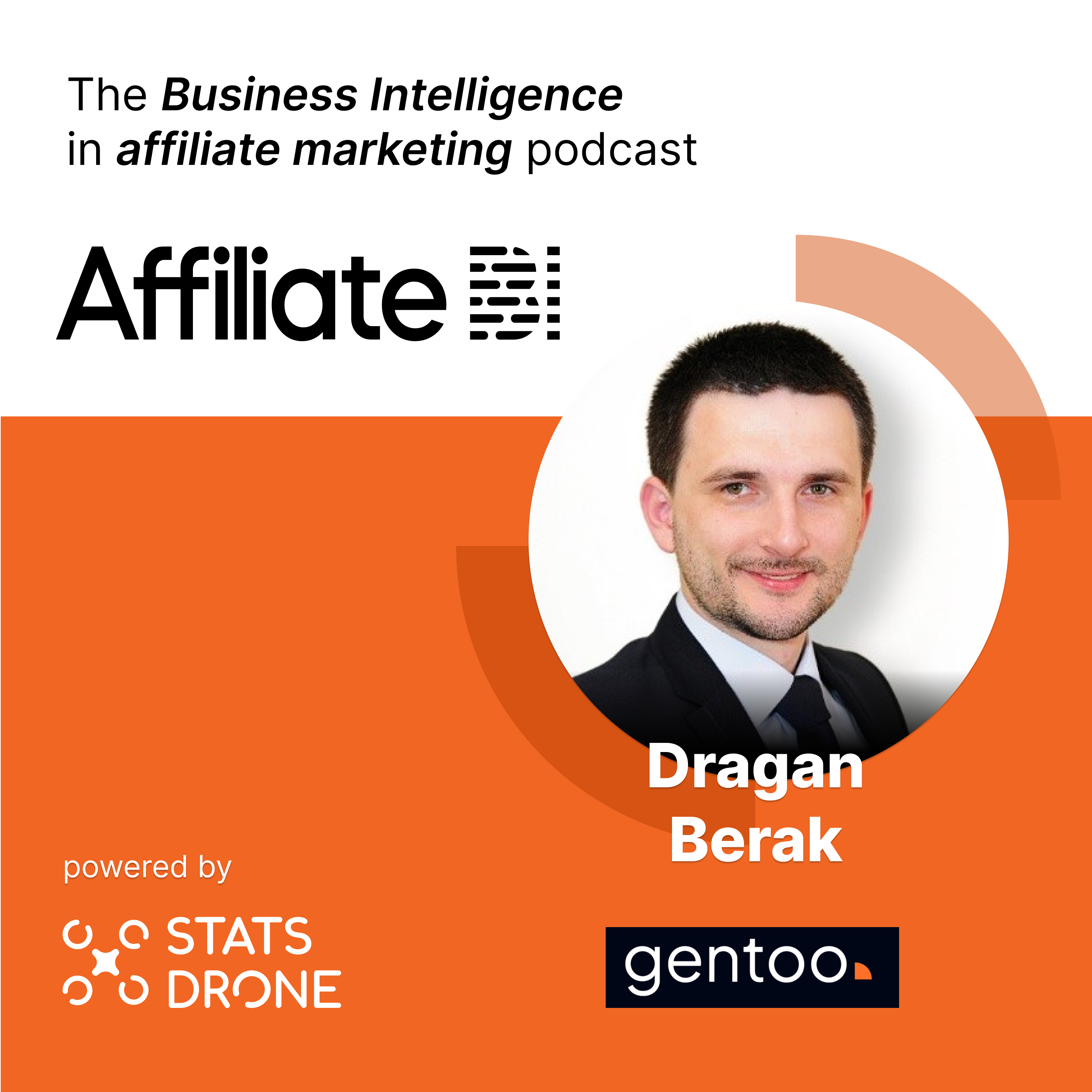
Casino SEO Strategies for AskGamblers with Dragan Berak
Guest: Dragan Berak
About This Episode
Meet Dragan Berak who's the Head of SEO at Gentoo Media and was the Head of SEO Global at AskGamblers before it got acquired by GiG and now is part of Gentoo.
Dragan got to see first hand how to improve a giant iGaming affiliate site in AskGamblers. I've had the pleasure to chat with Dragan at conferences before so I know he is very passionate about SEO. We both follow the likes of Lily Ray, Glen Allsopp and Eli Schwartz that have unique takes on the SEO landscape.
If your affiliate site has been hit by any of the Google penalties in the past 12 months, I think you should listen to this episode with a pen and notepad and take some notes. If you want to get my takeaway to add some perspective of what I learned in asking Dragan all of these SEO questions, it would be to ask yourself this question: is this piece of content I'm doing, the absolute best it can be? Am I adding a unique take on this topic that nobody else has? If you can't answer this question, I think you need to revisit the purpose of your affiliate site and it has to be a bit beyond just trying to make money.
How to reach Dragan
Full Transcript
Show: Revenue Optimization with StatsDrone
Episode: Casino SEO Strategies for AskGamblers with Dragan Berak
Host: John Wright
Guest: Dragan Berak
Published: Thu, 03 Oct 2024 20:37:00 +0000
Duration: 34:04
Speaker labels are a two-speaker split from pauses (host vs guest). Timestamps are `[HH:MM:SS]` from the episode audio. Light ASR; names and brands may need a pass.
---
John Wright: So if you're trying to be an affiliate who just publishes like tons and tons of pages without any insight whatsoever about how these pages can be helpful to users. And if you're just trying to rank for certain keyword with a huge volume and all, that's not going to work. And I think that Google has been trying to actually remove all these, I would call them fake affiliates and why fake affiliates? If you just write something that doesn't make any sense. And if you add many CTA's on your page and you expect people to actually click and
John Wright: then you just make money, that's a quick rich scheme for me and it's not going to work. And actually I think that affiliates should think about their sites, not just as landing pages, but as of course, if you're doing some kind of reviews, you should actually be the person who actually tried the product or service that you're talking about and then that people will recognize this. So if you're actually the user of the product or service, people will recognize this and will follow your advice. And I would say that's like the biggest stake for me at least.
Dragan Berak: I'm John Wright and you're listening to Affiliate BI, the Business Intelligence and Affiliate Marketing podcast brought to you by Staff Store.
John Wright: Welcome to the Affiliate BI podcast. Today we're chatting with Dragan Berak, who is the head of SEO at Gen2 Media. And before that he was head of SEO at Gaming Innovation Group. And before that, head of SEO at SEO Global for Katenna Media being in charge of Ask Gambling. So we're going to talk about SEO and iGaming today. Dragan, welcome to the show.
John Wright: Hi John, thanks for having me. So I'm going to ask one of these traditional SEO questions, which is SEO dead, not just in general, but is it going to be dead next year in 2025? We're dealing with AI content, Google core updates.
Dragan Berak: Every affiliate seems to be complaining about SEO and I actually think it might be one of the better times to be an SEO. So I want to get your take on this.
Dragan Berak: Oh yeah, definitely. I think that all you have to do is just go to Google and type SEO industry worth, and you'll see that it's almost I think 80 billion in 2024. So I think that companies are investing in SEO a lot. And I think that the prediction till 2030 is going to be $200 billion. So I'm pretty sure that SEO is not dead. And, you know, and every time I get this question, it's, I'm in a position to justify myself or, so it's, I'm not going to do that. There are people who think that SEO is dead, but I think that we should
Dragan Berak: observe like a general picture here. SEO is only one of the channels of internet marketing. And I think that we should be focusing on that. It's not like SEO is some kind of detached service on the internet. And then we can talk about it like separately. I think that we should actually divide internet marketing into two main categories. It's like interruption based and intention based. And I think obviously SEO is like the intention based marketing. So you already have, or you've made a decision that you want to buy something and then you go to Google and you search for it or any other such other for that matter.
Dragan Berak: So I think it's not that. Yes. Would you say that the concept of interruption based as like a marketing concept within SEO, would you say that separates the great SEOs from just the good ones?
John Wright: I thought the interruption based, I meant more like social media. So when you go to Instagram or any other social media channel, you.
John Wright: Are browsing to get more, even, either more information or to get entertained. And then all of a sudden you see some commercials and ads and that's what I meant interruption based, but in sense of interrupting people during the Google search, yes, there are all sorts of techniques you can use. The other day, I just read the article, Glenn Babe published that how people are abusing bad button and trying to make their websites look like Google discover. So you're actually not sure if you're on Google discover or you're actually still browsing their site and obviously the data that needed trying to increase the rate and all that.
John Wright: And of course that messes up with that boost. Yeah, there are a lot of techniques that people are employing, but I'm completely against it because you're at the end of the day, users would be annoyed and I don't go there. I think. Yeah. Okay. Now I got a challenging question, which is something I've experienced personally in doing SEO, which is analysis paralysis. There's many ways of trying to solve a problem. And I think where a lot of people happen to just operate is they don't do a lot of things because the word about making mistake, like what's at stake here is your site getting penalized and just going down. There's even SEO consultants where like their livelihoods at stake.
John Wright: So I want to ask a tough question. How do you make these, how do you make really good decisions when it comes to SEO?
John Wright: Uh-huh. And great question. Yeah. I think that Kevin Indy wrote about that like a couple of years ago and he talked about these SEO first principles. And I think that we should all before we even think about doing something advanced on our sites, we should stick to the basics and he outlined a couple of these like the main, not the main, but like the ranking factors that we know that are ranking faster. And I think we should stick to that first back to the square one. So you should check your content links, internal linking, all this boring
John Wright: work, quote unquote, that people are avoiding and they're like jump straight to the like advanced stuff, like schema markup and all that. And I think that you should be really concerned about crawling. Uh, it's Google control your site and what's next. There's also this, I think, Mozlow pyramid, something like that. And moz.com, they have this on their site. You just can find it on Google. So it's really well explained what kinds of things you should do first and then like second, third, fourth. And then if you follow this, like I think that you'll be better off just
John Wright: following like the basics instead of thinking about advanced concepts because and that that's why I think that's paralysis analysis sold out. You could spend all day doing this stuff. And I've been there, done that, but sometimes it helps to have good SEO friends as mentors to say, Hey, here's my situation. And then sometimes the solution you're like, wow, it's so simple. Just do the analysis and do, do exactly what you just said. I think that's where it goes over people's heads. It's try to just be the best product or the most useful for users. It sounds easy, but I think this industry has been caught up in a cycle of going, if I can just create more content and it ranks and I make more money with commissions, it's let's just rinse and repeat.
John Wright: Yeah. That's just what Google's been saying all the time. And well, do stuff for your users, not for search engines. And I think that people are like either do not want to understand that or they're just like neglecting this. Yeah, okay. It's cool. They're just giving some obscure advice. So we don't understand, but that's really so true. So if you make your users happy, then of course, Google will notice this. I think that Wendy Persle said, Google only loves you when everyone else loves you first. I think that perfectly describes what we should be doing all the time.
John Wright: Just observing things from this, I don't know, bird's eye perspective. And if you manage to make your users happy, I'm more than sure that Google
John Wright: will take notice and will reward you a bit more organic traffic. And that ties into the next question, which is we're both fans of Eli Schwartz, who's got a book called Product-Led SEO. And I want to ask a detailed question as what ways would you call site like Ask Gamblers, a complete product and not just another affiliate site?
John Wright: Yeah, huge, huge fan of Eli and his book. It's all about creating something useful. I know it sounds like, sounds easy. It sounds okay. Of course, we all know that we need to create useful stuff, but as Gamblers, first and foremost, we have this, we have, I would say three main components of our site, not just site, but of our product. First, it's definitely complaint service. So we, so far, I think that we have recovered more than $60 million for users. And I think that's something that people can recognize and they, that's
John Wright: why they come back to our site to search, like we're helping them to do something. That's first. Second, I think that's our community. We have a really big and at first it was only for casino. It was only casino focused, but recently we then to use as well as sports betting as well. So now people can discuss and they can find solutions and they can ask other members of community how they deal with certain stuff. And of course, third component or last part of this whole product, I would say that this is affiliate. Of course, we try and publish content that would help people to do what
John Wright: they intend to do and that's it. But what we are trying to achieve here is trying to find like a shortest way from the beginning of their journey to the end. So until they convert, we really try not to stand in their way. So I think that's one of the biggest mistakes. If you're trying to add so many layers of complexity, people will just abandon your site. The other hand, if you're only at one page and you and people land on that page and then you want them to like converge, like instantly, that's not going to work. You need to add something like here's value. Give me something in return.
John Wright: So these three things that I would say that make our product really great. It's interesting because I just published earlier this week, like an article that said our communities and forums, part of the big rise in search traffic. And to me, it's every time I look at sites that are doing well, they almost all seem to have a community behind them. And whenever I put that URL in Ahrefs, it's, I'm usually saying like, I think my quick and I don't even go through this in extreme detail, but it just looked like everything went up by a factor of 300%, if not more. And it's, I look at that, I'm like, what is community? It's a product, but social media.
Dragan Berak: Exactly. I couldn't agree more. I think if you just think about it, what Google is trying to, how Google can fight this whole AI thing, I think that's through communities because that's real people sharing their ideas, commenting on certain stuff, and that's what I would do. If I was Google, I would definitely pay more attention to communities. That's like definitely. Yeah. Cause my take on this was I'm like, I think this is bottom of funnel content, which compliments the rest of your, I dunno, pillars or yeah, the pillars of your website. So I think it's like, you can have Ask Ambers without the forum, but I think
Dragan Berak: the forum is really the finer details, which obviously links users to the reviews and it's a pure compliment. Exactly. Yeah. That's, that's what we're trying to accomplish at least. So I know you follow people like Lily Ray and Glenn Alsup from detail.com and I just want to get your take. What have you learned from them in the past year when both of them are talking a lot about affiliate sites and in relation to what's happening in the SEO space with all these updates and yeah, just as both of them as thought leaders. I definitely, both of them really, I really admire.
Dragan Berak: And I think their take some affiliates and usually Lily talks a lot about e-commerce, but also she talks about affiliate as well. I think what I just said, like adding value. So if you're trying to be an affiliate who just publishes like tons and tons of pages without any insight whatsoever about how these pages can be helpful to, to users. And if you're just trying to rank for certain keyword with huge volume and all that's not going to work. And I think that Google has been trying to actually remove all these, I would call them fake affiliates and why fake affiliates. Yeah.
Dragan Berak: If you just write something that doesn't make any sense. And if you add many CTA's on your page and you expect people to actually click and then you just make money. That's get quick rich scheme for me and it's not going to work. And actually I think that affiliates should think about their sites, not just as landing pages, but as of course, if you're doing some kind of reviews, you should actually be the person who actually tried the product or service that you're talking about and then that people will recognize this. So if you're actually the user of the product or service, people will
Dragan Berak: recognize this and will follow your advice and I would say that's like the biggest stake for me at least.
John Wright: So let's say you were going to either acquire a website and improve it or you used to do SEO consulting. So let's pretend we're putting your SEO consultant hat on and a small affiliate that's saying, okay, look, this industry is getting really tough to compete in. What should I do? Like my belief is it's the industry isn't too big that it's an end game where you can't actually make it. So what would you advise for a lot of affiliates? Let's say you're getting like 10 different sites are coming your way. Like how are you going to do the problem solving to help them actually grow? Yeah. Yeah. Great question. And I would say that I would first say what I wouldn't advise first and foremost,
John Wright: I think that do not try and mimic big layers. That just not going to work. If you try and like copy paste what, for example, what Adgalmer's is doing, trust me, I'm not going to succeed. And I'm not just saying that that's because I'm biased, but like just imagine after 18 years of existence on the internet, you really think that you're just starting off and you think you want to outrank the site.
John Wright: Now it's not going to happen. And right of the bat, you would see that. Okay. This is, and then we come to this paralysis analysis, of course. And then what should I do? My, like my advice would be, if you're good at slots, for example, just do slots and do not now think about even like are getting some big keywords, try it small and start small, and then you will expand over time. And I think that's also like justice on the internet. Why? Because just imagine ECU were in this second, in the other position of the huge affiliate, huge media website.
John Wright: And then all of a sudden like site that appeared, I don't know, two months ago to just outrank you. It would be really, it would be really odd because you've been investing like for even two decades. It's a lot in content in all that PR or media, for example, we have custom graphics on our site, so there's people working on that and it's full-time job for them. And then you think that with some stock images, you can, I step in and outrank that. So that's what I would say. Do not try copy big players and try start small at big on each, like any other industry.
John Wright: I'm not sure why this is not applicable to affiliates because if we talk about any other industry, people will tell you start small, pick your niche. And I think that affiliates should behave the same.
John Wright: I agree. I think it's been a few times this year, I've had affiliates ask me, do you think I should do complaints? And I tell them, no. I said, wait on Ask Scamblers and even the other competing ADR service sites. It's, it's a lot of work. Like you said, 18 years. It took a long time for Ask Scamblers to get to that 60 plus million return to players, you know, and then that's like, that's, I'm sure it's a whole other department. Yeah. It's a, it's similar to like English language. So can we just introduce some other language to be like globally accepted? Yeah. Not so fast.
Dragan Berak: Yeah. Okay. So one thing I want to get into, which I don't think is talked about for me personally too much in our industry is localization and how to do it properly in regards to SEO. So I interviewed Kira Koroshelova, I think it was quite a few months ago and she does that. And when I started asking her questions, I'm like, I just remembered all the mistakes I've made over the past five to 10 years and localization. So what are your tips for this?
John Wright: I think for localization, you need to prove that you have a budget for that. And by budget, for example, for Google, okay, you can publish a bunch of pages in some other languages. That's fine. But if you don't continue like with that, with publishing content, you know, being up to date with the latest industry trends and all that, I think that Google will recognize this, I mean, their algorithms and you will just drop. And I think that you, what I've seen and what I'm still seeing in the, our industry, what people are trying to achieve, like publishing tons and tons of pages, just for the sake of having content in some other language and they're not
John Wright: really making it, of course, initial boost will happen because, okay, Google will come and say, yeah, let's see what's happening here. And then after a while, if you just stop, I don't think you will succeed. And that's what I mean by like a budget. We also have teams working solely on different languages on our side. So we have a team for English, for Portuguese, for Spanish and for Japanese, also Italian. So they're like full-time job working on a certain language. They, they're checking content. Everything goes through their hands manually.
John Wright: So before we publish anything, we already checked all, of course, all the facts. We have a lot of different layers of checks, even with legal, what we can publish and whatnot. And I think that's the biggest thing that you should be like worried about. Do you have a budget? If you do, if you have people that can work on a certain language, yeah, go for it. But it's not, do not publish because people are, people think that you will publish one page in, I don't know, Vietnamese and you expect to rank well for certain keywords in that country. So that's not going to happen. And I think that's the right way to do localization.
John Wright: Just focus on long language first, make sure you like own it and then go to the next one. So I think what you're saying is that's all the reasons why you don't want to try to copy a big site like Ask Gamblers and say, I want to build the encyclopedia of casino, which to me, you know, that's what I consider Ask Gamblers.
Dragan Berak: Yeah. Yeah. Something like that. Yes. I agree. So I'm going to pivot a bit and talk about things on the operator side. Do you think operators don't do enough SEO work on their own? And do you think if they actually did, would that have a benefit to affiliates?
John Wright: Yes. I think they don't actually devote that much attention to SEO, especially because they, their sites are usually like JavaScript websites and we all know that that's a whole different conversation or how to optimize them for JavaScript and all that. And I think that's one of the biggest issues for operators because in order to look at interactive websites where people can actually do something interesting, there's, there's a cost for that. And I think that's their biggest issue with that is JavaScript SEO. Of course, there are a lot of solutions to that.
John Wright: You can use some server side rendering and all that, but I'm not sure that a lot of them are actually doing a great job with that and how that can help with, how that can help affiliates. To be honest, I wasn't thinking about that much because our job is to send traffic to operators and I guess it would help if we had some like dedicated pages for certain like products. And oftentimes you go to an operator website and then there's the just small link and it's like dynamic. And when you change something on a P link, doesn't change. And it's hard for us to send people to specific areas of their site.
John Wright: And that affects user experience. Actually, yeah, that's when I think about it. I think that's one of the biggest issues with we're seeing if they have absolute URLs that we can target that would help a lot and that would improve user experience immensely. Yeah, it would improve user experience, but I actually think the bottom line would change drastically, which is the conversion rate. Like you're doing all that work to funnel users over to operators and casinos and if they only have one landing page, it's like, where's the A-B split testing? Where's the knowledge to know that these links actually convert better?
John Wright: I think by giving you the affiliate more inventory to connect with, I actually think this is part of the missing link. And I think the irony is that if they do this, I think that actually has an SEO benefit for the operator.
John Wright: Oh yeah. Yeah. I also think so. You're completely right. And by UX, I meant if they had better UX, of course conversion rate would go up. And the pipeline situation for both of us. But yeah, I think it would come a long way till now. I hope that operators will recognize this and not observe us as affiliates. Like previous affiliates. It's a, it's like a common thing on the internet. Whenever you mention any affiliate with people just go like, oh, affiliate. They just want to get money without any work. And I think that this paradigm should change this perspective that affiliates are actually people or websites, of course, who are reviewing
John Wright: something and giving you like a better perspective of what you can expect for your money and offering you choices. So I think that should, that's like a missing link between like the man and supply.
Dragan Berak: Yeah. And going back to this concept, like we already touched upon it, that Askamers is a product. Do you think affiliate sites need to find more products and not just say, okay, we're going to copy the Askamers recipe of doing complaints and forums, but they need to find a way to go, what can we do? So we're not fully dependent on Google or the product actually amplifies their SEO.
Dragan Berak: Yeah, absolutely. Absolutely. I couldn't agree more with that as well, because if you just in the sea of sameness, what's going to happen if we just try and copy each other all the time? And what happens a lot when like SEOs trying to outrank someone, they just go and observe that page because that page is ranking, but they never, maybe that's a strong word, never, but they usually don't ask themselves why this page ranking and all, maybe Google doesn't have anything better to show to the users who said this is like the best possible solution. And if you're just trying to do a lot of copy pasting, that's not going to work.
Dragan Berak: And being authentic, I think that's, that's the hardest thing in life. Not just on the internet and in the B absolute industry, how to be authentic, how to offer something that's I think the perfect example is Stripe. Now before them, not a lot of companies had issues with payment processing and all that. And they like said, they, it was not an easy problem to solve, but after they've done it, I think like everybody knows about Stripe now. So that's the perfect example of how being authentic and how actually solving the problem. And I think the Hermosy Alexi said, if you're in business just to make money,
Dragan Berak: you'll have problems, but if you want to solve problems, you'll make money. It's like, definitely just think about how you were actually solving something. And I think that the money will follow. I agree. I referenced my own thought where it's a lot of people are trying to create like best casinos and best whatever. And then you look at their content. You're like, what's the best about this? Like this is either maybe not the best written, or you didn't put serious effort into it, and I just think there's an irony that this is where we are today with a lot of affiliate sites that are getting pushed down by Google. Google's been saying for years that we're going to enforce quality. And I think we finally are starting to see it.
Dragan Berak: And yeah, when you actually talk to people that are the best in this industry, for me, I start noticing patterns. I'm like, wait a minute. They spend a lot of time and effort into this. Like they actually do what you said. They go very deep on the user solving problems. And I think other people, they keep going, Oh, I've lost more revenue, which is their problem. And they're trying to just solve the revenue problem. Not like why should Google care about it? Yeah. Yeah. That's that's only the consequence of not doing a great job. Like it's the same as what Simon Sinek, he said, let's start with why are you in this business? If it's only to make money, you're wrong.
Dragan Berak: And the money is only a consequence of a great work. And so not a lot of people know why they do what they do. Some of them know how to do it. And most of them know what they're doing. And I think that's, you can find it as well on the internet. It's amazing to us. I would highly recommend that. And he explains perfectly how basically the whole world functions like on these three levels, why, how, and what. And if you manage to understand your why, if you know your why, then you will definitely make great choices for your audience and offer them solution supports.
Dragan Berak: And I think just pivoting into the topic of M&A, it's like, why would a big company want to acquire a small site if it doesn't have a why, if it doesn't have a product, if it's just another informational site, or if it really isn't the best at anything. Yeah, exactly. So what's the point if you're just adding more pages to your inventory? It could be helpful for a while, but over time it will just disappear. Yeah. So I want to pivot again, cause I get inspired by people and books and things, but one website that comes to mind when this is the question I want to ask you, what are some websites that you find inspirational as a product or great
Dragan Berak: user experience and the one that comes to mind for me as they, they put in the little details, it's detail.com. Like the way they have mouse over and it's, I'm like, it makes me actually think about the website even more than just not another SEO blog that does have amazing content. So what are ones that you follow, whether it's an iGaming or outside of it?
John Wright: Yeah, you got me there. There's a lot of websites that I've been following recently, but a website that like inspire me is sometimes they're not really connected to any of things, not connected to affiliates industry. And believe it or not, recently I've been looking at the New York Times. Why? Because they have an amazing site map. Not sure if you notice, but if you go to their site map at some, you can find an article like 50 years ago. They really did it. Like that did a great job. And someone like spend a lot of time doing this and some are like every
John Wright: single article and on any topic you can imagine that they're going to rank with that why, because they really solve this issue with Google crawling through their pages and of course, we want to pivot to affiliate websites. I think that we're not often thinking about it. We're just publishing like slots and bonuses and casinos. And we're not actually thinking about, okay, how does Google actually find these pages? Are they like connected throughout the site or we just rely on like Google, this almighty Google, they will figure it out. But at the end of the day, Google is only a machine.
John Wright: So you need to explain things to a machine in order to understand your website. And I think that's the biggest hurdle for us. We should be thinking about this all the time. How does Google actually find information and then just pull everything at them and just expecting that they will understand and of course they're going to rank us. And then of course, oftentimes we would get mad at them or like, how come you don't understand my content, but actually it's on us most of the time. Great answer. I have been looking at New York times, but I think there's a good reason to actually dig and go, okay, what else are they doing?
John Wright: That's not just SEO, but is a by-product of SEO. It's like they got that SEO because they're doing these things you said. Exactly. Exactly. So they do a lot of things. If you just scratch the surface, you will see great product and great example of the website, if you ask me, and also g2.com because they're connected to the affiliate industry and they also created some product around their services. So yeah, I think there's a lot of inspiration to be found. I agree. I actually think a lot of people don't copy enough of what they do well, like
John Wright: them and Clutch and other sites. Exactly. There's a lot, I think that SEMrush recently they published this new feature, like top websites, so I think it's SEMrush slash website slash top, something like that. I'm not sure exactly, but you can go to that portion of their site and you just pick an industry and you pick a country and then you will see like top hundred websites ranking in that industry in a certain country. And it's awesome. You can see a lot of websites, maybe you've never heard about, but you will, you can go and check why they rank, why they have like millions and millions of organic
John Wright: visits per month, and then you can start digging and actually try and understand like reverse engineer, why they rank. And there's a lot of things to be learned and not just to rescue, I think just like for intermarketing purposes in general. Yeah. I think that would be insightful. So the last question I have for you is what do you see as the future of affiliate marketing as it intersects with business intelligence?
Dragan Berak: Yes, that's a great question. I think that business intelligence and affiliate marketing is especially useful for smaller affiliates. I think like for big players, they will probably most of the time will create their own solutions for business intelligence and BI and all that tracking APIs and stuff, but for a small and medium businesses, it's like a paramount. I think it's something they should really think about. And that can solve a lot of problems for them because A, you don't have to hire people like to do that full time for you and B, like industry knowledge.
Dragan Berak: It's something that you cannot acquire in a year. And then I think that's like a no-brainer for me to hire people who know what they do and how they do it. That's usually like even some, in some cases, decades of work within an industry and they can help you to understand your data better. And if you are data-driven, especially in the affiliate industry, I think that's a path of success. Otherwise you're just guessing and you rely on your luck and I'm not sure you should be relying only on luck in any business.
John Wright: Okay. You've given me a big challenge, which is how do we find clever ways of getting these BI tools to affiliates when sometimes they don't even know what they look like. When I talk to a lot of affiliates, a lot of times they're like, I'll know it when I see it, but I don't even know where to start and just great for a company like ours because people come to us and say, we're looking for help. Like we want dashboards, we want data, but like they don't even know what's on the other side of the fence, which is basically the top companies that, like you said, not only do they have BI departments, but I think BI will always be, you can make it generic for everyone, but I think in your company, it's always going to be unique to you. Oh yeah. Yeah, definitely.
John Wright: Because it's really specific and this is that I think that perfectly correlates to what we talked about like a couple of minutes ago, like finding your niche. So there's, when you say BI, you can do all sorts of stuff, plethora of industries, but if you only focus like for the affiliate and especially for gambling affiliate, that's really something that chosen your niche and then you really dig deep. And I think that when you actually present solutions to businesses in that niche, that's like a no brainer for them. They're just going to hire you. And in my opinion, you should be talking more about the end solution.
John Wright: Like you said, they don't know how to search for it, but yeah, we need data. We need dashboards. We need graphs. We want to understand how we can make money and stuff like that. Like that's top of the funnel content, of course. And some of them will know what they're actually looking for. Quite often they won't, especially if they're new, a new kid on the block. So think about solutions again. Awesome. Thank you so much for doing this. Always enjoy chatting with you. And I want to pass it back to you to ask, helping people get a hold of you. If you want them to get ahold of you.
Dragan Berak: Uh, they can find me on LinkedIn.
John Wright: We'll include the link on LinkedIn for sure. Yeah. Yeah. Thank you. Thank you so much. John, it was a real pleasure. Thank you.